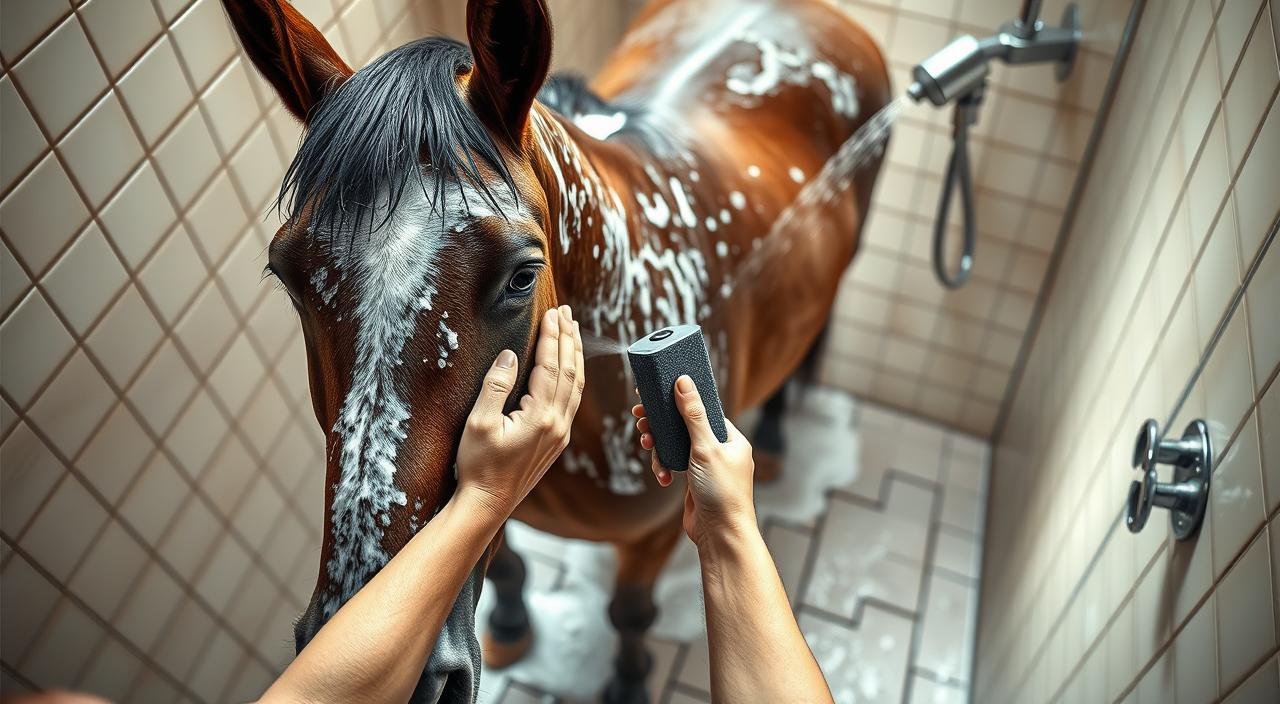
If you love your horse, you already know a clean horse isn’t always a healthy horse—but a healthy horse is almost always well cared for. Learning how to safely bathe a horse without stripping the coat is one of those quiet skills that separates basic care from thoughtful, long-term horsemanship.
Bathing a horse is more than hosing off sweat and dirt. Done right, it supports skin health, keeps the coat soft and shiny, and gives you precious hands-on time to check for little problems before they become big ones. Done wrong, it can dry the skin, dull the hair, and leave your horse itchy and uncomfortable.
Let’s walk through how to bathe your horse in a way that cleans thoroughly but protects those important natural oils.
Understand what you’re washing: your horse’s coat and skin
Before you reach for the hose, it helps to know what you’re working with.
Natural oils: your horse’s built-in conditioner
Under the hair, your horse’s skin produces sebum—a natural oil that:
- Waterproofs the coat
- Reduces friction under tack
- Keeps the skin supple and less prone to cracking
- Gives that deep, healthy shine you can’t fake with spray
Every time you shampoo, you remove some of that oil. The goal is to remove sweat, dirt, and manure without stripping away all the protection. That’s why product choice, water temperature, and frequency matter so much.
Different coat types need different care
Not every horse’s coat behaves the same way:
- Fine, silky coats can dry out and lose shine quickly with harsh shampoos.
- Thick or double coats (ponies, drafts, some native breeds) tend to hold sweat and dirt and may need more thorough rinsing and a bit more conditioner.
- Clipped horses often have more sensitive skin and may need gentler products and extra moisturising.
Once you know what kind of coat you’re dealing with, you can adjust how often you bathe and how rich your conditioner needs to be.
Bathing frequency: how much is too much?
There’s no magic number that fits every horse, but as a general rule:
| Horse’s lifestyle | Typical bathing frequency (with shampoo) |
|---|---|
| Show/competition horse | Every 1–2 weeks, plus spot cleaning |
| Regularly ridden leisure horse | Every 3–6 weeks, plus rinsing and grooming |
| Mostly turned out, light work | Only when really dirty or before a special event |
Daily baths with shampoo are rarely necessary and almost always hard on the skin. On most days, a good grooming and a simple water rinse on sweaty areas are enough.
When should you bathe your horse (and when not to)?
Instead of circling dates on a calendar, watch your horse:
Clear signs your horse needs a bath
- Dried sweat crusts that don’t brush out
- Persistent manure or urine stains
- Built-up grease under the mane, along the neck, or on the hindquarters
- Smell and stickiness after hard work in hot weather
- You’re prepping for a show, sale, clinic, or vet visit
Times to avoid bathing
Skip or rethink a full bath when:
- The weather is very cold, wet, or windy and you don’t have a way to dry your horse properly
- Your horse is unwell, stressed, or coming out of sedation
- They have open wounds or raw skin where shampoo would sting
- You’re short on drying time before turnout or stabling
In those situations, spot clean instead: warm damp cloth, a little no-rinse cleanser or diluted shampoo, and lots of careful grooming.
Essential supplies for a moisturizing horse bath
You don’t need a trailer full of products—just a small, thoughtful kit that cleans well and protects the coat.
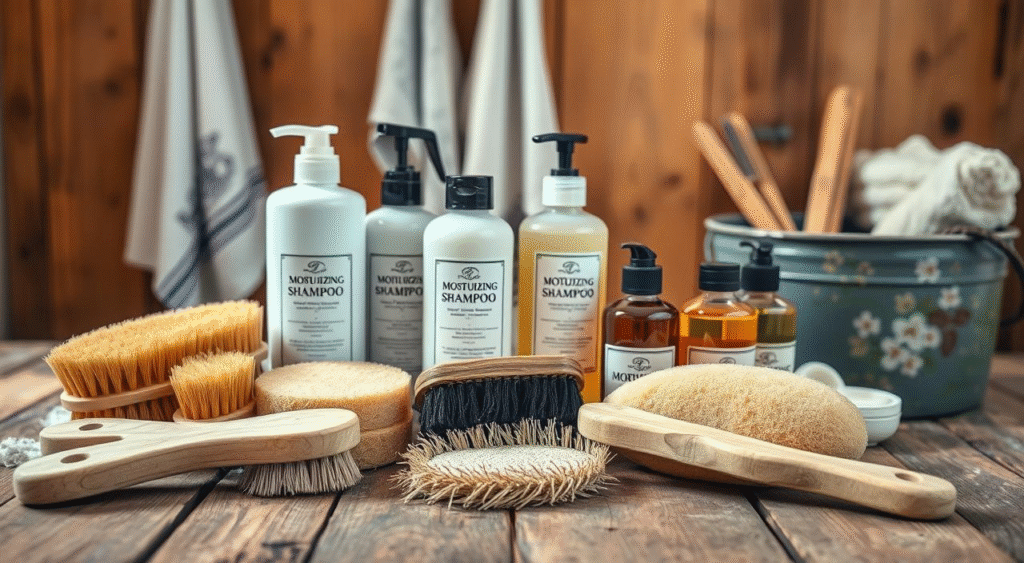
Choose horse-specific shampoo and conditioner
Skip human shampoo and washing-up liquid. They’re the right pH for people, not horses, and tend to strip too much oil. Look for:
- Mild, pH-balanced horse shampoo
- “Sensitive skin” or “everyday” formulas are usually safest.
- Conditioner or coat moisturiser
- Either a rinse-out conditioner or a leave-in conditioner/detangler.
- Optional speciality products
- Whitening shampoo for socks/greys (use sparingly)
- Medicated shampoo only if your vet advises it
Basic tools you’ll actually use
- Hose with a soft spray setting or a couple of large buckets
- Rubber curry mitt or soft curry comb
- Soft body sponge or wash mitt
- Sweat scraper
- A few large, absorbent towels
- Safe, non-slip bathing area with good drainage
Set everything out before you fetch your horse so you’re not leaving them tied while you hunt for the sweat scraper.
Pre-bath preparation: the part most people rush
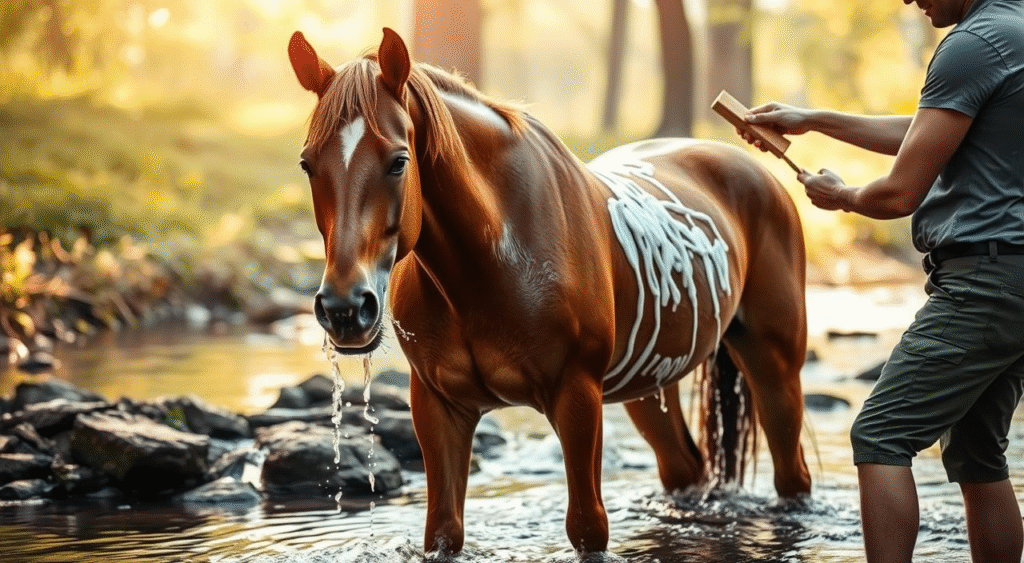
A good bath starts before the water is turned on. Skipping these steps is one of the fastest ways to end up with a dull coat and irritated skin.
1. Thorough grooming first
- Curry the body to loosen dried mud and hair.
- Brush out as much dirt and dust as you can.
- Gently detangle mane and tail.
Why? Less dirt on the coat means less scrubbing with shampoo, which means fewer natural oils washed away.
2. Protect sensitive areas
- Avoid spraying water straight into the ears or face.
- Use a damp cloth or very soft sponge around eyes, nostrils, and lips.
- If your horse is ear-shy, keep the head high and use a slightly damp cloth instead of splashing.
3. Help nervous horses accept water
If you’ve got a horse who isn’t sure about baths:
- Start at the front legs, not the body.
- Use a gentle spray or a sponge rather than a hard jet.
- Work in short sessions, reward relaxation, and don’t rush.
A couple of patient sessions now will save you many battles later.
How to safely bathe a horse without drying out the coat
Here’s a step-by-step routine designed to get your horse truly clean while keeping the skin and hair comfortable.
Step 1: Wet the horse the right way
- Use lukewarm water if you can—cold enough to be refreshing, not shocking.
- Start at the legs, then the shoulders, working with the hair, not against it.
- Move slowly over the body, leaving the head and hindquarters for later so they stay relaxed.
Avoid blasting water at the spine or directly into the flanks; those areas can be more sensitive.
Step 2: Dilute the shampoo
This is where many owners go wrong:
- Pour a small amount of shampoo into a bucket or mixing bottle.
- Top up with water and froth it with your hand or sponge.
A diluted solution:
- Spreads more easily,
- Rinses out more completely,
- Is gentler on the skin and oils than a blob of neat shampoo.
Step 3: Wash, don’t scrub the shine away
- Apply the diluted shampoo with a sponge, wash mitt, or soft curry mitt.
- Use small circular motions on the fleshy parts (neck, shoulder, barrel, rump).
- Go gently on the legs, belly, and girth area, where skin is thinner.
- Only use shampoo where they really need it—sweaty areas, stain spots, and very dirty patches.
You’re not sanding a fence; if you have to attack the coat to get it clean, you probably didn’t groom enough beforehand.
Step 4: Rinse until you think you’re done—then rinse again
Soap left in the coat is one of the quickest ways to end up with:
- Dull hair
- Itchy, irritated skin
- Flaky dandruff patches
To avoid this:
- Start rinsing at the top of the neck and work downwards.
- Watch the water running off—keep going until it runs completely clear.
- Pay extra attention to the girth area, under the mane, and between hind legs.
Don’t forget the tail: hold it away from the body and rinse thoroughly down to the dock.
Step 5: Keep an eye on water temperature throughout
If you’re using a mixer tap or yard system that changes temperature:
- Test the water on your wrist frequently.
- Avoid sudden hot or cold bursts—those can make a horse fidgety and tense.
Conditioning: how to clean without leaving the coat “stripped”
Once the shampoo is out, it’s time to put some moisture back.
When and how to use conditioner
- Apply conditioner after shampooing, with the coat still wet.
- Focus on:
- Mane and tail
- Areas that tend to get dry (hips, hindquarters, under rugs)
- Follow product instructions—many need a few minutes of contact time before rinsing.
Rinse-out conditioners are best for full-body use. Leave-ins are ideal for tails and manes, and for in-between-bath care.
Natural conditioning boosters (used carefully)
Some owners like to add a little natural oil to their grooming routine, for example:
- A tiny amount of diluted coconut oil or jojoba oil on especially dry patches
- Aloe vera gel on mildly irritated, non-broken skin
Less is more—over-oiling can attract dirt and make the coat sticky. Always patch-test on a small area first.
Deep conditioning for damaged coats
If your horse’s coat is already dry or sun-bleached:
- Use a richer conditioning treatment every few weeks.
- Leave on for the full recommended time before rinsing.
- Support from the inside too: good nutrition, access to forage, and any recommended supplements.
Drying your horse properly (without causing chills or rubs)
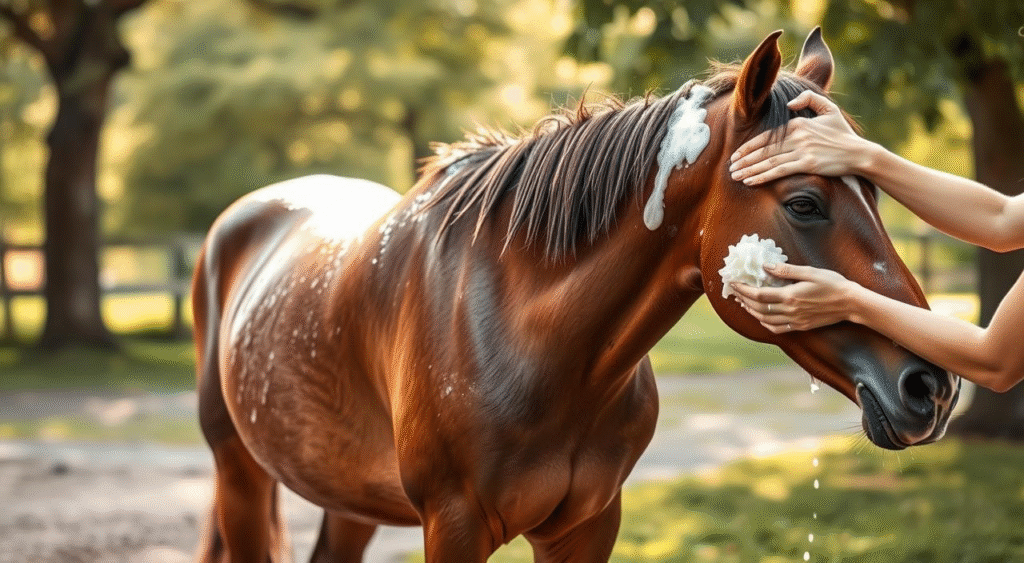
How you dry your horse matters just as much as how you wash them.
Step 1: Sweat scrape efficiently
- Go over the whole body with a sweat scraper immediately after rinsing.
- Use long strokes in the direction of hair growth.
- Wipe the blade frequently so you’re not just spreading water around.
This removes most of the surface water and makes the rest of the drying process much quicker.
Step 2: Towel and air dry wisely
- Use large towels to pat (not rub) sensitive areas: face, belly, inside thighs.
- On a warm, still day, turnout or hand-grazing in the sun can finish the job.
- In cool or breezy weather, walk the horse until the coat is just damp, not dripping.
If your horse is clipped or it’s chilly:
- Put on a cooler or wicking rug until the coat is fully dry.
- Only switch to a stable or turnout rug once you’re sure there’s no damp trapped underneath.
Step 3: Avoid rushing straight back to a dirty field
If you can, give them a few minutes somewhere clean so they don’t immediately roll in mud. If they must go straight out, you may decide to save full baths for warm, dry days and rely on spot cleaning and grooming at other times.
Seasonal adjustments: bathing smart all year round
Your basic routine stays the same, but the priorities shift with the seasons.
Summer: heat, sweat, and sun
- Rinse sweat off with plain water as often as needed to prevent salt build-up.
- Use shampoo a bit more often, but always follow with conditioner if baths are frequent.
- Consider fly-repellent shampoos or after-bath sprays to help with insects.
- Be mindful of sunburn on pink skin—avoid leaving wet, exposed areas in strong sun.
Winter: mud and chill
- Use warm water if at all possible.
- Prefer spot cleaning and grooming to full baths, unless you have a warm wash bay and drying area.
- Focus on legs—mud fever prevention is about clean, dry skin.
- Never turn out or leave your horse in a cold stable while dripping wet.
Spring and autumn: shedding and coat changes
- A shedding blade or grooming block can often replace a bath.
- Use mild shampoo when heavy shedding leaves the coat dusty and dull.
- Be extra watchful for rubs if rugs are on and off between warm days and cool nights.
Special bathing situations
Sometimes a “normal” bath isn’t what your horse needs.
Show prep
- Plan your show bath at least a day before if possible, so oils can rebalance and the coat doesn’t look fluffy.
- Use whitening shampoos only where needed and rinse extremely well.
- Follow with a light conditioner and careful grooming for maximum shine.
Medicated baths
- Always follow your vet’s instructions on how often and how long to leave medicated shampoo on.
- Treat only the affected areas if possible to protect the rest of the skin.
- Moisturise around (not on) healing skin if it looks dry or tight.
Sensitive or anxious horses
- Break the process into short, calm sessions: legs one day, hindquarters the next.
- Use a sponge and buckets instead of a hose if that’s less scary.
- Reward small steps—standing quietly, accepting water on the legs, etc.
Common bathing mistakes that dry out a horse’s coat
Even experienced owners slip into these habits:
- Using human shampoo or harsh detergent – wrong pH, strips oils, can irritate skin.
- Bathing “just because” – frequent full baths when grooming or rinsing would do.
- Not rinsing thoroughly – leftover soap causes dandruff, itchiness, and dullness.
- Scalding or icy water – makes horses tense and uncomfortable and isn’t kind to the skin.
- Rough scrubbing with stiff brushes while shampooing – breaks hairs and irritates the skin surface.
If your horse is suddenly dull, itchy, or scurfy after a run of baths, back off the shampoo, focus on grooming, and consider adding a gentle conditioner until the coat recovers.
Keeping the coat healthy between baths
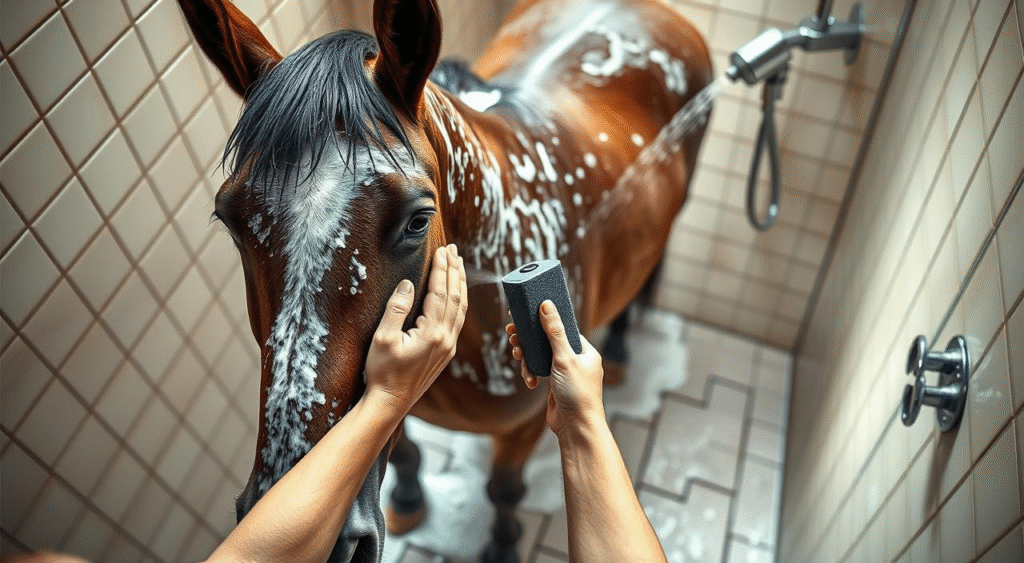
A truly good coat comes more from what you do every day than what you do on bath day. Between baths:
- Groom regularly with a curry and soft brush to lift dirt and spread oils.
- Massage the skin gently with your hands; you’ll feel heat, swelling, or tightness early.
- Keep rugs and saddle pads clean so sweat and grease don’t build up.
- Make sure your horse’s diet supports skin and coat health (good forage, balanced minerals; add oil or omega-3 if your vet or nutritionist recommends it).
Bathing then becomes the finishing touch—not the only thing standing between your horse and a decent coat.
Conclusion: clean, comfortable, and shining for the right reasons
To safely bathe a horse without drying out the coat, think less about foam and bubbles and more about balance:
- Remove sweat, mud, and stains.
- Respect the natural oils and the skin.
- Use the bath as a chance to connect and check your horse from nose to tail.
With the right products, water temperature, and a calm, methodical approach, your horse can step away from every bath clean, comfortable, and protected, not stripped and itchy. Over time, you’ll notice fewer skin issues, an easier-to-groom coat, and a horse who actually relaxes when you reach for the hose.
FAQs: Safely bathing a horse without drying out the coat
How often should I safely bathe a horse with shampoo?
Most leisure horses do well with a shampoo bath every 3–6 weeks, plus regular grooming and water rinses on sweaty areas. Show horses might need more frequent baths before events, while mostly turned-out horses often need fewer.
What’s the best way to safely bathe a horse in winter?
Use warm water, work quickly, and focus on the dirtiest areas instead of a full drenching if possible. Dry thoroughly with a sweat scraper, towels, and a cooler. Avoid turning out or leaving your horse standing in a cold stable while still damp.
Can I use human shampoo on my horse?
It’s not recommended. Human shampoos are formulated for human skin pH and can strip a horse’s natural oils, leading to dryness and irritation. Use a horse-specific, pH-balanced shampoo instead.
How do I know if I’ve rinsed all the shampoo out?
Keep rinsing until the water runs completely clear and the coat feels “squeaky clean” but not slimy or soapy under your fingers. Pay extra attention to thick areas like the tail, mane roots, girth area, and between hind legs.
What’s the best way to keep my horse’s coat shiny between baths?
Daily or near-daily grooming is your secret weapon:
- Curry to loosen dirt and stimulate oils
- Soft brush to smooth and shine
- Occasional use of a light conditioning or shine spray
A good diet and clean rugs/pads matter just as much as what you do with the hose.
My horse gets very itchy after a bath—what am I doing wrong?
Likely culprits are:
- Shampoo that’s too harsh
- Bathing too often
- Soap not fully rinsed out
Switch to a milder horse shampoo, reduce how often you bathe, rinse more thoroughly, and consider adding a gentle conditioner. If itching continues, ask your vet to check for allergies or skin conditions.
How can I safely bathe a horse that’s scared of water?
Go slowly and break it into small steps:
- Start with a damp sponge on the legs.
- Gradually introduce a gentle hose spray on the feet, then higher.
- Always work in short, calm sessions and reward relaxation.
Never tie a frightened horse tightly and force a full bath; you’ll set training back and risk injury.
With patience and the right techniques, bath time can become something your horse genuinely enjoys—not just something they tolerate.