
“The right saddle can make all the difference,” says Monty Roberts, a renowned horse trainer. If you’ve ever swung a leg over a beautifully broken-in leather saddle, you know exactly what he means. A good saddle quietly supports both horse and rider – but only if you look after it.
Clean and Condition a Leather Saddle isn’t just “equipment”; it’s skin. Sweat, dust, and rain slowly pull moisture out of it, leaving it dry, stiff, and eventually cracked if you ignore it. As one traditional care guide puts it, “Every quality product requires particularly good care in order to preserve its high quality and functional properties for as long as possible.” – Passier Saddle Care Guide passier.com
Modern saddle-care advice all points the same way: light, regular care beats a big rescue job once or twice a year. That means brushing off dust, wiping away sweat, then using the right cleaner and conditioner for your leather. One practical guide reminds riders not to skip the hidden parts: “When cleaning the saddle don’t forget to clean underneath all of the flaps as well as under the saddle itself.” – Horse FactBook horsefactbook.com
In this article, you’ve got the full routine in one place: how to prepare your saddle, clean it properly, condition it without overdoing it, deal with mold or neglect, choose the right products, and avoid the classic mistakes that ruin good tack. Treated well, your leather saddle doesn’t just look smart in the tack room – it stays safe, comfortable, and ride-ready for many years.
Why Leather Saddle Cleaning Is Essential
Keeping your leather saddle clean is important for its longevity. A clean saddle looks great and works better. It also lasts longer. Cleaning regularly stops dirt and grime from damaging the leather.
Preventing Premature Wear and Damage
Dirt, sweat, and grime can harm your leather saddle if not cleaned right. Using the right leather saddle care products helps avoid early wear. Cleaning removes particles that can scratch and weaken the leather, making your saddle last longer.
Maintaining Comfort for Horse and Rider
A clean saddle is not just about looks; it’s also about maintaining comfort for both the horse and the rider. Dirt and sweat can cause irritation and discomfort. Regular cleaning keeps your saddle comfortable, which is key for the horse’s health and the rider’s performance. Proper care, including how to maintain leather saddle effectively, is essential for keeping the saddle looking and working well.
Essential Supplies to Clean Leather Saddle
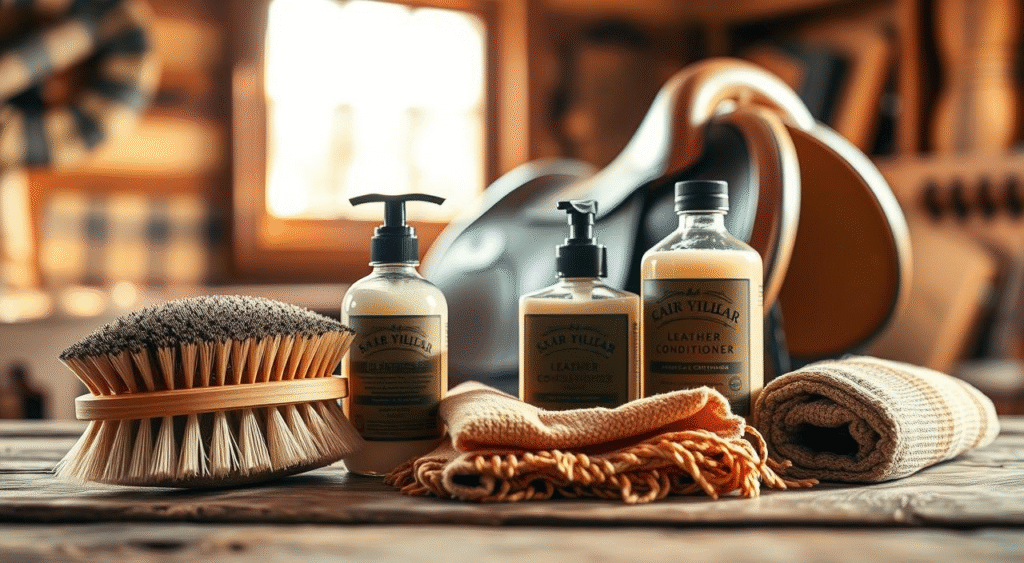
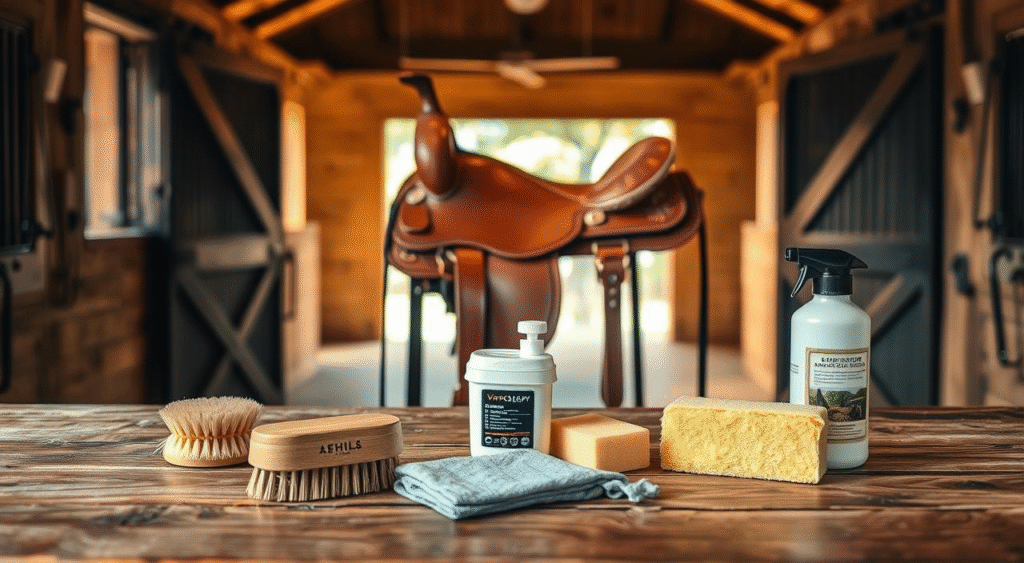
Before you start cleaning your leather saddle, make sure you have the right tools. The right supplies help you clean and care for your saddle without harming it.
Recommended Cleaning Products
It’s important to pick the right cleaning products for your leather saddle. You need a cleaner that matches the type of leather your saddle is made of.
Saddle Soaps and Cleaners
Saddle soaps and cleaners are made just for leather saddles. Look for ones that are pH-balanced and don’t have harsh chemicals. Some good options are:
- Lexol Leather Cleaner: A gentle, non-greasy cleaner for most leather types.
- Kiehl’s Leather Cleaner: A mild, soap-based cleaner that removes dirt well without drying the leather.
Natural vs. Commercial Solutions
Commercial cleaners are easy to use, but some prefer natural solutions like olive oil or coconut oil. But, be careful with natural products. They might not work as well or could leave residue.
Tools and Materials You’ll Need
You’ll also need various tools and materials to clean your leather saddle well.
Sponges, Cloths, and Brushes
Use soft, lint-free cloths or sponges to apply cleaners and wipe the saddle. A soft-bristled brush is good for gently removing dirt from small areas or crevices.
Storage Containers and Work Area Setup
Having a dedicated workspace and storage for your cleaning supplies makes things easier. Make sure your work area is well-ventilated and free from distractions.
By getting the right supplies and knowing how to use them, you can keep your leather saddle in top shape. Regular cleaning and care will make your saddle last longer and stay comfortable for you and your horse.
Preparing Your Saddle for Cleaning
To clean your leather saddle well, start by removing dirt and debris. This step is key to a deep clean without harming the leather. It helps keep your saddle in top shape for a long time.
Removing Surface Dirt and Debris
The first thing to do is remove dirt and debris from the surface. Use a soft-bristled brush or a dry cloth to gently remove loose particles. This helps avoid scratching the leather.
Be careful not to soak the leather if you need to dampen the cloth for tough dirt. After cleaning, let the saddle dry for a few minutes before moving on.
Disassembling Components When Necessary
Some saddles need parts taken off for a good clean. For example, if your saddle has removable parts like stirrups or a seat jockey, remove them. This makes cleaning more effective and prevents dirt from getting stuck.
Make sure to keep all parts and hardware organized when disassembling. If you’re not sure how to take apart your saddle, check the manufacturer’s guide or ask a pro. Put everything back together once it’s all clean and dry.
Step-by-Step Guide to Clean Leather Saddle
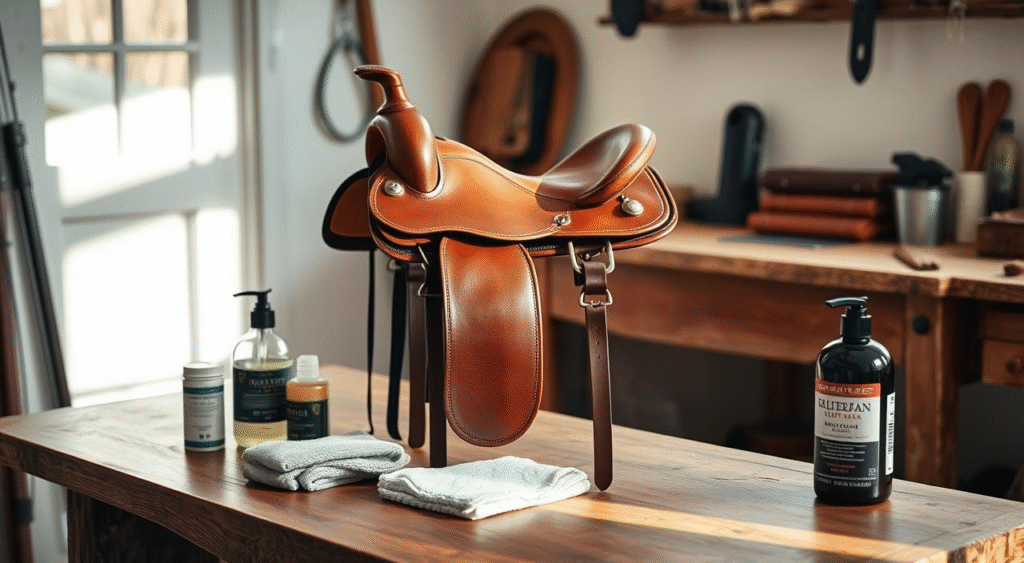
To keep your leather saddle in top shape, follow this cleaning guide. Cleaning your leather saddle is key to its care. It keeps it in good condition and ensures comfort for horse and rider.
Initial Dust and Dirt Removal Techniques
Begin by gently removing loose dirt or dust from the leather saddle. Use a soft-bristled brush or a dry cloth. This step prevents scratches during cleaning. Focus on crevices and areas around hardware.
Applying Leather Cleaner Properly
Put a small amount of leather cleaner on a damp cloth. Gently rub the saddle in circular motions. Don’t use too much water or cleaner to avoid damage. Always follow the cleaner’s instructions.
Addressing Stubborn Stains and Spots
For tough stains, add more cleaner and scrub with a soft-bristled brush. If needed, repeat until the stain goes away. After cleaning, use a clean, damp cloth to remove any leftover cleaner.
| Cleaning Step | Purpose | Tools Needed |
|---|---|---|
| Initial Dust Removal | Remove loose dirt and dust | Soft-bristled brush or dry cloth |
| Applying Cleaner | Clean the leather surface | Leather cleaner, damp cloth |
| Addressing Stains | Remove stubborn stains | Leather cleaner, soft-bristled brush |
Conditioning Your Leather Saddle
To keep your leather saddle in top shape, conditioning is key after cleaning. It moisturizes the leather, preventing dryness and cracks. This step is vital for the saddle’s look and comfort for both horse and rider.
Selecting the Right Leather Conditioner
Choosing the right conditioner is essential for leather care. Find one that matches your saddle’s leather type. Some conditioners are for specific finishes or types, like finished or unfinished leather. Always read the product label to check if it’s right. Popular ones include natural ingredients like lanolin or beeswax.
| Conditioner Type | Suitable Leather Type | Key Ingredients |
|---|---|---|
| Moisturizing Conditioner | Finished Leather | Lanolin, Beeswax |
| Nourishing Conditioner | Unfinished Leather | Neatsfoot Oil, Coconut Oil |
Proper Application Methods
Use a soft, clean cloth to apply the conditioner in circular motions. Make sure to cover the whole surface but don’t overdo it. It’s better to do small sections for even coverage.
Allowing Adequate Drying and Absorption Time
Let the conditioner dry and absorb fully into the leather. This can take several hours or overnight, depending on the product and leather. Don’t use the saddle until it’s fully absorbed to avoid stains on other surfaces or clothes.
By following these steps, you can keep your leather saddle in great condition. It will remain a valuable and comfortable piece of equipment for many years.
Deep Cleaning Techniques for Neglected Saddles
A neglected leather saddle needs thorough care and the right techniques to be restored effectively. Dirt, grime, and neglect can cause significant damage. But with the correct approach, you can revive your saddle.
Treating Mold and Mildew Issues
Mold and mildew can severely damage your leather saddle if left untreated. Start by gently removing any visible mold or mildew with a soft-bristled brush. Then, apply a solution of equal parts water and white vinegar to the affected area using a clean cloth.
Allow the solution to sit for a few minutes before wiping it off with a damp cloth. Finish by drying the area thoroughly with a clean towel.
Prevention is key: Regularly inspect your saddle for signs of mold or mildew, specially after exposure to wet conditions.
Restoring Severely Dried or Cracked Leather
For leather that has become severely dried or cracked, restoration involves rehydrating the leather. Begin by applying a high-quality leather conditioner or oil to the affected area, using a generous amount. Gently work the conditioner into the leather using circular motions with a soft cloth.
Allow the conditioner to absorb fully before buffing the leather with a clean, dry cloth to remove any excess.
Addressing Water Damage and Staining
Water damage can cause unsightly stains and discoloration on your leather saddle. Start by gently blotting the wet area with a clean, dry cloth to remove as much moisture as possible. Avoid rubbing, as this can further damage the leather.
Once you’ve removed the excess moisture, allow the saddle to air dry slowly, away from direct heat sources. If staining persists, consider using a leather stain remover or consulting a professional.
To prevent water damage in the future, consider applying a leather waterproofing treatment to your saddle.
Specialized Care for Different Leather Saddle Types
Leather saddles come in many types, like English, Western, and exotic. Each needs special care to stay in good shape. The leather type, how the saddle is made, and its use affect its care.
English Saddle Maintenance Specifics
English saddles are sleek and fit close to the horse. They need careful cleaning with a soft leather cleaner. This removes dirt and sweat that can harm the leather.
It’s also key to condition the leather often. This keeps it soft and stops it from cracking.
Western Saddle Care Requirements
Western saddles are made of thicker, tougher leather. They need a different care routine. Use a strong leather conditioner to keep the leather strong and looking good.
Also, don’t forget to take care of the saddle’s detailed designs and decorations.
Exotic and Specialty Leather Considerations
Leathers like alligator or ostrich need special care. Using the wrong cleaning or conditioning products can harm them. Always check with a pro or use products made for these leathers.
Knowing and meeting your leather saddle’s unique needs helps it stay in top shape. This ensures it looks and works well for many years.
Best Leather Saddle Care Products
Leather saddle care is more than just cleaning. It’s about using the right products to keep it looking good and working well. The quality of care products you use is key to your leather saddle’s longevity and condition.
Top-Rated Cleaners for Various Needs
When cleaning your leather saddle, pick a cleaner that’s both effective and gentle. Here are some top choices:
- Lexol Leather Cleaner: It cleans well without drying out the leather.
- Saddle Soap: A classic choice for a gentle yet effective clean.
- Mink Oil: It cleans and conditions the leather, making it soft and supple.
Premium Conditioners and Preservatives
After cleaning, conditioning is key to keep the leather soft and prevent cracking. Here are some premium conditioners:
- Lexol Leather Conditioner: It provides long-lasting moisturization.
- Kiwi Camp Dry Leather Conditioner: It offers waterproofing and conditioning.
- Chamber’s Leather Milk: A rich conditioner that deeply nourishes the leather.
All-in-One Care Solutions for Regular Maintenance
If you want something easy, all-in-one care solutions are great. They clean, condition, and protect the leather in one go. Here are some popular ones:
- Moneysworth & Best Leather Cleaner and Conditioner: A gentle, non-greasy formula that cleans and conditions.
- Obsession Leather Care: An all-in-one product that cleans, conditions, and protects.
By picking the right care products, your leather saddle will stay in top shape. It will provide comfort and reliability for many years.
Professional Leather Saddle Cleaning Services
For tough leather saddle cleaning jobs, professional services are the way to go. They’re perfect for saddles that have been ignored or are really dirty. These services give your saddle a deep clean, making it look like new again.
When to Seek Professional Assistance
If your leather saddle shows deep stains, mold, or mildew, it’s time for a pro. Also, if it’s been stored badly or faced harsh weather, a pro can fix it. Experts have the right tools and know-how to clean without harming the leather.
Finding Reputable Saddle Care Specialists
To find a good saddle cleaner, look for someone with experience. Ask horse owners for tips or check online. Make sure they use top-notch cleaning products and methods. A good service will check your saddle first and explain their cleaning plan.
Cost Considerations and What to Expect
The price for professional cleaning depends on your saddle’s state, size, and needed services. Expect to pay $50 to $200 for a full clean and conditioning. Always get a price quote first. A pro will not only clean but also teach you how to keep it in great shape.
Common Mistakes to Avoid When Cleaning Leather Saddles
When you care for your leather saddle, it’s important to avoid common mistakes. These mistakes can harm the saddle’s look and function. Many people, new or experienced, can accidentally damage their saddles by using the wrong cleaning methods or products.
Harmful Products That Damage Leather
Using the wrong cleaning products can dry out and crack the leather. Avoid harsh chemicals and choose gentle, leather-specific cleaners instead. Stay away from products with ammonia or bleach, as they are very harmful.
Improper Techniques That Cause Wear
Wrong cleaning methods can also wear down your leather saddle. Rubbing too hard can scratch it, and circular motions can make uneven spots. Clean the saddle with gentle, straight strokes, always in the leather’s grain direction.
Overcleaning and Overconditioning Risks
Overcleaning can remove the leather’s natural oils, while too much conditioner can make it feel greasy. It’s important to find the right balance. Only use cleaners or conditioners when needed, and always read the instructions.
| Common Mistake | Consequence | Prevention |
|---|---|---|
| Using harsh chemicals | Damage to leather, dryness, cracking | Use gentle, leather-specific cleaners |
| Rubbing too hard | Scratches, uneven wear | Clean with gentle, straight strokes in the direction of the grain |
| Overcleaning or overconditioning | Stripped natural oils, greasy feel, weakened leather | Clean and condition only when necessary, follow product instructions |
By avoiding these common mistakes, you can take good care of your leather saddle. This way, it will stay durable and beautiful for many years.
Preserving Your Leather Saddle’s Beauty and Function
To keep your leather saddle looking great and working well, regular care is key. By following the steps in this article, you’ve started on the right path. Preserving leather saddle aesthetics is easier with regular cleaning and conditioning.
For ongoing care for leather saddle, create a routine. This should include regular checks and upkeep. It helps your saddle last longer and stay comfy for you and your horse.
When picking leather saddle care products, go for top-notch cleaners and conditioners. Look for brands like Lexol and Kiwi. They’re known for keeping leather in great shape.
Putting in the time and effort for proper care will make your leather saddle last for many years. It keeps its beauty and function intact.
Conclusion
A leather saddle quietly tells the story of your riding life: sweat marks from summer hacks, polish from show days, little creases where you always sit. Good care doesn’t erase that story – it keeps the saddle strong enough to carry you through the next chapters.
If you read through the best saddle-care guides, the advice is surprisingly consistent:
wipe off sweat and dust after you ride, clean more deeply when the leather actually needs it, and condition often enough to keep it supple but not greasy.Anatomica+1 Regular care also means checking stitching, billets, and girth straps, not just the pretty parts you can see from the aisle. A saddle that looks clean but has tired stitching is still a risk.
The goal isn’t perfection; it’s habit. Maybe your habit is a quick wipe with a damp sponge after each ride and a proper clean once or twice a month. Maybe you tie your “deep clean and condition” to something you already do, like farrier visits or lesson days. The exact schedule can vary, but the consistency shouldn’t.
When you treat your saddle as a long-term partner instead of a replaceable object, everything improves: your horse’s comfort, your position, and your wallet. A well-cared-for saddle molds to you, stays safe under stress, and holds its value for years. A neglected one feels stiff, squeaks, rubs, and quietly shortens its own life.
So pick a routine that fits your climate, your leather, and your riding schedule. Keep the products simple and suited to your saddle. And remember: five minutes with a sponge today is far cheaper – and kinder to your horse – than trying to rescue cracked leather later.
Faqs
What is the best thing to clean a leather saddle with?
For most saddles, the safest choice is a pH-balanced leather cleaner or traditional saddle soap made for tack. These products lift sweat and dirt without stripping the leather. Many brands now offer gentle glycerine saddle soaps or foam cleaners designed specifically for saddles and bridles.horsefactbook.com+1 Avoid household cleaners, baby wipes, or anything with bleach, ammonia, or strong detergents – they’re too harsh and can dry or stain the leather.
How often should I clean my leather saddle?
It depends how often and where you ride. If you ride most days, a quick wipe-down after each ride and a proper clean every couple of weeks is a good rhythm.Anatomica+1 If you ride less often, a thorough clean and condition once a month – plus wiping off obvious sweat or mud after use – is usually enough. The more dust, sweat, and rain your saddle sees, the more often it needs attention.
Do I need to condition my saddle every time I clean it?
No. Over-conditioning is a real problem: it can clog the leather’s pores, make it spongy, and even weaken stitching over time.Hugging Face+1 A light cleaner after sweaty rides and a proper condition every few weeks (or when the leather starts to feel a bit dry) is usually plenty. If the saddle feels soft, supple, and not squeaky-dry, you probably don’t need more conditioner yet.
Can I use regular soap or dish soap on my leather saddle?
Some riders do use a tiny amount of mild dish soap in special cases, but it’s not the first choice for routine care. Most leather experts recommend dedicated saddle cleaners because they’re balanced for leather and less likely to dry it out or leave residue. If you ever use dish soap in an emergency to strip heavy grime, rinse it thoroughly and follow up with a good conditioner.Reddit+1 Always test anything new on a hidden area first.
Is saddle soap bad for leather if I use it every day?
Used correctly, good saddle soap isn’t “bad,” but using it hard and often can be too much. Several modern care guides advise using saddle soap when the leather is actually dirty, not as a daily maintenance step.Anatomica+1 For everyday care, a damp cloth to remove sweat and dust is often enough; save saddle soap for proper cleaning sessions and then condition.
How do I know when my saddle needs deep cleaning instead of a quick wipe?
Signs your saddle is due for a deeper clean include: dark, sticky patches where sweat has built up; grey or white grime in the stitching; stiff or squeaky leather; or a dusty film that doesn’t come off with a light wipe. If you’re about to compete or ride in heavy rain, that’s also a good time to give your saddle a proper clean and condition so the leather is in its best shape.
Can I use olive oil, coconut oil, or other kitchen oils on my saddle?
It’s tempting, but it’s usually a bad idea. Kitchen oils can go rancid, attract dirt, and may soak unevenly into the leather, leading to dark spots or a tacky feel.Hugging Face It’s much safer to use a conditioner made specifically for saddles, with ingredients and consistency designed to nourish leather without causing long-term problems.
Here are real, unedited comments from riders talking about how they actually care for their saddles:
I use a good saddle soap, then rinse completely and thoroughly. Once dry then I follow with a really good leaderbalsam (passier or effax) and just let it all soak in.
I should do this weekly where i live but I do it maybe every few months. if the saddle or bridle get full of sweat, then I do a quick rinse/wipe off, otherwise I just leave it. (I know I am bad)
I ride dressage and this is the cleaning/conditioning routine my saddler recommended. Reddit
Step 1: clean with Dawn dish soap and warm water. Let the leather dry completely for 24-48 hours.
Step 2: apply 100% neatsfoot oil. Buff. This step is only necessary if the leather is looking particularly rough or if it gets rained on. Let the leather dry again for 24-48 hours.
Step 3: Apply Ray Holes saddle butter, buff, and let it marinate for another 24-48 hours.
I only deep clean my tack 2-3 times a year. I never, ever use leather products with glycerin. Reddit
You are over cleaning and conditioning your leather. You only need to use leather cleaner and condition it once in a while, especially with how infrequently you’re using it. You really only need to oil it once or twice a year. Leather is porous and too much glycerin soap/conditioner/oil is going to clog the pores and mess up your leather.
Just spot clean as needed and wipe dirt off, save the deep cleaning and conditioning to every other month or so. Reddit
I live in the desert where you can taste the dust in your mouth on a calm day. If you clean your saddle and blink, it’ll be covered in dirt again.
Wipe down with a barely damp cloth after every ride. Cover stirrups and saddle, put bridle in bag. Erreplus cleanser and balsam before a show. Ride a couple of tests. Bemoan that twenty minutes outdoors has ruined your hard work. Reddit