Can You Salvage Your Moldy Leather Tack? Mold on leather tack feels like a personal insult. You open the tack room door, pull out a favorite saddle or bridle, and there it is – that fuzzy green or white film that wasn’t there last week. In damp barns, some riders joke that mold grows faster than horses do.
Tack experts all say the same thing: mold isn’t just ugly, it’s destructive. Horse Illustrated explains that mold spores burrow into the pores and layers of leather, especially where there’s sweat and dirt on the surface.horseillustrated.com As Pro Equine Grooms puts it, mold and mildew on leather “create damage” because leather was once living tissue and still has microscopic spaces mold can live in.Pro Equine Grooms
The good news is that most moldy tack can be saved if you act quickly and work methodically. Lynn Thompson of Practical Horseman recommends cleaning tack after every ride, especially in warm, wet weather, because “conditions like this are an open invitation for mold.” – Lynn Thompson, Practical HorsemanPractical Horseman Combined with smart storage and a bit of climate control, that kind of routine makes a huge difference.
What follows in your guide walks through exactly that process: how to tell mold from simple grime, how to clean without ruining the leather, when to reach for vinegar or a leather-safe mold remover, how to condition the tack afterwards, and what to change in your tack room so you don’t have to repeat this battle every month. With the right approach, most moldy leather can go back to being safe, sound, and good-looking again.
Understanding Mold Growth on Leather Tack
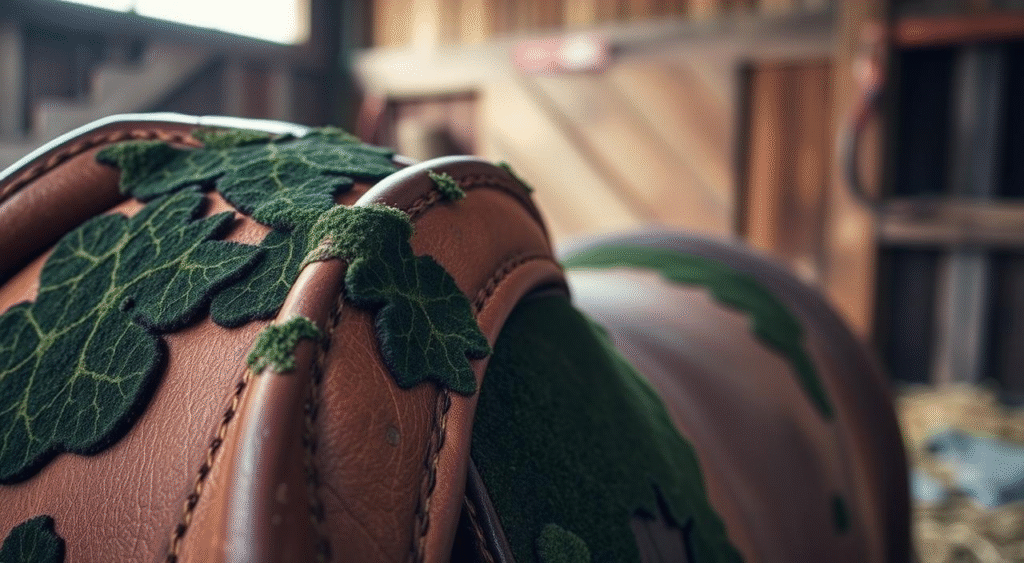
Leather tack is a key part of equestrian sports. It’s very likely to grow mold because leather absorbs moisture. This makes it a perfect place for mold to grow, mainly in humid places.
Why Leather Tack Is Susceptible to Mold
Leather is a natural, porous material that soaks up moisture. This makes it easy for mold to grow when it’s wet or humid. Leather tack also gets dirty and sweaty, which makes it even more likely to get mold.
Because leather is organic, it can feed mold, helping it to grow. Keeping leather tack clean and dry is key to stopping mold.
Common Conditions That Promote Mold Growth
Several things can help mold grow on leather tack. High humidity and temperature changes are perfect for mold. Also, storing tack in damp or airless places can lead to mold.
| Condition | Effect on Leather Tack |
|---|---|
| High Humidity | Increases moisture absorption, promoting mold growth |
| Poor Ventilation | Traps moisture, creating an ideal environment for mold |
| Temperature Fluctuations | Can lead to condensation, further moistening the leather |
Identifying Mold vs. Mildew on Your Equestrian Equipment
Keeping your equestrian gear in top shape means knowing the difference between mold and mildew. Both can harm your leather tack, but they need different cleaning methods.
Visual Signs of Mold Contamination
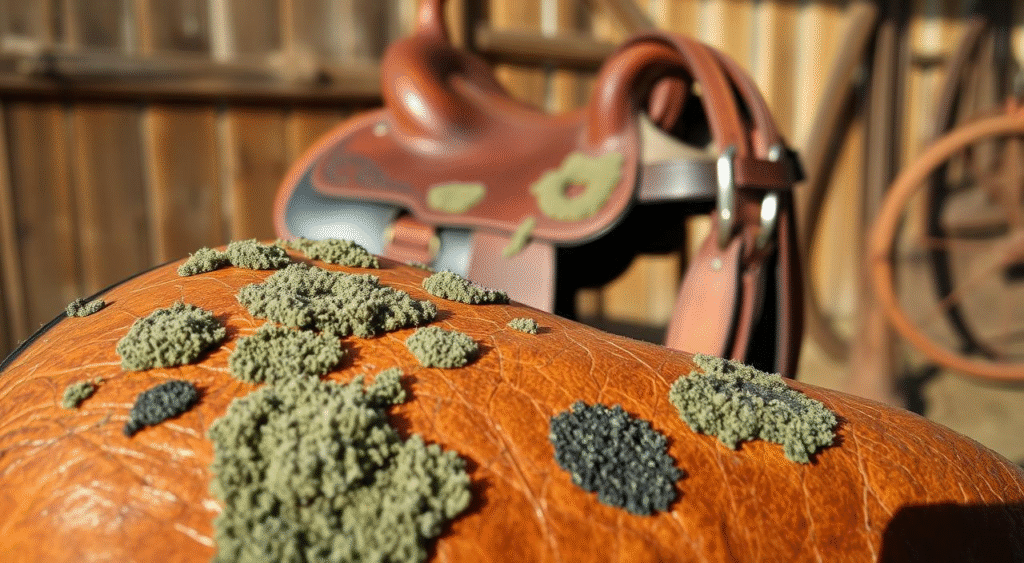
Mold on leather tack shows up as fuzzy or slimy growths. It can be black, green, or white and smells musty. Look closely at moist spots like under the saddle flap or in the bridle.
Differentiating Between Dirt, Mold, and Mildew
Dirt and grime can look like mold or mildew, but they’re not the same. Dirt is easy to wipe off, but mold and mildew dig deeper into the leather. Mildew often looks like a white or grayish powder on the surface.
To tell them apart, brush off the surface gently. If it comes off, it’s probably dirt or mildew. If it stays, it might be mold.
| Characteristics | Mold | Mildew | Dirt |
|---|---|---|---|
| Appearance | Fuzzy or slimy growths | Powdery or white coating | Superficial staining |
| Texture | Slimy or fuzzy | Powdery | Variable |
| Removal | Difficult to remove | Can be brushed off | Easily wiped away |
Knowing these differences helps you spot and fix mold and mildew on your gear. This keeps it in great shape.
Essential Safety Precautions Before You Begin
Removing mold from leather tack needs careful preparation to avoid harmful mold spores. You’re not just cleaning your gear; you’re protecting your health.
Health Risks Associated with Mold Exposure
Mold exposure can cause health issues like allergic reactions and respiratory problems. It can make asthma worse and lead to infections in people with weak immune systems. It’s crucial to minimize your exposure when handling moldy leather tack.
Protective Equipment You Should Wear
To safely remove mold from your equestrian equipment, you’ll need to wear appropriate protective gear. This includes:
- Respiratory protection
- Protective gloves
- Coveralls or protective clothing
Respiratory Protection Options
For respiratory protection, consider using an N95 respirator or a more advanced respirator with a higher filtration rating. These masks can filter out mold spores, reducing the risk of inhalation.
Gloves and Clothing Recommendations
Wear nitrile or latex gloves to prevent skin contact with mold spores. Also, use disposable coveralls or protective clothing that can be washed in hot water after use to prevent cross-contamination.
By taking these precautions, you can significantly reduce the health risks associated with removing mold from your leather tack. Remember, safety should always be your top priority when dealing with moldy equipment.
Gathering the Right Supplies to Remove Mold from Leather Tack
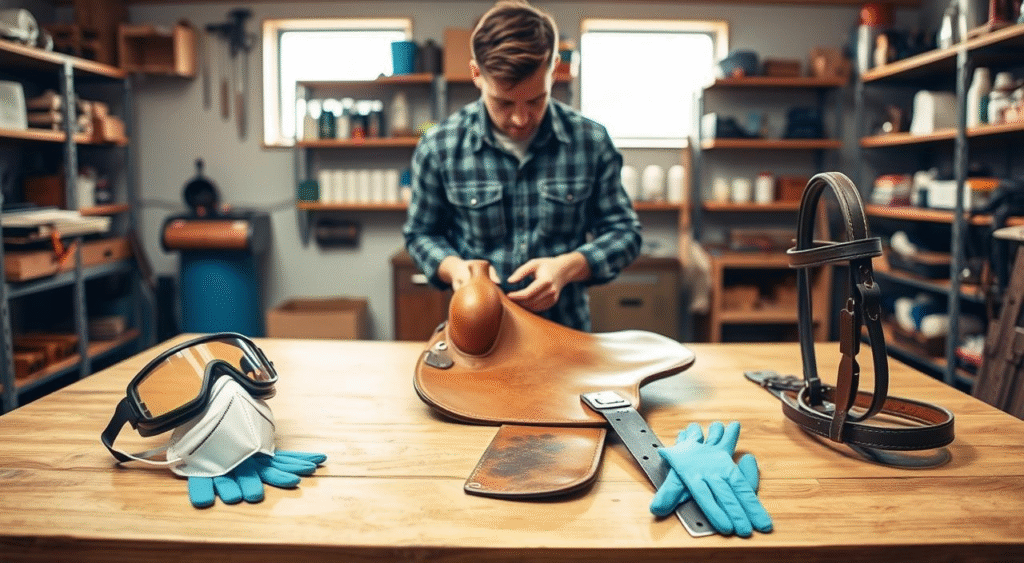
To remove mold from your leather tack, you need the right cleaning products and tools. This step is key to safely bringing back your equestrian gear to its best state.
Recommended Cleaning Products
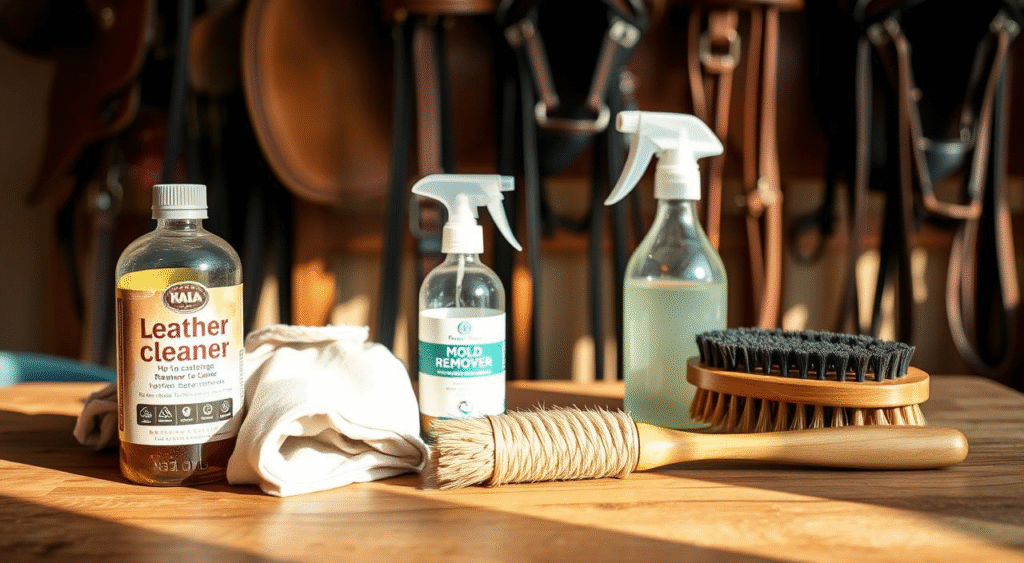
Choosing the right products for cleaning mold from leather is vital. Leather-safe mold cleaners are made to remove mold without harming the leather.
Leather-Safe Mold Cleaners
These cleaners are designed to fight mold and mildew while keeping the leather safe. Look for cleaners that are pH-balanced and don’t have harsh chemicals. Kiwi Camp Dry and Sabra Leather Cleaner are good examples.
Household Alternatives
If you can’t find specialized cleaners, some household items can work. A mix of water and white vinegar can help remove mold. But, test it on a small area first to avoid damaging the leather.
Tools and Equipment Checklist
You’ll also need some basic tools to clean your leather tack. You’ll need a soft-bristled brush, a clean cloth or sponge, and a well-ventilated area.
Having the right tools and supplies will make cleaning mold from your leather tack easier. It also ensures your tack is restored well.
Step-by-Step Process to Remove Mold from Leather Tack
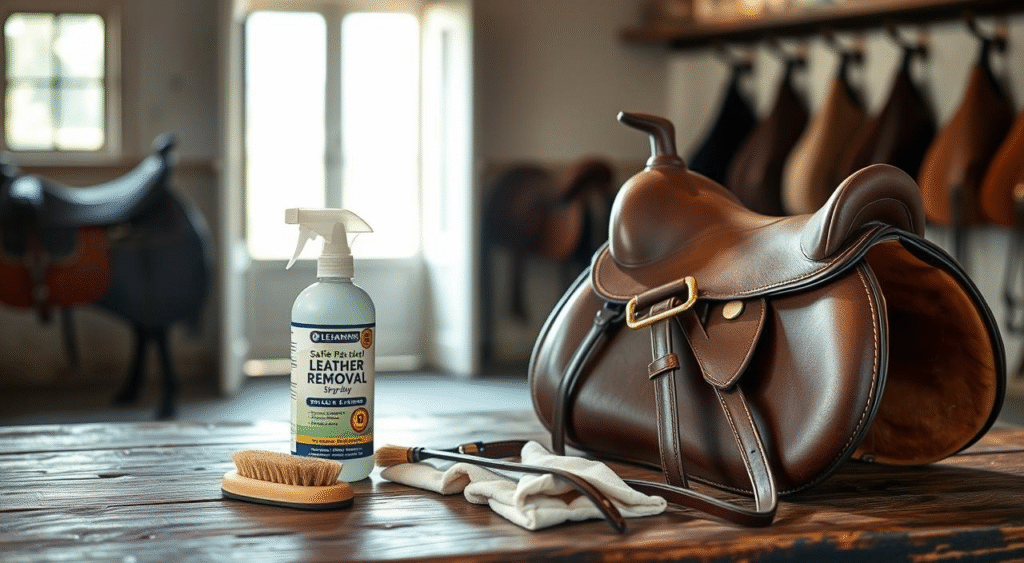
To remove mold from leather tack, you need a careful process. This includes gentle cleaning, thorough drying, and conditioning. These steps help keep the leather soft and strong. They also prevent mold from coming back.
Initial Dry Cleaning Phase
The first step is dry cleaning. You remove loose mold spores or debris gently. Use a soft-bristled brush to sweep away mold, being careful not to damage the leather. This step stops mold from spreading when you clean with water.
Brush away from your face and body to avoid breathing in mold spores. Clean outside or in a well-ventilated area to reduce exposure.
Wet Cleaning Methods
Next, use a wet cleaning method to remove mold. Mix mild soap and warm water. Apply it to the moldy area with a soft cloth, avoiding soaking the leather.
Scrub gently with a soft-bristled brush in a circular motion. Clean all surfaces, including crevices and stitching, where mold can hide.
Drying and Conditioning Process
After wet cleaning, dry the leather well to stop mold from growing. Use a clean, dry cloth to blot the area. Let the leather air dry slowly, away from sunlight or heat.
Once dry, apply a leather conditioner to keep the leather moist and supple. This step is key to keeping your leather tack in good condition.
Specialized Cleaning Techniques for Saddles
Saddles have a complex design, making mold removal a challenge. They have parts like flaps, panels, and stitching where mold can hide.
Addressing Mold in Hard-to-Reach Areas
Areas like under the flaps or around the pommel need special care. Use a soft-bristled brush to clean these spots. This way, you can remove mold without harming the leather.
- Choose a gentle cleaning solution that won’t damage the leather.
- Don’t use too much water, as it can make mold worse.
- Make sure to dry the area well after cleaning.
Treating Saddle Flaps and Panels
Saddle flaps and panels are often where mold grows. The type of leather your saddle has will guide your cleaning choice.
Suede and Rough-Out Leather Considerations
For suede or rough-out leathers, use a suede cleaner and a soft brush. Be gentle to avoid damaging the leather.
Smooth Leather Treatment
Smooth leather can be cleaned with a mild soap solution. Use a soft cloth to apply the solution and gently rub. Then, wipe with a damp cloth and dry completely.
Leather care experts say, “The goal of saddle cleaning is to remove mold and protect the leather.” Proper care can make your saddle last longer.
Effective Methods for Cleaning Moldy Bridles and Smaller Tack
Cleaning moldy bridles and smaller tack needs a gentle yet effective method. You must consider the different parts, like buckles, metal, reins, and straps. Each part needs special care.
Mold and mildew can harm leather if not treated quickly. So, first, gently remove any loose mold or mildew from the surface.
Handling Buckles and Metal Components
When cleaning bridles and smaller tack, focus on buckles and metal parts. Use a soft-bristled brush or a cotton swab to remove mold or mildew. For a deeper clean, mix mild soap and water, and use it to gently scrub the metal. Make sure to dry them well to avoid rust.
- Use a soft-bristled brush to remove loose debris
- Mix mild soap and water for a cleaning solution
- Dry metal parts thoroughly to prevent rust
Cleaning Techniques for Reins and Straps
Reins and straps need a different cleaning method. Use a gentle leather cleaner made for mold and mildew. Apply the cleaner to a soft cloth and rub it gently on the affected areas. Don’t soak the leather to avoid damage.
After cleaning, let the leather air dry. Once dry, apply a leather conditioner to keep the leather moist and soft.
Key steps to remember:
- Clean gently to avoid damaging the leather
- Use appropriate cleaning solutions for different materials
- Condition the leather after cleaning to maintain its quality
Natural vs. Chemical Solutions for Mold Removal
Fighting mold on leather tack can be done with natural or chemical methods. Each has its own benefits. It’s key to think about how well they work, if they’re safe, and how they might affect your leather.
Vinegar, Alcohol, and Other Natural Remedies
Natural solutions are a favorite for getting rid of mold on leather. They’re good for the environment and don’t harm you. Vinegar and alcohol are two common choices that can kill mold without hurting the leather.
Creating Effective Homemade Solutions
You can make your own mold cleaners from things you have at home. For example, a mix of equal parts water and white vinegar in a spray bottle works well. It’s a gentle but effective cleaner.
Application Methods
When using natural cleaners, how you apply them matters. Spray the solution on the moldy area, let it sit for a bit, then wipe it off with a soft cloth.
Commercial Leather Mold Removers
If you’re looking for something easier or if the mold is really bad, commercial cleaners are a good choice. They’re made to fight mold on leather.
| Product Type | Effectiveness | Safety |
|---|---|---|
| Natural Remedies | Moderate | High |
| Commercial Removers | High | Moderate |
Choosing between natural and chemical cleaners depends on how bad the mold is and what you prefer. Do you want something eco-friendly or something easier to use?
Restoring and Conditioning Leather After Mold Removal
Removing mold from your leather tack is just the first step. The next important task is to restore and condition the leather. This makes the leather look and feel like new again.
Restoring leather means more than just cleaning. It’s about using the right products and techniques. You want to bring back the leather’s natural moisture and softness.
Selecting the Right Leather Conditioners
Picking the right conditioner is key. Think about the leather type and its current state. Neatsfoot oil and mink oil are great for moisture. Commercial conditioners offer extra benefits like waterproofing.
| Conditioner Type | Benefits | Suitable Leather Types |
|---|---|---|
| Neatsfoot Oil | Moisturizes, softens | Full-grain, top-grain |
| Mink Oil | Waterproofs, conditions | Suede, nubuck, smooth leather |
| Commercial Conditioners | Nourishes, protects | Various leather types |
Application Techniques for Optimal Results
Applying conditioner correctly is as important as choosing the right one. Start with a small test area. Then, use a soft cloth to work the conditioner into the leather in circular motions.
Let the leather dry completely before using or storing it. Regular conditioning keeps the leather healthy and looking good for a long time.
By following these steps and using the right products, you can restore and condition your leather tack. This ensures it stays in great shape for years.
Preventing Future Mold Growth on Your Tack
To keep your leather tack mold-free, focus on storage and maintenance. The right strategies can protect your investment and make your equestrian gear last longer.
Proper Storage Solutions
Proper storage is key to stopping mold. It’s not just about putting your tack away. It’s about creating a space that doesn’t let mold grow.
Climate Control Considerations
Keeping a stable climate is essential. Avoid humid or very hot places for storage. Aim for a room temperature of 60°F to 70°F (15°C to 21°C). Also, keep humidity levels between 40% to 50%.
Tack Room Organization Tips
Organizing your tack room well can also fight mold. Use bags or containers that breathe. Make sure your tack has space to breathe, avoiding overcrowding.
| Storage Method | Benefits |
|---|---|
| Breathable Bags | Allows air circulation, reducing moisture buildup |
| Climate-Controlled Room | Maintains optimal temperature and humidity levels |
| Open Shelving | Prevents overcrowding, promotes air flow |
Maintenance Routines to Prevent Mold
Regular care is vital to stop mold. Clean your tack often and condition it to keep the leather healthy.
By sticking to these tips, you can greatly lower mold risk on your leather tack. This way, it will stay in great shape for many years.
Preserving Your Investment: Long-Term Leather Tack Care
To keep your leather tack in top shape, a long-term care plan is key. Regular upkeep not only keeps your gear in great condition but also makes it last longer.
By following the steps in this article, you’ve started on the right path. Now, it’s time to make long-term leather care a regular part of your routine. This means cleaning, conditioning, and storing your tack right to avoid damage and mold.
Good leather tack maintenance means checking your gear often for wear and fixing any problems fast. This way, you catch issues early and fix them before they get worse.
By focusing on preserving leather tack, you protect your investment and keep your gear working well. With proper care, your leather tack will be a trusted friend for many years.
Conclusion
Moldy tack feels like a disaster the first time you see it, but in most cases it’s just your leather telling you something about its environment. Too much humidity, not enough air flow, a bit of sweat and dust left on the surface – that’s exactly the world mold wants. Clean, conditioned leather in a dry, well-ventilated space is a very different story.
Across the best tack-care advice, the pattern is simple:
get the mold outside or at least away from other tack, brush it off gently, wipe with something that actually kills spores (like a diluted white-vinegar solution or a leather fungicide), then follow up with proper tack cleaner and conditioner.horseillustrated.com+2Pro Equine Grooms+2 The goal is not just to make it look better for a week, but to stop it coming back.
Your long-term protection is in the boring habits: wiping sweat and dirt off after rides, letting tack dry before it goes under a cover, running a fan or dehumidifier in a sticky tack room, and being honest when a piece is too far gone to be safe. Some saddles and bridles that have had mold deep in the flocking or core simply don’t come back, and that’s when the safest choice is to retire them instead of hoping for a miracle.Reddit+2Reddit+2
The flip side is encouraging: well-made leather is tougher than it looks. Riders have brought back saddles that were forgotten in damp barns, bridles that went furry green over one wet summer, and reins that looked ready for the bin. With the right cleaners, patience, and better storage, those pieces went back to work and stayed mold-free.
If you treat mold as a signal instead of a catastrophe, you protect both your investment and your horse. You keep your tack room healthier, your gear safer, and your leather soft and reliable every time you pick it up.
FAQs
Q: Can moldy leather tack be saved?
In many cases, yes. Light to moderate mold on the surface of good-quality leather can usually be removed with careful brushing, a diluted white-vinegar or leather-safe mold cleaner, then normal tack soap and conditioner.horseillustrated.com+2Practical Horseman+2 If mold keeps coming back quickly or the leather feels spongy, split, or smells deeply musty even after cleaning, it may be growing inside the leather or flocking and that piece might not be safe to keep using.Reddit+1
Q: Is it safe to ride with mold on my saddle or bridle?
Riding with visible mold on your tack isn’t a good idea. Mold can weaken stitching and leather fibers over time, and the spores are not great for your lungs, especially in a closed arena or tack room.EquiSearch+1 It’s better to clean the mold off thoroughly, let the leather dry, condition it, and then check for any damage before riding again.
Q: Will white vinegar kill mold on leather tack?
Diluted white vinegar (for example, around 1 part vinegar to 3–10 parts water) is widely used by riders and leatherworkers as a first step against mold.horseillustrated.com+2Pro Equine Grooms+2 It helps kill spores and change the surface pH so mold doesn’t like it as much. It’s still an acid, so you don’t want to use it every day, and you should always follow with a proper leather cleaner and conditioner once the tack is dry.
Q: Can I use rubbing alcohol to remove mold from leather?
Some people do use isopropyl alcohol on very stubborn mold, but it’s a bit harsher and can dry the leather if you’re not careful. You’ll see riders say it worked when vinegar and soap didn’t, but they also warn that good conditioning afterwards is essential.Reddit+2Reddit+2 If you go this route, keep it diluted, test a small area first, and avoid soaking the leather.
Q: How do I stop mold coming back on my tack?
Think “clean, dry, and airy.” Clean sweat and dirt off after rides, let tack dry before covering it, use a fan or dehumidifier in damp climates, and avoid glycerin soaps if you’re constantly fighting mold (they hold moisture on the surface).Reddit+4Pro Equine Grooms+4Practical Horseman+4 In very humid areas, many riders keep their main saddle and bridle at home in climate control and only bring them to the barn to ride.
Q: When should I throw away moldy tack instead of trying to clean it?
If the leather is cracking through, feels spongy, stretches strangely, or the stitching is rotting, it’s usually not worth the risk. Riders and leatherworkers on forums are pretty blunt about this: when mold has thoroughly permeated the leather and it’s dry-rotted or weakened, the safest option is to bin it or salvage the hardware.Reddit+2Reddit+2 For saddles, if the flocking or internal structure is moldy, a saddler needs to strip and rebuild it; if that isn’t realistic, retirement is kinder than a mid-ride failure.
Q: Do I have to clean moldy tack outside?
You don’t have to, but it’s strongly recommended. Tack cleaning guides and saddlers advise taking moldy leather outside or at least away from other tack before brushing and wiping, so you don’t shower your whole tack room in spores.horseillustrated.com+2Horse Journals+2 Once the worst is off, you can bring it back in for conditioning and finishing.
Real feedback from riders and leather folks
Here are some real comments from people dealing with moldy leather and tack. I’m leaving their wording exactly as it is:
This is common in the south. Clean with saddle soap and a damp sponge to remove the mold, then condition and oil. You’ll want to keep the saddles covered and preferably in a climate controlled room. If that isn’t possible, put a couple of box fans in the tack room. You will still see some mold in the summertime. I live in Atlanta, and it’s a way of life down here! The fans in our tack room have helped.
I’ve also found mold develops more frequently if you use a lot of water when cleaning the saddle: use enough just to get the sponge damp rather than saturating the sponge. Reddit
I live in Atlanta and my tack does this. I have to keep it inside my house or it just gets too humid in the barn and I end up cleaning everything made of leather every few days. Reddit
I have a 15+ year old collegiate English saddle that I cannot get to stop molding. It sat in a garage for over 10 years and when I started riding again 6 months ago I scrubbed it real well and have kept it oiled, but it keeps molding. I have tried soap and water, vinegar, leaving it in the sun to dry out, saddle soap, leather cleaner and conditioner, nothing has worked. It mostly molds on the under side. I keep it in my air conditioned house when I’m not riding. I dont know what else to do. Any advice would be welcome!
…
The mold has probably infested the inside of the saddle. Into the flocking through the seams. I’ve never seen a saddle come back from that unless it’s been taken apart, cleaned and reflocked. Reddit
Has something similar happen. I used vinegar from a spray bottle, wiped the surface and dried with lots of sunlight. After used some clove essential oil diluted in regular leather moisturizer. Make sure to keep/store it in a well ventilated place afterwards. Mold has not come back for me a year later so fingers crossed. Hope this works for you! Reddit
White is usually mildew. Mold is green. Regardless, treatment is the same. Wipe down with a 50/50 mix of white vinegar and water. Preferably chlorine free water.
Once clean, the mold can reemerge from inside the fibers. You will need to condition it after the vinegar, so I recommend using Obenauf’s leather oil. Obenauf’s oil and their LP contains propolis which naturally resists mold, mildew and bacteria.
I’ve used this method to successfully kill mold and it never came back. The only downside is Obenauf’s will darken the leather. But if it saves a priceless heirloom, it’s worth it. Reddit
I use Damp Rid in my trailer and tack room, try not to put anything damp in these areas ( saddle pads, damp leather) and try to keep a fan going with it’s humid. I get the hanging damp rid packages, stuff works great and tack room smells nice 🙂 I still get a little mold but my stuff isn’t green and furry anymore! Also try to keep my saddle covered too. 🙂 Reddit