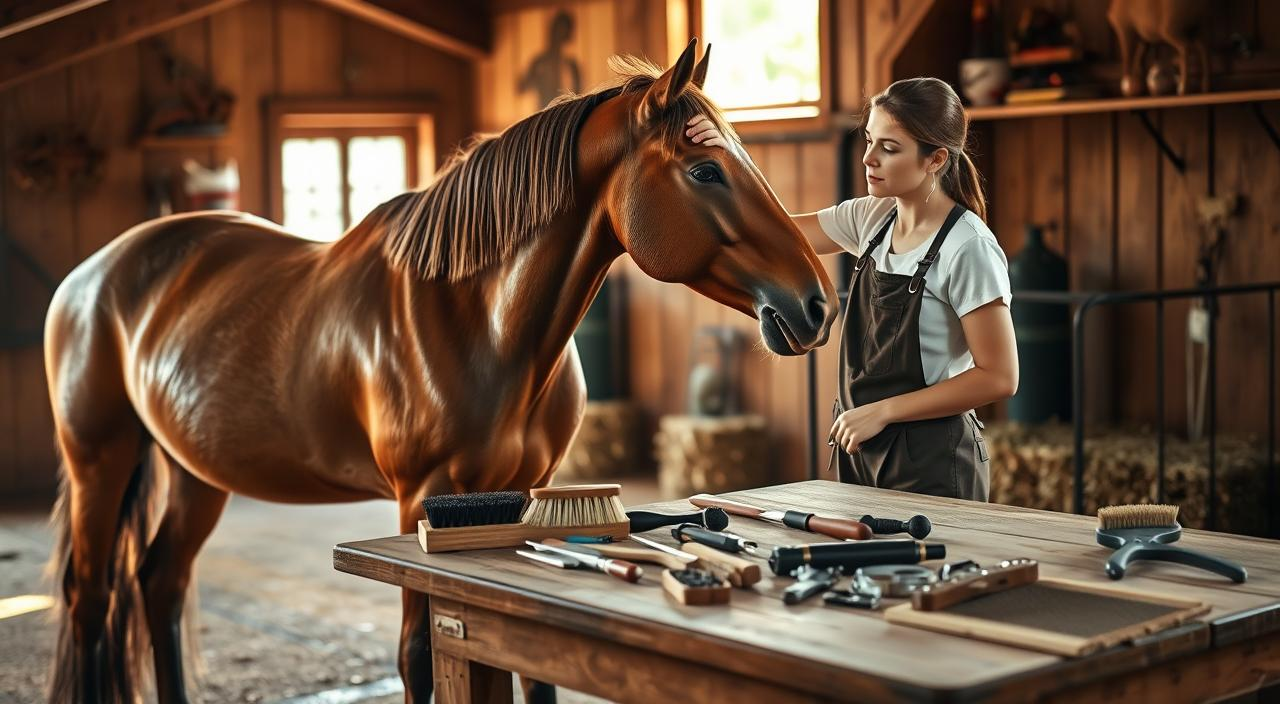
“The bond between a horse and its handler is forged through trust, care, and attention to detail,” says renowned equine expert Monty Roberts. If you’ve ever stood in a quiet stable with a brush in your hand and your horse breathing softly at your shoulder, you already know how true that is. Daily Horse Grooming Routine isn’t just a chore you tick off a list – it’s one of the simplest ways to say, “I see you, I’m paying attention, and you matter.”
Modern grooming guides all say roughly the same thing: regular hands-on care improves circulation, helps keep the coat and skin healthy, and lets you spot injuries long before they turn into big vet bills. One author puts it perfectly: “A clean horse is a healthy horse, and regular grooming helps prevent problems before they start.” (Bayequest grooming guide) Bay Area Equestrian Network
The good news? You don’t need an hour every day to do right by your horse. A focused 10-minute stable checklist can cover the essentials: a quick health scan, a fast but effective brush-off, a check of the feet, and a moment for those sensitive areas horses often can’t reach themselves. Done consistently, that short routine can transform your horse’s comfort, your peace of mind, and the quality of your partnership.
In the rest of this guide, you’ve already laid out what to do with those 10 minutes: which tools actually save time, how to use them without over-grooming, and how to adjust the routine for different seasons and disciplines. Think of this checklist as your daily “reset button” – a small habit that pays off every time you halter your horse, swing a leg over, or just stand with them quietly in the aisle.
Why Your Horse Needs Daily Grooming
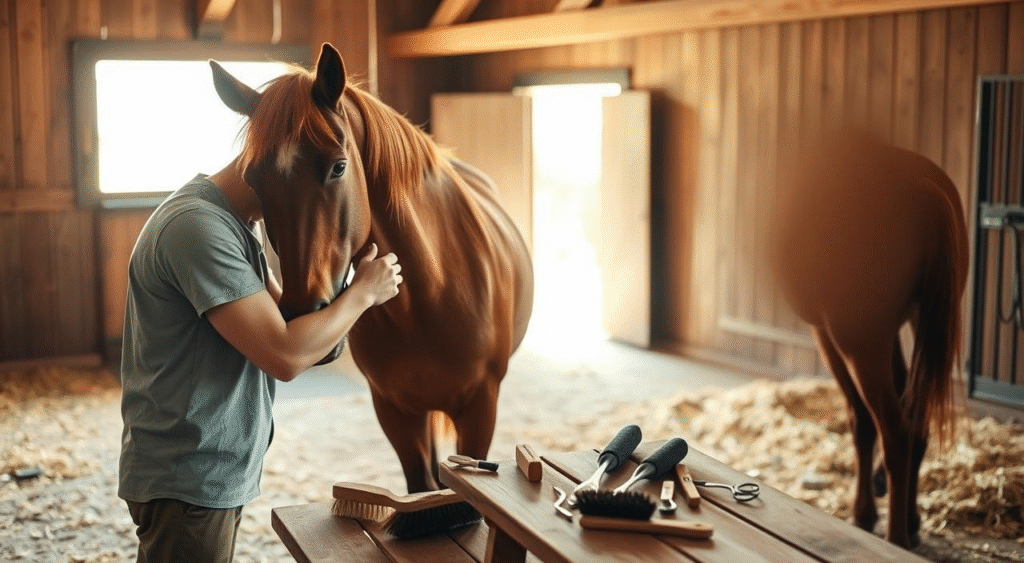
Grooming your horse every day is a simple yet powerful way to make their life better. It also strengthens your bond with them. Daily grooming can greatly improve your horse’s health and happiness.
Health Benefits of Regular Grooming
Regular grooming spreads natural oils across your horse’s coat. This improves blood flow and lowers stress. It can make their coat healthier and shinier, boosting their overall health.
Building Trust Through Consistent Handling
Daily grooming lets you handle your horse regularly. This builds trust between you and your horse. Trust is key for smoother and more effective interactions.
Early Problem Detection
Regular grooming lets you check your horse’s body for injuries or illnesses early. This can stop small problems from becoming big health issues.
| Benefits of Daily Grooming | Description |
|---|---|
| Health Benefits | Improves circulation, reduces stress, and distributes natural oils |
| Trust Building | Fosters a deeper connection and trust between horse and handler |
| Early Detection | Allows for early identification of potentially serious health issues |
Understanding the value of daily grooming is the first step to a healthier, happier horse.
Essential Horse Grooming Tools for Speed and Efficiency
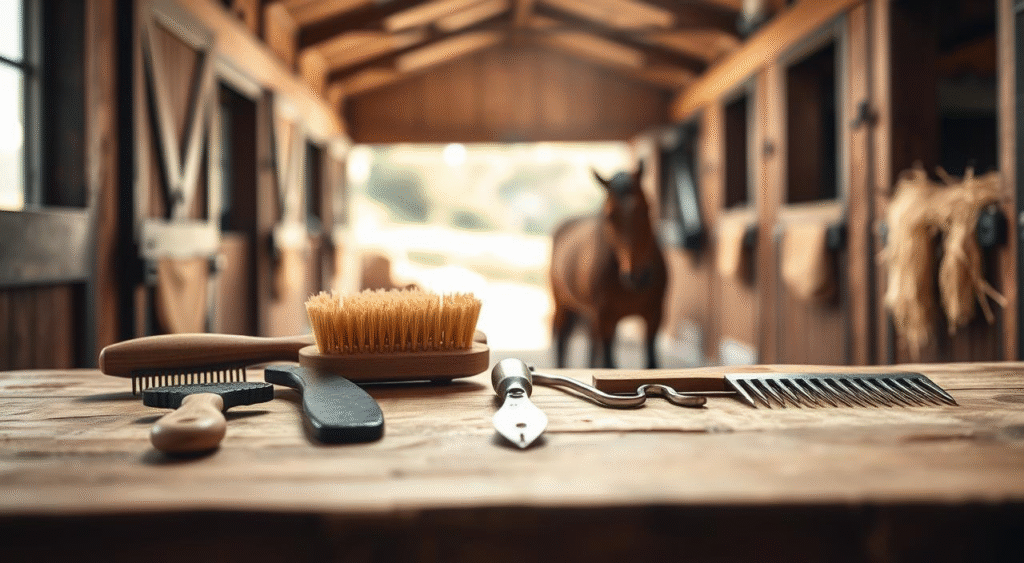
The right horse grooming tools can make a big difference in your daily routine. Having the correct equipment saves time and ensures your horse gets the best care.
Must-Have Tools for Your 10-Minute Kit
To keep an efficient equine grooming routine, you need a few key tools. These include:
- A curry comb for removing dirt and tangles
- A soft brush for polishing the coat
- A hoof pick for cleaning the hooves
- A mane and tail brush for detangling
Experts say, “A well-maintained grooming kit is key to a healthy horse.” Regular grooming improves your horse’s look and helps spot health issues early.
Organizing Your Grooming Station
Organizing your horse grooming tools in a grooming station saves time and makes grooming fun. Keep your tools in a spot like a grooming box or bucket.
Tool Maintenance for Longevity
Keeping your grooming tools in good shape is important. Clean your brushes often and store them right to make them last longer. This keeps your tools ready for your daily grooming schedule for horses.
Establishing Your Daily Horse Grooming Routine

Creating a daily horse grooming routine is easy with the right tools and approach. It’s important to be consistent and safe.
Creating a Time-Efficient Schedule
To make a good grooming routine, plan a schedule that fits you and your horse. Think about your horse’s daily activities and energy. Grooming works best in the morning before riding or in the evening after work.
Preparing Your Horse for Quick Sessions
Make sure your horse is comfortable and secure before grooming. Let them get used to the grooming tools and your touch. Use gentle, steady movements to help them relax.
Safety Practices for Efficient Grooming
Safety is key during grooming. Watch your horse’s body language and reactions. Move gently and avoid sudden actions that might scare them. Also, check your grooming tools for damage to prevent accidents.
By following these tips, you can make a daily grooming routine that’s efficient and safe. It will improve your horse’s health and your bond with them.
The 10-Minute Stable Checklist: Overview
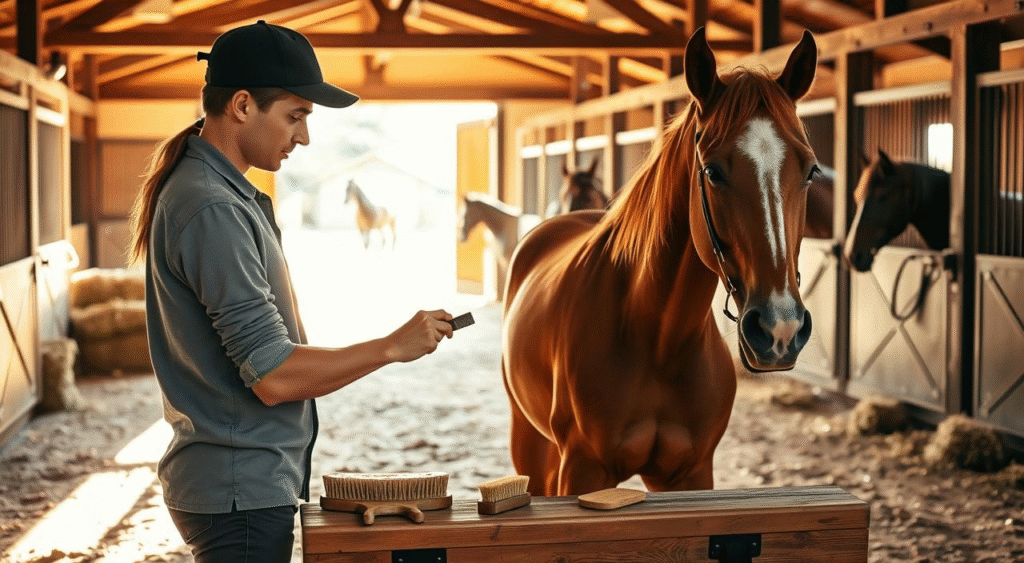
A 10-minute stable checklist is key for keeping your horse healthy and looking good. It helps you give your horse the same care every time. It also lets you spot any problems quickly.
Printable Checklist Components
A good checklist has parts for health checks, grooming, and special needs. You can make it fit your horse’s unique needs.
| Checklist Component | Description |
|---|---|
| Health Checks | Monitor vital signs, inspect for injuries or illness |
| Grooming Tasks | Brushing, mane and tail care, hoof picking |
| Special Requirements | Additional care based on age, health, or discipline |
Tracking Progress and Health Changes
Using a checklist helps you see how your horse is doing. It’s great for catching health or behavior changes early.
Adapting the Checklist to Your Horse’s Needs
Your checklist should change as your horse’s needs do. Make sure to update it often to keep it useful.
With a 10-minute stable checklist, you can make your daily horse care easier. Your horse will get the care they need.
Step 1: Quick Health Assessment
Start your daily horse grooming with a quick health check. This helps spot health issues early. Regular checks keep your horse healthy and catch problems before they get worse.
30-Second Body Scan Technique
Begin with a 30-second body scan to see how your horse is doing. Stand back and look over your horse from head to toe. Look for injuries, swelling, or odd behavior. This scan can spot lameness or skin problems.
Checking Vital Areas: Eyes, Nose, and Mouth
Then, check the important areas: eyes, nose, and mouth. Make sure the eyes are clear and there’s no discharge. Check the nostrils for odd discharge or breathing trouble. Look inside the mouth for dental issues or sores. These checks can show early health problems.
Documenting Changes or Concerns
Remember to document any changes or concerns you see. Keeping a record helps track your horse’s health over time. It’s useful for your vet. Note any changes in behavior, appetite, or physical condition.
Adding this quick health check to your daily grooming is key. It follows best practices in horse grooming and keeps your horse healthy and happy.
Step 2: Efficient Dirt Removal Techniques
To keep your horse clean and healthy, learning how to remove dirt efficiently is key. Good grooming not only makes your horse look better. It also helps avoid skin problems and infections.
Curry Comb Circular Motion Method
Using a curry comb in circular motions is a great way to get rid of dirt. It spreads natural oils in your horse’s coat. This method also helps remove dirt and tangles and boosts blood flow to the skin. Be gentle around sensitive areas.
Strategic Brushing Patterns for Speed
Using smart brushing patterns can make grooming faster. Start by brushing in the hair growth direction, using long strokes to remove dirt. For thicker coats, you might need to press a bit harder. This method ensures a deep clean and saves time.
Focusing on High-Priority Areas
Some areas need more attention when removing dirt. Focus on the back, legs, and belly, where dirt and sweat build up. Cleaning these spots regularly helps prevent irritation and keeps your horse comfy.
By adding these efficient dirt removal techniques to your equine grooming routine, your horse will look great. It will also be healthier and happier.
Step 3: Mane and Tail Maintenance in Minutes
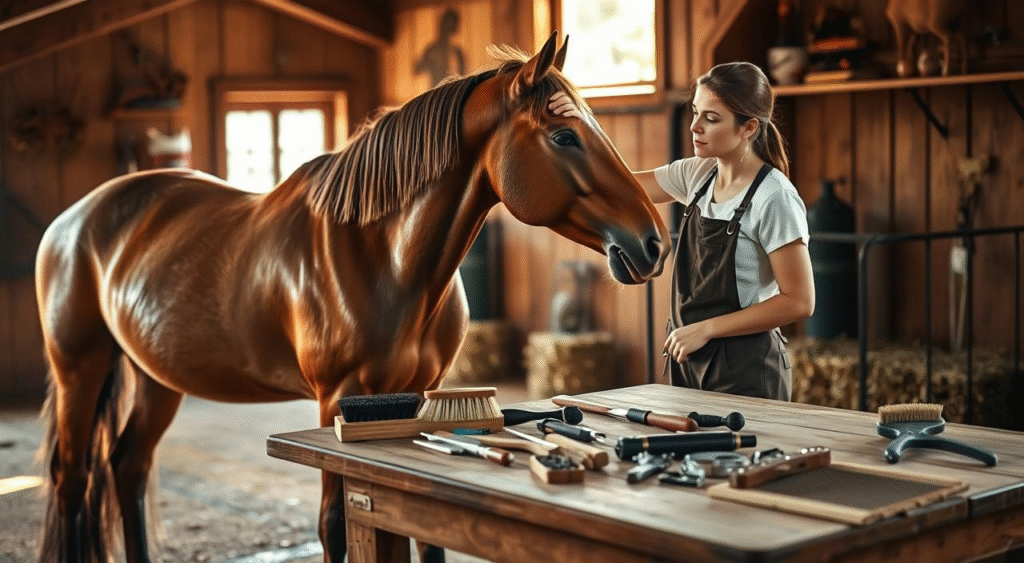
Keeping your horse’s mane and tail clean is key to avoiding tangles. It also cuts down on grooming time. A few easy steps can make your horse’s mane and tail look fantastic.
Quick Detangling Methods
Use a wide-tooth comb or detangling spray to untangle your horse’s mane and tail. These tools are gentle and won’t hurt your horse. Start at the ends and work up to avoid tangles.
Preventative Care to Save Time
Preventing tangles is the best way to save time. Brushing regularly with a soft brush or a special mane and tail brush helps. Also, using a conditioner keeps the hair soft and easy to handle.
Products That Reduce Daily Maintenance
Some products can make daily grooming faster. Detangling sprays, conditioners, and leave-in products keep hair healthy and easy to manage. Choose products made for horse mane and tail care.
By following these tips, you can make your horse’s mane and tail look great and save time. For more horse grooming tips and daily horse care advice, keep reading our guide.
Step 4: Proper Hoof Care Routine
Your horse’s hoof health is key to its overall wellbeing. Daily hoof care is a must. It helps prevent pain and discomfort.
Efficient Hoof Picking Technique
Learning an efficient hoof picking technique is vital. It removes dirt and debris from the hooves. Focus on the frog and sole areas. Regular cleaning stops dirt and bacteria buildup, which can cause infections.
Step-by-Step Hoof Picking:
- Stand beside your horse, facing its tail.
- Gently lift the hoof by pressing against the leg.
- Use a hoof pick to remove dirt and debris, starting from the heel and working towards the toe.
- Pay special attention to the frog and sole areas.
Identifying Common Hoof Issues
Regular hoof care helps spot common issues early. Look out for thrush, abscesses, and cracks. Catching these early can prevent bigger problems.
| Hoof Condition | Description | Action |
|---|---|---|
| Thrush | A bacterial infection causing black discharge and a foul odor. | Clean the hoof thoroughly and apply a thrush treatment. |
| Abscess | A painful pocket of pus within the hoof. | Consult a farrier or veterinarian for drainage and treatment. |
| Cracks | Fissures in the hoof wall. | Assess the severity and consult a professional for repair or treatment. |
When to Call Your Farrier
Knowing when to call your farrier is key. Regular trimming and shoeing prevent hoof issues. If you see lameness, hoof cracks, or other problems, call your farrier.
Emergency Hoof Care Situations
Some situations need immediate help. A lost shoe, severe laminitis, or a hoof puncture wound are emergencies. Call your farrier or vet right away.
“The health of your horse’s hooves is foundational to its overall health and performance. Regular care and attention can prevent many common hoof problems.” – Equine Care Expert
Adding a proper hoof care routine to your daily grooming is essential. It keeps your horse’s hooves healthy and contributes to its overall wellbeing.
Step 5: Sensitive Area Grooming
Grooming your horse gently is key to avoid irritation and keep them comfortable. This is a vital part of your equine grooming routine. It helps keep your horse healthy and happy.
Face and Ear Cleaning Shortcuts
When grooming sensitive spots, be very gentle. Use a damp sponge to clean your horse’s face and ears. This is a quick and easy horse grooming tip for your daily routine.
Training for Easier Handling
Teaching your horse to handle sensitive areas can make grooming easier. Start by introducing gentle touch and handling slowly. This helps your horse get used to it and feel more comfortable.
Safe Products for Delicate Areas
Choosing the right products for sensitive areas is important. Look for gentle, specially made products for your horse’s sensitive spots. This follows best practices in horse grooming.
| Product Type | Recommended Use | Benefits |
|---|---|---|
| Gentle Face Wipes | Daily face cleaning | Convenient and gentle |
| Ear Cleaning Solutions | Weekly ear cleaning | Effective dirt removal |
Seasonal Adaptations to Your Daily Horse Grooming Routine
As seasons change, your horse grooming routine must adjust. This ensures your horse stays comfortable and healthy. It’s important to change your horse care routine with the seasons. This helps meet specific needs that come up at different times.
Summer: Sweat and Insect Management
In summer, fighting sweat and bugs is key. Regular grooming gets rid of dirt and sweat, lowering skin irritation risk. Using insect-repellent grooming products also keeps your horse comfy.
Winter: Mud and Coat Challenges
Winter brings mud and coat changes. Regular grooming tackles mud and stops matting. The right tools, like curry combs, spread oils and keep coats healthy.
Spring: Shedding Season Strategies
Spring means shedding, and brushing often is vital. Shedding blades or deshedding tools help remove loose hair and stop matting.
Fall: Preparation for Colder Weather
Fall is for getting your horse ready for cold weather. You’ll need to adjust their grooming schedule for horses to fit their changing coat and diet.
Adapting your daily horse grooming routine to the seasons keeps your horse healthy and comfy all year.
Discipline-Specific Grooming Considerations
Different horse disciplines need special grooming. The grooming style affects a horse’s performance, comfort, and health. It depends on the discipline.
Show Horses: Maintaining Presentation
Show horses focus on looks, not just cleanliness. Regular grooming sessions keep their coat, mane, and tail perfect. You should pay attention to details like braiding or banding their mane and tail. Make sure their coat is shiny and well-groomed.
Working Horses: Practical Grooming Approaches
Working horses need grooming that’s practical. The goal is comfort and health. Check for wear or irritation, like under saddles and harnesses. Efficient grooming techniques are key to save time without sacrificing care.
Trail Horses: Focus Areas for Comfort
Trail horses groom for comfort, mainly in areas that rub or irritate. Regular checks on hooves, saddles, and bridles prevent discomfort and injury. Grooming also helps spot signs of fatigue or stress.
Retired Horses: Therapeutic Grooming Benefits
Grooming is therapeutic for retired horses. Gentle grooming is calming and enjoyable. It keeps their coat healthy and provides comfort. It’s also a way to check their health and catch issues early.
Adapting your grooming to your horse’s discipline ensures they get the best care. This improves their performance, comfort, and life quality.
Making Every Minute Count: Your Investment in Equine Wellbeing
Daily horse grooming is more than just a routine. It’s a key part of your horse’s wellbeing. Spending a few minutes each day on equine grooming routine can greatly improve your horse’s health. It also strengthens your bond and boosts their quality of life.
A good horse care routine does more than clean. It builds a connection with your horse, spots problems early, and keeps them comfortable. Your daily grooming makes your horse look great and keeps them happy and performing well.
By following this guide, you’re making every minute count. You’re not just keeping your horse’s appearance up. You’re also investing in their health and wellbeing. This simple routine shows your horse you care, deepening your relationship.
Remember, every minute you spend grooming is a step towards a healthier, happier horse. Your consistent equine grooming routine will strengthen your bond and prepare your horse to perform at their best.
Conclusion
If you strip all the fancy brushes, lotions and gadgets away, daily grooming really comes down to this: you taking a few minutes to pay close attention to your horse. Health, performance, and that “soft eye” we all love are side effects of that attention.
Current grooming advice from vets and professional grooms all points in the same direction: a short daily check plus a deeper weekly groom is far more effective than the occasional marathon clean-up. How To Own a Horse+1 Your 10-minute stable checklist does exactly that. In those ten minutes you:
- Run your hands over the horse and catch heat, swelling or small cuts early
- Clear the worst of the dirt, sweat and mud from high-friction areas before they cause rubs
- Pick out the feet so little stones don’t turn into big lameness problems
- Spend calm, predictable time with your horse so they learn you are safe, consistent, and worth listening to
The real power isn’t in doing a “perfect” groom every day. It’s in showing up regularly. Some days you’ll have time for a full spa session with mane detangling, tail conditioning and a long, relaxing brush. Other days you’ll barely squeeze in a quick curry, hoof pick and body scan before dark. Both days count.
Over time, that daily routine becomes a language your horse understands: your touch, your rhythm, your smell, your way of working around their body. They start to stand a little quieter, lower their head a little quicker, and let you a little closer. That’s not luck – that’s the result of a simple habit you’ve repeated hundreds of times.
So treat your 10-minute checklist as non-negotiable, like feeding and water. Adjust the details for season, workload and temperament, but keep the structure. Your horse will feel better in their own skin, you’ll catch problems early, and you’ll build the kind of quiet, reliable partnership that shows up everywhere – from a muddy field catch to a tense warm-up ring.
Faqs
How often should you groom your horse?
Most sources now suggest some form of daily grooming, even if it’s only 10–15 minutes, especially for horses in regular work or wearing rugs. How To Own a Horse+1 At the very least, groom before and after riding so you’re not putting tack on top of dirt, sweat or mud. Horses living out in a herd and not in heavy work can sometimes manage with a few thorough sessions a week, but a quick daily check is still smart for spotting injuries or hoof issues.
What should be included in a daily horse grooming routine?
A simple daily routine doesn’t need to be complicated. In 10–15 minutes you can:
- Do a quick visual and hands-on scan for lumps, heat, cuts or swelling
- Pick out all four feet and check for stones, cracks or thrush
- Curry comb the major muscle areas to loosen dirt and stimulate the skin
- Brush off loose mud, hair and sweat where the saddle, girth and bridle will sit
- Run a soft cloth or sponge over eyes, nostrils and dock if needed
That covers comfort, hygiene and basic health monitoring without turning grooming into a huge job.
How long does it really take to groom a horse properly?
For a full, traditional groom – hooves, curry, several brushes, mane and tail, detailed health check – most guides say 30–60 minutes depending on coat, season and how dirty the horse is. The Vet Expert+1 But a focused “working day” groom before and after a ride can be done in 10–20 minutes if you stay organised and focus on the high-friction and high-risk areas.
Do horses need to be groomed every day to stay healthy?
Not every single horse needs a full groom every day, but regular contact is important. Horses that are rugged, stabled, clipped or ridden a lot benefit most from daily grooming because they don’t have the chance to roll, mutual-groom or shed dirt naturally. health4horses.com.au+1 Pasture horses living in a herd may look after much of their own coat care, but they still need their feet checked, bodies inspected and tack areas cleaned before riding.
Can you over-groom a horse?
Yes, you can. Several modern articles and owners point out that too much brushing – especially with harsh or stiff brushes – can strip the coat’s natural oils and reduce waterproofing, particularly in winter. horseandcountry.tv+1 The trick is balance: groom often enough to remove sweat, mud and crusted dirt, but don’t scrub the life out of the coat. Focus on comfort and clean tack areas, and use softer tools or grooming gloves on sensitive horses.
What happens if you don’t groom your horse regularly?
Skipping grooming completely can lead to:
- Rubs and sores under saddle, girth and bridle
- Mud rash, skin infections or rain scald under dried sweat and caked mud
- Stones or packed mud in hooves causing bruising or abscesses
- Missed injuries or weight changes because nobody is looking closely every day
In the short term your horse will just look a bit feral. Over months, small ignored problems can turn into expensive vet or farrier visits.
Real human feedback
From a Reddit discussion on “How often to groom?” Reddit
My horse gets groomed as he needs it, I feel him over at least once a day for any lumps or injuries but at the end of the day he’s probably not far off 40 and doesn’t enjoy being groomed apart from his itchy spots. I do groom more often when he’s shedding and even then I just go over him with a plastic deshedding flower to keep it as quick as possible. If he doesn’t enjoy it I don’t see the point in doing it more often than necessary.
Brush/curry every time I see her and pull the knots from her tail and mane, wash/shower as necessary. I clip when she’s in a program, and let it do its own thing when she’s not. Regularly check her bits n pieces for buildup and wash as needed. They’ll appreciate the hell out of you for that one.
Mule gets a full grooming every time i’m at the barn. 2-4x weekly. rubber curry, legs rubbed with the “hands on” gloves, stiff brush, soft flick brush, mane and tail detangled, bridlepath trimmed up if needed, face washed with washcloth or baby wipe, ears cleaned (his favorite part) and hooves picked out, his least favorite.
If you’re going to put any equipment on the horse, you must be sure that the area you put the equipment on is clean. Aside from that, most horses can take care of themselves. They really don’t need to be groomed that often to be healthy. My girls get groomed about 3x per week, to varying degrees of thoroughness. If they don’t get groomed on a given day, they usually still get hooves picked, to check for anything amiss. Really, examining the horse for injuries/problems is the most important thing, along with getting rid of serious grime that they can’t remove themselves (e.g. something stuck in the mane, udder crud, etc.)