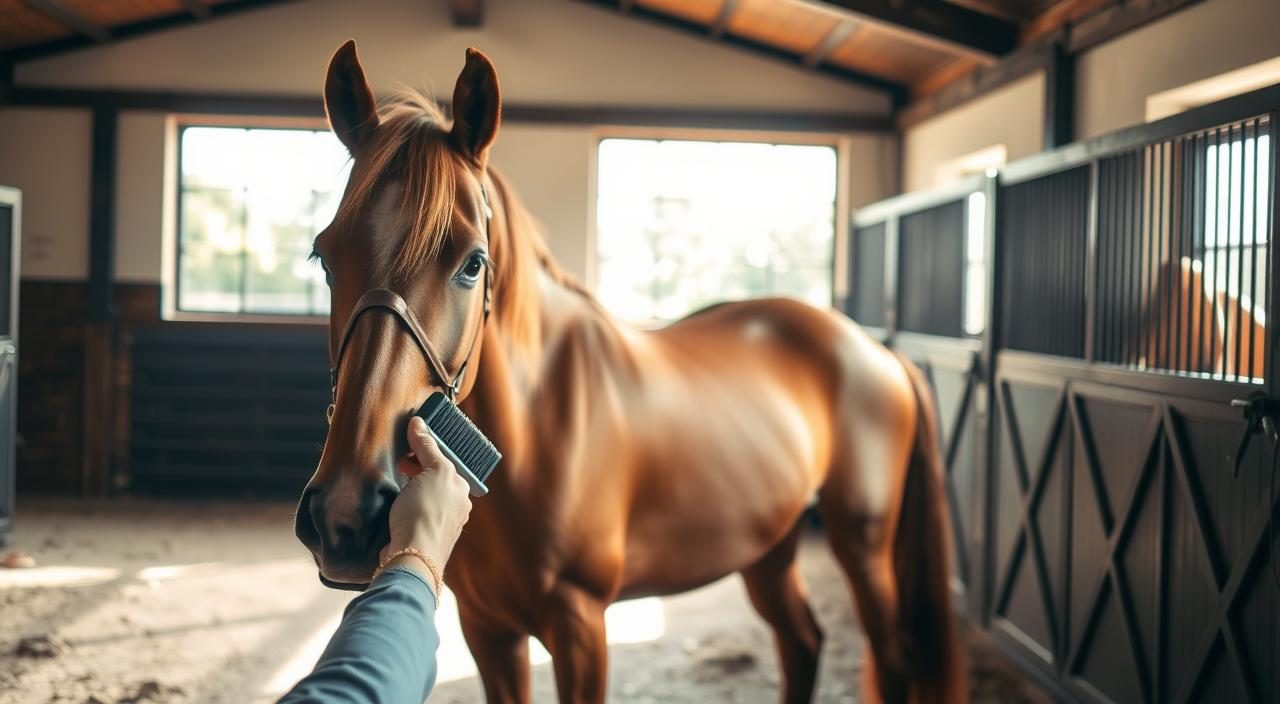
If you own a pleasure horse, a groom your leisure horse daily routine is one of the best gifts you can give them. Daily grooming isn’t just about looking tidy for a hack or a fun show; it’s quiet, hands-on time where you check their body, protect their health, and deepen your partnership. Many small issues—rubs, skin problems, sore spots—are first spotted with a brush in hand, not under saddle.
Below is a practical, barn-ready checklist and routine you can adapt to your horse, your yard, and your schedule.
Why daily grooming really matters
A quick flick with a brush on show days isn’t enough. A consistent daily grooming habit pays off in three big ways:
1. Physical health benefits
Daily grooming:
- Stimulates circulation – Curry combs and body brushes increase blood flow to the skin.
- Spreads natural oils – Regular brushing distributes oils along the hair shaft, giving that “healthy shine” you can’t fake with spray.
- Keeps skin clean and dry – Dirt, sweat, and loose hair can trap moisture and cause scurf, rain rot, or girth galls if they sit on the coat.
Over time you’ll see fewer skin issues, a stronger immune system, and a horse who simply looks and feels better.
2. Early warning system for problems
Hands-on grooming is the fastest way to notice:
- Warm or swollen joints
- Tiny cuts or scrapes hidden under the hair
- Saddle rubs or girth pinch points
- Changes in weight, topline, or muscle soreness
Catching these early often means a simple fix—adjusting tack, adding a rug liner, tweaking feed—rather than a vet bill and time off.
3. A stronger horse–human bond
Many leisure horses live for one-on-one time with “their” person. Quiet grooming:
- Builds trust through consistent, gentle handling
- Helps nervous or young horses relax and accept touch
- Teaches your horse to stand tied, lift feet, and accept care
As one old-school horseman liked to say, “You don’t just brush the horse, you brush the relationship.”
Build a grooming kit that actually works
A well-stocked, tidy grooming kit saves time and keeps your routine smooth. You don’t need every gadget; you need the right basics and a few thoughtful extras.
Essential daily grooming tools
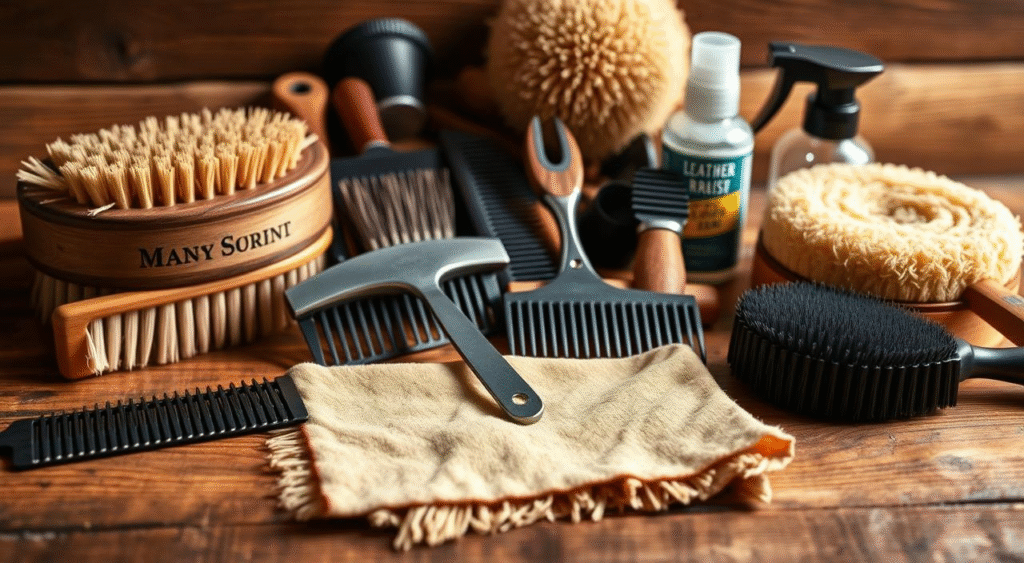
Here’s a simple breakdown you can keep in the tack room:
| Tool / Item | What it’s for | How often you’ll use it |
|---|---|---|
| Rubber curry comb | Loosens dirt, mud, and loose hair on fleshy areas | Daily |
| Dandy (stiff) brush | Flicks off mud and dried sweat | Daily |
| Body (soft) brush | Smooths coat, spreads oils, adds shine | Daily |
| Mane & tail comb/brush | Detangles hair (used gently to avoid breakage) | Daily / most days |
| Hoof pick with brush | Clears stones, mud, and manure from hooves | Every time you handle |
| Sponges/soft cloths | Face, eyes, nostrils, dock, and delicate areas | Daily |
| Fly spray (seasonal) | Protects from biting insects | As needed |
| Grooming tote or box | Keeps everything together and easy to carry | Always |
Worthwhile extras as your budget allows
- Shedding blade or grooming block – A lifesaver during spring shedding.
- Detangler spray – Helps keep tails full and prevents breakage.
- Rubber grooming mitt – Great for sensitive horses or bony areas.
- Sweat scraper – Essential after bathing or heavy work.
Store everything in a clean, dry grooming box or hanging caddy. Wipe down brushes regularly and toss anything cracked, rusty, or shedding bristles.
Daily grooming checklist for leisure horses
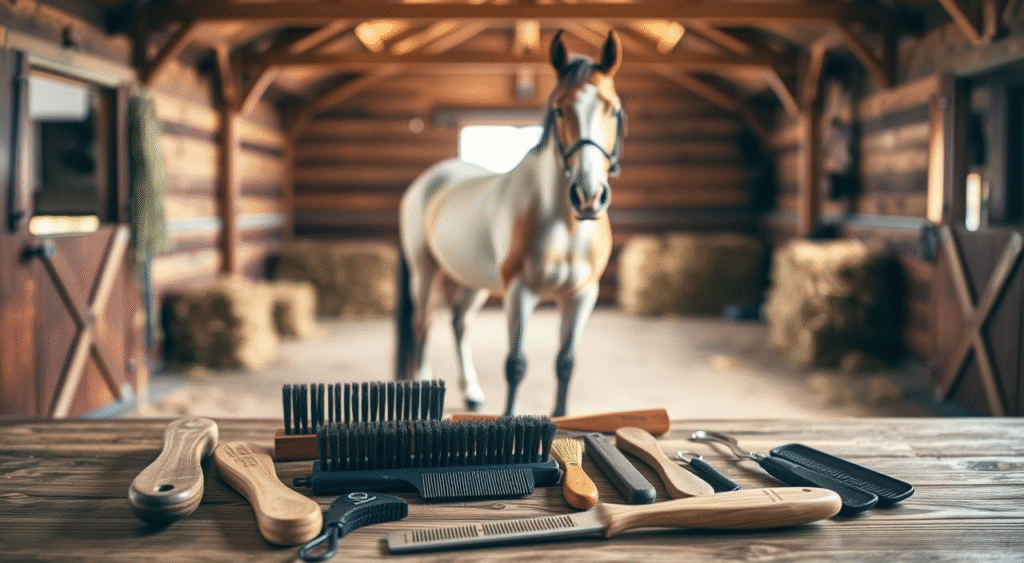
Think of your grooming as two touchpoints: a quick “check-in” and a more thorough session. You can swap morning/evening depending on your yard routine, but try to get both types of contact in each day.
Quick check (5–10 minutes)
Perfect for before turnout or a light ride:
- Say hello and observe
- Is your horse bright-eyed? Moving freely? Eating and drinking normally?
- Pick out all four hooves
- Remove stones, packed mud, and manure.
- Check for heat, thrush smell, or tenderness.
- Fast body brush
- Run a soft brush over neck, back, girth area, and flank.
- Flick off any mud or sweat where tack will sit.
- Check for obvious issues
- Look for new cuts, swelling, or rubs.
- Tidy mane and tail
- Finger-comb or lightly brush to remove straw, burrs, or knots.
This “mini” routine alone can prevent a lot of problems and only takes a few minutes.
Full daily groom (15–30 minutes)
Aim for at least one thorough session per day, especially on riding days.
1. Safe preparation
- Tie your horse with a quick-release knot or use cross-ties if appropriate.
- Choose a calm, non-slippery area with good light.
- Stand close to the horse’s body, facing the tail when working on the barrel, so you’re safer if they move.
2. Curry and loosen dirt
- Use a rubber curry comb in small circles on fleshy areas: neck, shoulder, barrel, rump.
- Avoid bony parts (spine, hips, legs) with the curry; use your hand or a soft brush there.
- Adjust pressure if your horse flinches—discomfort may signal soreness, not bad manners.
3. Flick away with a dandy brush
- Follow the direction of hair growth, using short, firm flicks to move dirt off the coat.
- Focus on muddy areas, legs, and dried sweat patches.
4. Finish with a body brush
- Use a softer brush to remove the last dust and add shine.
- Include the face and legs with extra care; use a separate smaller soft brush or cloth for the face.
5. Mane and tail care
- Start with your hands: pull out bedding, burrs, and knots gently.
- If needed, mist with detangler before brushing to avoid breaking hair.
- Always comb from the bottom up, holding sections of hair in your hand to reduce pulling on the roots.
6. Sensitive areas
Use clean sponges or cloths (ideally color-coded so the “under-tail” sponge never touches the face):
- Wipe around eyes and nostrils.
- Clean the dock and under the tail.
- Check girth area, elbows, and between hind legs for sores or chafing.
7. Final check
- Run your hands over legs, back, girth area, and along the spine.
- Check for heat, swelling, or flinching.
- Make a mental note (or jot it down) of any minor changes to watch.
Daily hoof care: protect the foundation
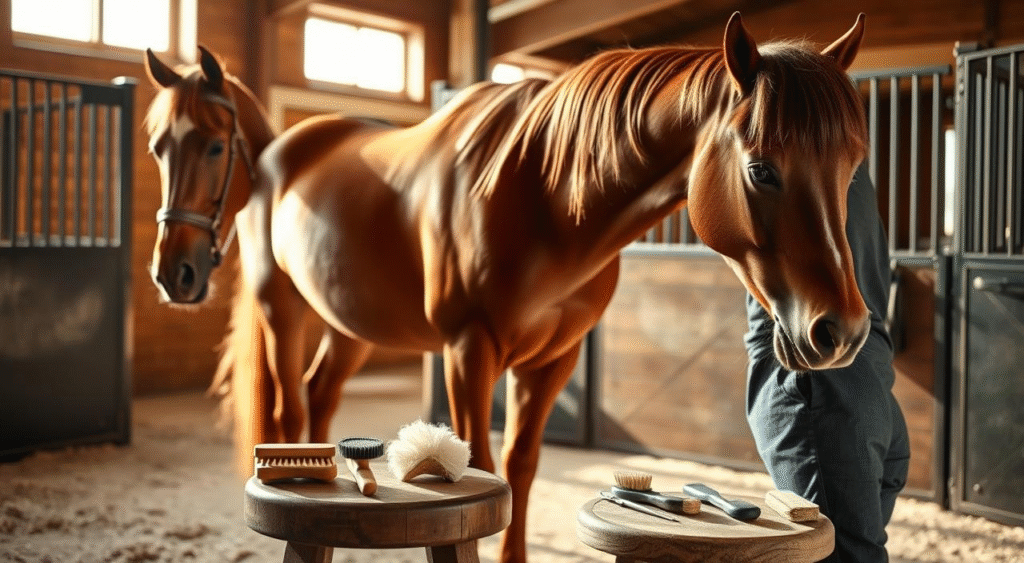
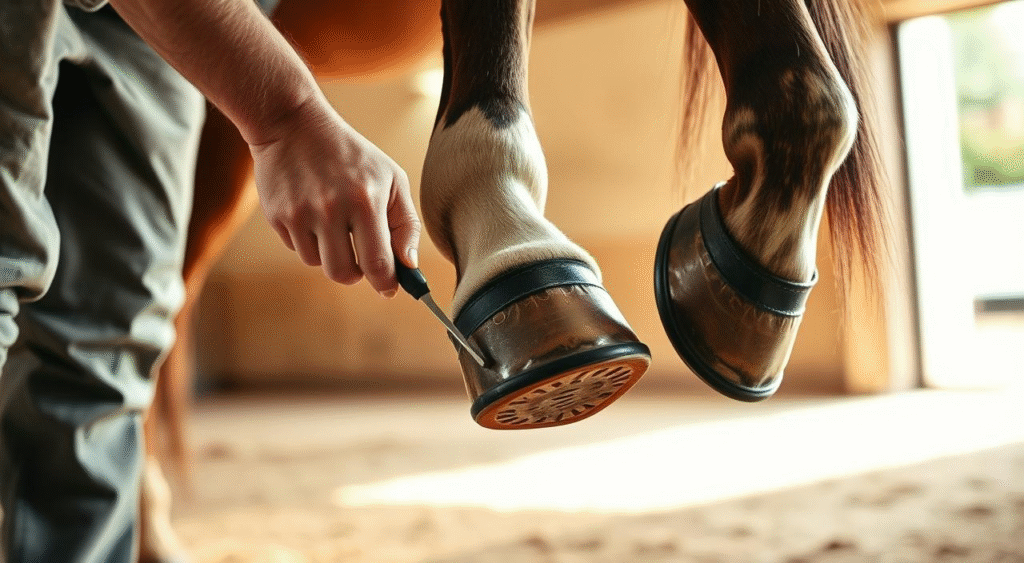
Hooves really are “no hoof, no horse.” A leisure horse might not jump big fences or gallop races, but they still carry weight, work on varied footing, and live in turnout where mud, stones, and manure can cause trouble.
How to pick out hooves safely
- Stand beside the shoulder or hip, facing the tail.
- Run your hand down the leg; say your usual cue (“foot,” “up”) as you gently squeeze the fetlock.
- Support the hoof with your hand or rest it on your thigh.
- With the hoof pick, work from heel to toe, cleaning the frog grooves and sole.
- Avoid stabbing the frog; you’re removing debris, not digging a trench.
- Brush away the last bits of dirt so you can see the whole sole clearly.
What to watch for, every day
- Thrush: black, smelly discharge in the frog; treat early and keep bedding dry.
- Cracks or chips: may signal overdue farrier work or poor footing.
- Heat or strong digital pulse: can be an early warning of laminitis—call your farrier or vet.
- Embedded stones: especially in white line or clefts.
A quick reference:
| Hoof Issue | Early signs | What to do next |
|---|---|---|
| Thrush | Black, foul-smelling frog, tenderness | Clean, apply thrush treatment, improve hygiene |
| Abscess | Sudden lameness, heat, strong pulse | Contact farrier; may need to be opened and poulticed |
| Laminitis (early) | Warm hooves, reluctance to move | Call vet immediately; manage diet and turnout |
Bathing and spot-cleaning without overdoing it
Leisure horses rarely need full baths every day, and over-washing can dry the skin. Use a simple rule of thumb:
- Daily: spot-clean sweat marks, mud, and sensitive areas with a damp cloth.
- Weekly or as needed: full bath after heavy work, very hot weather, or before a show/clinic.
When to spot-clean vs. bathe
- Spot-clean if: your horse has light sweat marks, mud splashes, or stable stains.
- Bath if: they’re salt-crusted, very sweaty, or caked in mud in warm weather.
For full baths:
- Use lukewarm water if possible.
- Choose a mild, horse-safe shampoo; dilute it.
- Rinse thoroughly—shampoo residue can cause itching.
- Scrape excess water with a sweat scraper and walk them until dry enough to rug or turn out safely.
In cold weather, sponge off saddle area only and use a cooler or rug to prevent chills.
Adjusting your grooming routine with the seasons
Your checklist stays mostly the same year-round, but the emphasis shifts.
Summer: sweat, sun, and insects
- Curry and brush more frequently to remove sweat and dust.
- Pay attention to girth, saddle area, and under the mane where sweat builds up.
- Add fly spray, masks, and careful inspection of bites and rubbed areas.
Winter: mud and long coats
- Avoid hosing unless necessary; use brushes and towels to remove dry mud.
- Focus on keeping legs as clean and dry as possible to prevent mud fever.
- If clipped, check rug rubs at shoulders, withers, and chest daily.
Spring and autumn: shedding and coat change
- Use shedding blades, blocks, or grooming mitts to loosen dead hair.
- Groom outdoors whenever you can; shedding hair gets everywhere.
- Keep an eye on body condition as grazing and workloads change.
Using grooming time to monitor overall health
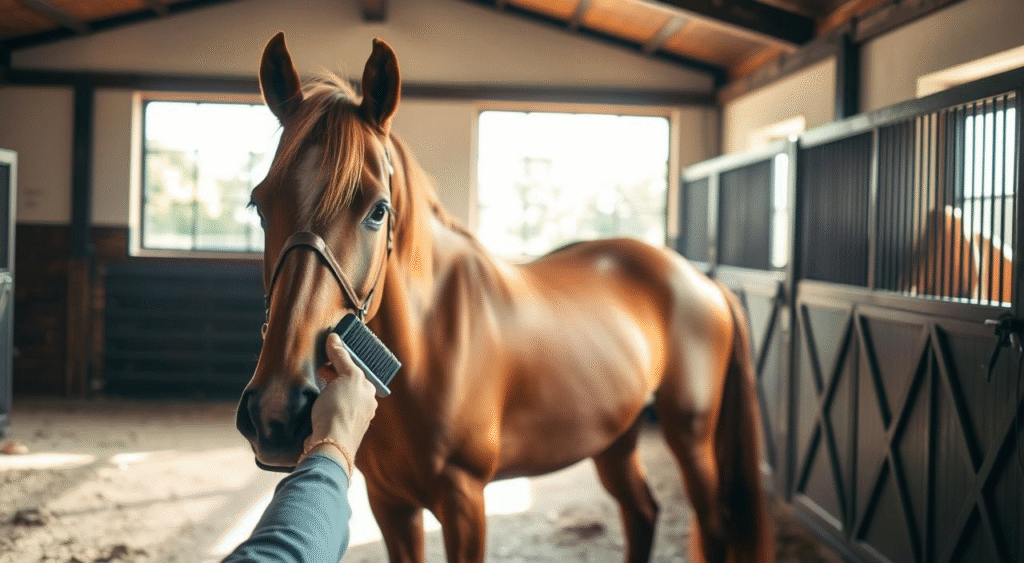
Grooming doubles as a daily “health scan.” While you brush, ask yourself:
- Are ribs more or less visible than last month?
- Has muscle along the back or hindquarters changed?
- Any new lumps, bumps, or sore spots?
- Is the coat losing shine, getting dandruffy, or patchy?
Make it a habit to:
- Track weight/condition every few weeks (many owners use a simple body condition score of 1–9).
- Note new lumps, scabs, or injuries in a notebook or phone.
- Mention anything that worries you to your vet, bodyworker, or instructor early rather than late.
Common grooming mistakes to avoid
Even with the best intentions, a few habits can cause problems. Steer clear of:
- Brushing against the hair with stiff brushes – leads to irritation and broken hairs.
- Using too much force with curry combs on bony areas – can make a sensitive horse defensive.
- Sharing dirty sponges between tail and face – spreads bacteria and irritates delicate skin.
- Skipping hooves “just this once” – the day you skip is often the day a stone is wedged in.
- Rushing a nervous horse – teaches them that grooming is something to endure, not enjoy.
If your horse fidgets, tail swishes, or pins ears during grooming, don’t just tell them off. Ask, “Is something hurting? Is this brush too hard? Is this area sore?”
Time-saving grooming strategies for busy owners
You don’t need an hour a day to do a good job. You need consistency and priorities.
- On very busy days:
- Check attitude and movement.
- Pick out all four feet.
- Brush and check saddle and girth area.
- Quick hand-run over legs and back for heat or swelling.
- Use your time in the stable wisely:
- Groom while the horse eats a small hay net.
- Keep your kit stocked and in the same place so you’re not hunting tools.
- Rotate “deep clean” jobs (full tail wash, sheath/udder clean, mane tidy) across the week instead of all at once.
A realistic aim for many leisure owners:
- 5–10 minutes check and tidy on quiet days.
- 20–30 minutes full groom when riding or lunging.
Conclusion: grooming as daily care and daily connection
A good daily grooming routine for your leisure horse is much more than a beauty session. It’s:
- Preventative healthcare
- Early-warning system
- Handling practice
- Quiet time together
Horses don’t care if the brushes match or the grooming box is Instagram-worthy. They care that your hands are kind, your routine is consistent, and you notice when something isn’t quite right. Start with a simple checklist, keep your kit basic but effective, and focus on being present. Over time, you won’t just see a cleaner horse—you’ll feel a deeper, more trusting partnership every time you pick up a brush.
FAQs: Grooming your leisure horse daily
How long should daily grooming take for a leisure horse?
For most horses, 15–30 minutes is ideal on riding days, and 5–15 minutes on quieter days. The important part is that you check hooves, saddle areas, and overall condition every day, even if the groom is short.
Is daily grooming really necessary if my horse lives out?
Yes. Horses living out still pick up mud, get minor knocks, and can develop skin issues under rugs. Daily grooming doesn’t have to be elaborate, but a quick check, hoof clean, and brush-over are very important.
How often should I wash my horse with shampoo?
In most cases, only when necessary: after heavy work in hot weather, before shows, or if your vet recommends it. Over-bathing can strip natural oils and dry the skin. Spot-clean with water or a damp cloth the rest of the time.
Can children safely help with daily grooming?
Absolutely, with supervision. Teach them:
- Where it’s safe to stand
- How to move quietly around the horse
- Which brushes to use where
Always keep an adult close by and choose a calm, patient horse for beginners.
What if my horse hates being groomed?
Dislike is often a sign of discomfort. Check:
- Are you using brushes that are too hard?
- Is the horse sore under the saddle, along the back, or in the girth area?
- Are there skin conditions making grooming painful?
Soften your tools, lighten your touch, and ask your vet or bodyworker to check for pain if the behavior doesn’t improve.
Should I groom before or after riding?
Ideally both:
- Before riding to ensure skin is clean where tack sits and to check for injuries.
- After riding to remove sweat, check for rubs, and cool the horse down. If time is tight, do a thorough groom either before or after and a quick check the other time.
Do I still need to groom if my horse is clipped and rugged?
Yes. Clipped and rugged horses often need more careful grooming:
- Rugs can rub shoulders, withers, and chest.
- Clipped coats can show skin issues earlier.
Daily grooming spots problems before they turn into sore, open areas.
What’s the single most important grooming habit if I’m very busy?
If you can only do one thing, pick out the hooves and run your hands over the horse’s body every day. You’ll catch stones, swelling, heat, and obvious injuries quickly—and that alone can prevent many bigger problems.