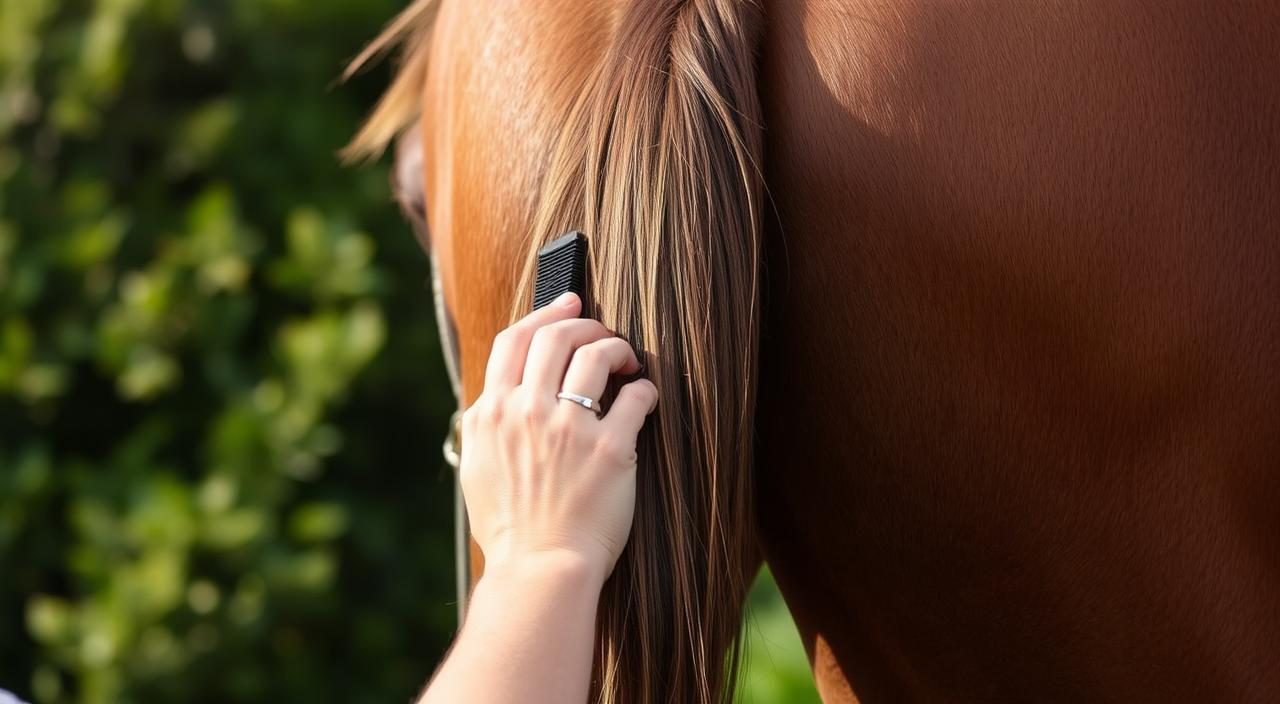
If you’ve ever come back from a long ride with burrs in your horse’s forelock and a tail that looks like a dreadlocked mop, you already know why mane and tail detangling routines for trail horses matter. Out on the trail, manes and tails are constantly dragged through brush, snagged on branches, and coated in dust, sweat, and mud. Left alone, that turns into painful mats, broken hair, and skin irritation.
A clean, tangle-free mane and tail aren’t just about looks. They’re about comfort, health, and safety. A horse whose tail is full of knots can’t swish flies properly. A badly tangled mane can hide rubs or even get caught in tack. With a simple, consistent routine, you can keep your trail horse’s mane and tail soft, strong, and easy to manage—even if you’re riding through rough country every weekend.
Let’s walk through practical, realistic mane and tail care you can actually keep up with, even when you’re busy.
Why trail horses need special mane & tail care
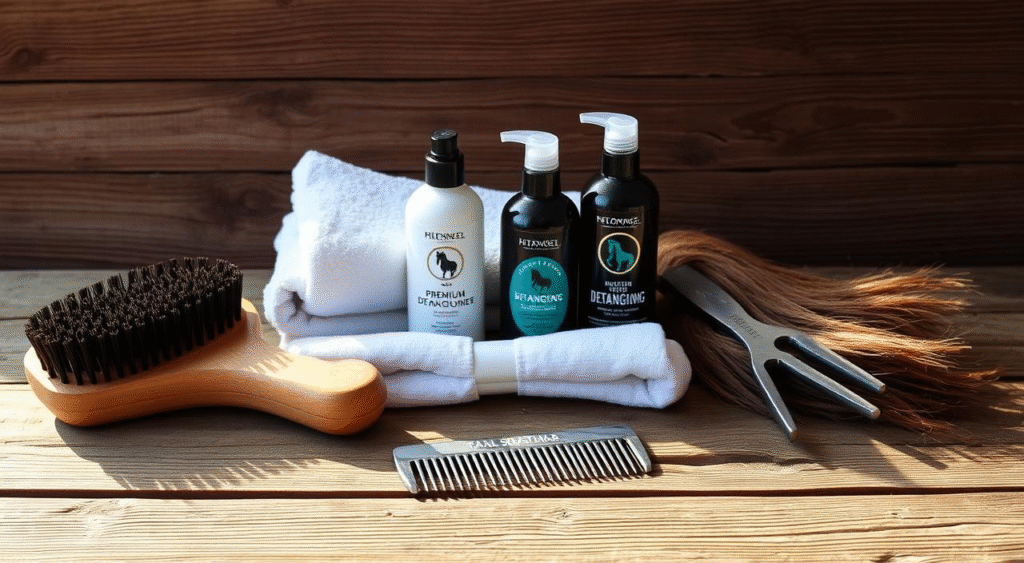
Trail horses work in conditions arena horses rarely see. They push through brush, squeeze past trees, cross creeks, and deal with wind, dust, and weather for hours at a time.
Environmental challenges on the trail
Out on the trail, your horse’s mane and tail are exposed to:
- Burrs and seed heads that cling and twist into hair
- Branches and brambles that snag and break strands
- Mud and creek water that dry into stiff, gritty tangles
- Sun and wind that dry the hair and make it brittle
On top of that, sweat and dust mix together and create a kind of “glue” that makes tangles worse.
How trail riding stresses equine hair
Every stride over uneven terrain makes the hair swing, rub, and twist:
- Saddlebags, breastcollars, and cruppers can rub manes and tail tops
- Long hours in the saddle means repeated friction
- Frequent hosing or washing after rides can strip natural oils if you’re not careful
All of this is manageable—if you’re proactive.
The real cost of neglecting mane & tail care
Letting things slide has very real consequences:
- Painful mats that pull on the skin
- Broken hair and thinning tails
- Higher risk of skin infections under tight mats
- Sensitive, itchy areas that make grooming and tacking up a battle
A little regular work is much kinder (and cheaper) than trying to fix a wrecked tail a few times a year.
Essential tools for mane & tail detangling (trail-friendly kit)
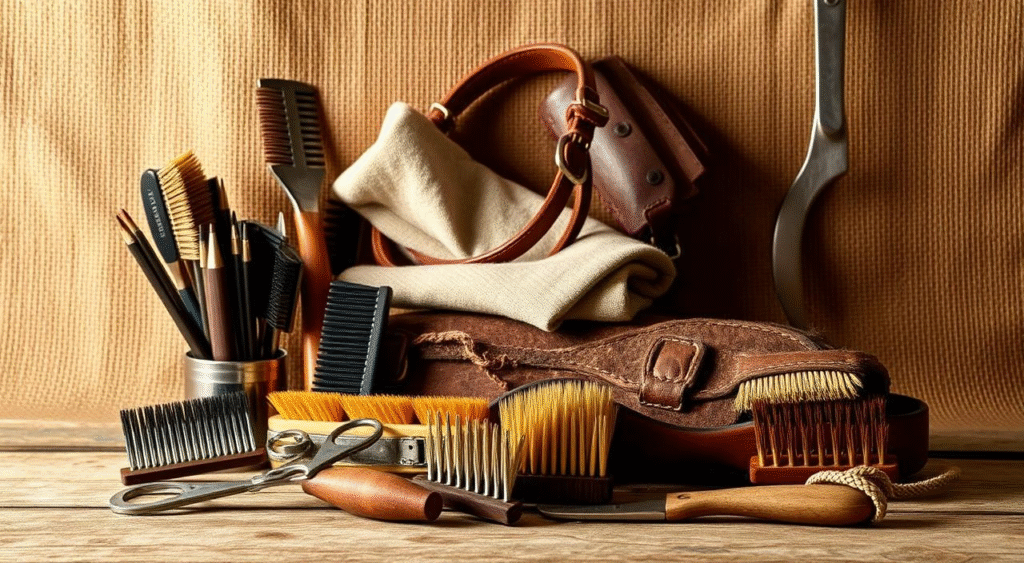
You don’t need a huge grooming box, but you do need the right tools that won’t tear hair out.
Must-have brushes and combs
For trail horses, look for:
- Wide-tooth comb – Use this after you’ve finger-separated knots and added detangler.
- Flexible detangling brush or paddle brush – Designed to bend rather than rip through snags.
- Rubber curry mitt – Great for loosening mud and dirt at the roots before you start detangling.
Metal mane combs and stiff human hairbrushes are often too harsh if used on dry, unprotected hair.
Handy detangling tools for trail conditions
Because trail hair tangles are often mixed with debris, it helps to have:
- Good detangling spray or serum – Reduces friction so knots slide apart instead of snapping.
- Small blunt-nose scissors – Only for emergency burr surgery when hair is truly trapped.
- Soft cloth or small sponge – For wiping out mud at the roots or near sensitive skin.
Portable grooming kit for the trailer or saddle bags
You’ll thank yourself later if you keep a mini kit ready for trail days:
| Item | Why it helps on the trail |
|---|---|
| Travel-size detangling spray | Loosens burrs and knots before they get bad |
| Small detangling brush/comb | Quick fixes at the trailer after your ride |
| Rubber bands or mane ties | Fast protective braids for manes |
| Soft rag or towel | Wipe sweat, mud, or sap from hair and skin |
A few small, well-chosen tools will save you from fighting with a full-blown mess later.
Choosing the best detangler products for trail horses
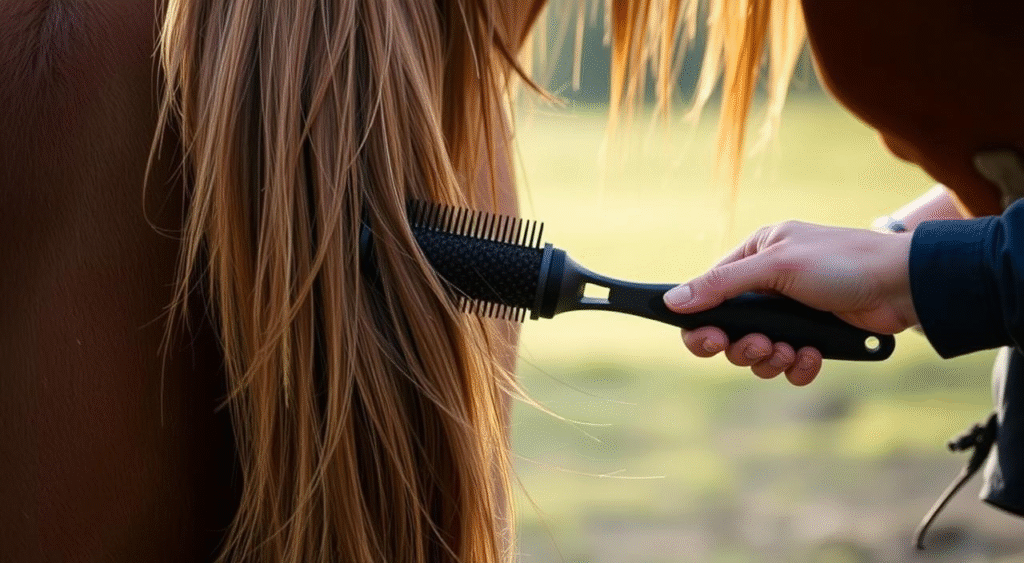
Not all detanglers are created equal. Trail horses need products that can handle sweat, dust, and brush without making the hair greasy or attracting more dirt.
Commercial spray detanglers that can handle trails
Look for:
- Slip without slime – Hair should feel slick and smooth, not oily.
- Dust-resistant – Some cheaper sprays act like a magnet for dust.
- Safe for regular use – Gentle enough not to dry hair with frequent application.
Many riders like silicone-based detanglers for trail horses because they reduce friction and help prevent future tangles, not just fix existing ones.
Natural and DIY options
If you prefer a softer, more natural approach, you can mix your own:
- A small amount of coconut oil or jojoba oil diluted in warm water in a spray bottle
- A dash of aloe vera gel mixed with water for a light conditioning mist
Always test on a small section first and avoid over-oiling; too much oil can collect dirt and make the hair heavy.
Leave-in conditioners: extra protection that saves brushing time
For trail horses that see a lot of use, a leave-in conditioner is your friend:
- Use on tails that tend to mat or rub against boots and brush
- Great for thick manes that get hot and sweaty under reins or breastplates
- Pick water-resistant formulas if you ride through creeks or in rain
The right leave-in means fewer full detangling sessions and less hair loss over time.
Pre-ride protection: set the mane & tail up for success
The easiest knots to deal with are the ones that never form.
Simple braiding techniques for trail rides
Braiding isn’t just for shows. Done correctly, it protects:
- Mane:
- Loose running braid along the crest
- A few big, low-tension braids instead of many tiny tight ones
- Tail:
- Braid only from the bottom of the dock downward, never tightly around the tail bone
- Secure with soft bands or fabric ties, not tight rubber bands that cut hair
The goal is protection, not show-ring perfection. Braids should be comfortable and easy to undo, not tight and fussy.
Tail bags and wraps for active trail horses
If your horse has a long, thick tail and you ride through brush a lot, a tail bag is worth considering:
- Keeps hair cleaner and less prone to burrs
- Reduces breakage from branches and rubbing
- Best for horses that don’t swish excessively (you don’t want them tangled in the bag itself)
Always secure tail bags gently and check them regularly for rubs.
Quick pre-ride sprays
Before you mount up:
- Lightly mist mane and tail with detangler or leave-in conditioner
- Focus on the underside of the mane and the mid-lengths of the tail
You’re not trying to drown the hair—just add enough slip so anything it brushes against is less likely to snag.
Mane & tail detangling routines for trail horses (daily, weekly, monthly)
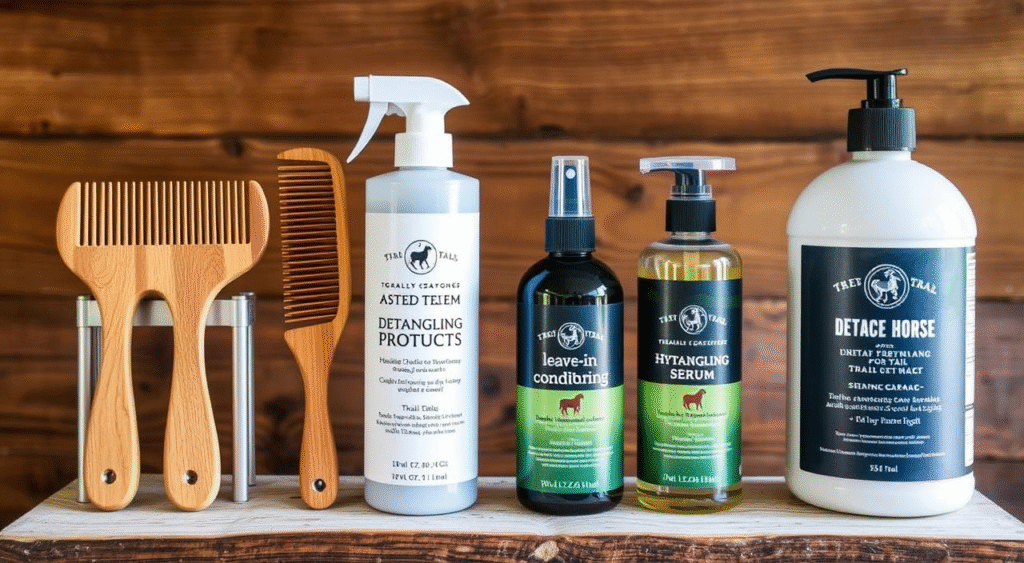
A routine doesn’t have to be complicated. The magic is in consistency, not perfection.
Daily (or after every ride): 5–10-minute quick routine
After a trail ride, while your horse is cooling down or munching hay:
- Check for debris
- Run your fingers through the mane and tail to find burrs, twigs, and knots.
- Mist lightly with detangler where needed
- Finger-separate tangles first
- Use a wide-tooth comb or detangling brush, starting at the bottom and working upward
If you’re short on time, focus on:
- The bottom 10–15 cm (4–6 inches) of the tail
- The section of mane under the bridle reins or breastplate
Those are the areas that tangle the fastest and break the most.
Weekly: 20–30-minute deeper session
Once a week, aim for a more thorough grooming:
- Detangle mane and tail completely
- Apply a conditioning spray or leave-in and work it through
- Check the tailbone and crest for rubs, scurf, or soreness
- Look for signs of breakage—short, snapped hairs, thinning sections
This is your chance to spot early problems before they become chronic.
Monthly: full check-in and tidy up
Once a month (or so):
- Trim split hairs at the very bottom of the tail if needed
- Tidy stray long hairs that catch under tack
- Reassess your routine:
- Are you washing too often?
- Is the mane thinner than it used to be?
- Do you need to braid more, or less?
This is also a good time to adjust things for the season (more on that in a moment).
Step-by-step: detangling a severely matted tail
If you haul your trail horse out of the field and find the tail looks like it’s been through a tornado… take a breath. You can save most of it with patience.
1. Assess before you attack
- Don’t just grab a brush and start yanking.
- Look for burr clusters, mud balls, or sections tight to the skin.
- Ask yourself honestly: Is this safe to do alone, or should I get help from an experienced groomer or trainer?
2. Soften and prep the hair
- Tie your horse safely and ensure they can move their feet if they get uncomfortable.
- Generously coat the matted sections with detangler or an oil-based product.
- Let it sit for 10–15 minutes to soak in.
For extreme mats, you can wrap the treated section in plastic or a damp towel for a short period to help the product penetrate.
3. Work in tiny sections from the bottom up
- Start with the very bottom of the tail, not near the dock.
- Use your fingers first, gently pulling apart small strands.
- Only once a section is mostly loosened should you bring in a comb or brush.
- Always comb from the ends upward, holding the hair above the knot so you’re not pulling at the roots.
Progress might be painfully slow at first. That’s normal. Slow and gentle saves hair; fast and angry breaks it.
4. Know when to use scissors (and when to stop)
Sometimes:
- A clump of burrs is welded to hair so tightly it’s not worth the horse’s discomfort.
- In those cases, carefully cut away as little as possible, and never blindly near the tail bone.
If you’re not sure, get help. It’s better to accept a shorter tail this season than to injure your horse or create lifelong sensitivity to handling.
5. Prevent a repeat
Once the tail is free again:
- Apply a good leave-in conditioner or detangler.
- Consider braiding and/or using a tail bag on future trail rides.
- Build a habit of a 5-minute post-ride check so mats never reach this stage again.
Tackling common trail debris in mane and tail
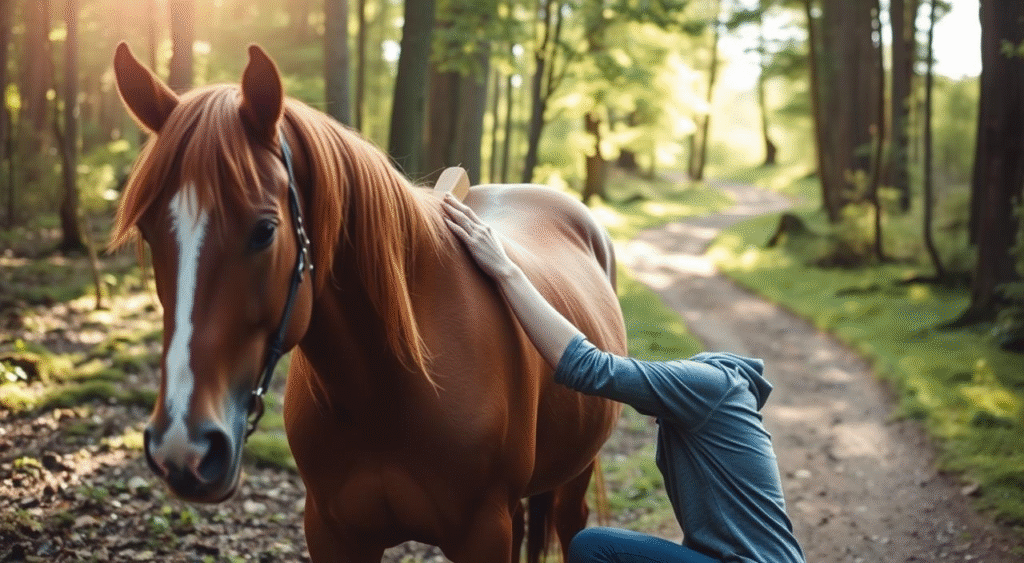
Most trail riders deal with the same three enemies: burrs, mud, and sap.
Burrs and seed heads
- Never rip them out dry.
- Soak with detangler or oil.
- Pinch the burr in one hand and gently slide it down the strand, rather than pulling sideways.
- Sometimes breaking the burr apart with your fingers first helps it release.
Mud and dirt build-up
- Let thick mud dry completely before you tackle it. Wet mud just smears.
- Use a curry mitt at the roots and a brush or fingers through the lengths.
- If you must wash, follow with a conditioner to prevent crisp, brittle hair.
Sap and sticky messes
- A small amount of vegetable oil, baby oil, or commercial sap remover can help dissolve sticky spots.
- Apply to the sticky patch, work it in with fingers, then gently comb out.
- Wash or wipe the area afterward so oil doesn’t attract more dirt.
Seasonal mane & tail detangling routines for trail horses
Your horse’s hair doesn’t behave the same in July as it does in January, so your routine shouldn’t either.
Summer: sun, sweat, and insects
- Use light conditioning sprays that don’t overheat the skin under the mane.
- Protect tails from bleaching and drying with UV-protective sprays or by keeping them conditioned.
- If you’re using fly spray, apply it after your detangler so you’re not diluting either product.
Winter: brittle hair and static
- Avoid full baths unless you have warm water and a safe drying setup.
- Rely more on leave-in conditioners and thorough grooming than frequent washing.
- Watch for static in very dry conditions; a bit of conditioner on your hands or brush can help.
Spring and autumn: shedding and weather swings
- Extra hair means more tangles; groom a bit more often.
- Be mindful of rugs and sheets rubbing the mane and tail head—adjust fit if you see broken hairs.
- Damp weather plus long hair can equal more matting. Don’t skip those quick detangling sessions.
Nutrition: the invisible foundation of great manes and tails
No detangler in the world can fully fix a poor diet.
Key nutrients for strong, resilient hair
- Quality protein – Hair is mostly protein; your horse needs enough to grow it.
- Omega-3 fatty acids – Support healthy skin and coat (often from flax or fish oil).
- Biotin and B-vitamins – Involved in hair growth and hoof health.
- Trace minerals like zinc and copper – Important for coat and hair quality.
If your trail horse’s mane and tail are consistently dry, thin, or brittle, talk to your vet or an equine nutritionist. Sometimes a tweak in the diet does more than any grooming product.
Hydration matters too
A dehydrated horse often has:
- Dull hair
- Flaky skin
- Poor elasticity and shine
Plenty of clean water and appropriate electrolytes (when needed) support the coat as much as they support muscles and performance.
Fixing common mane & tail problems in trail horses
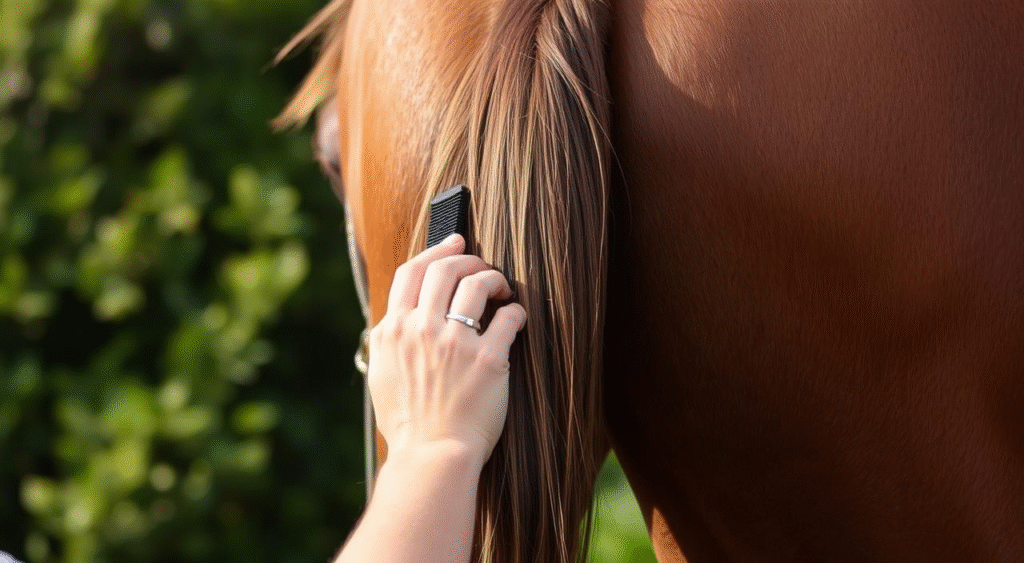
Even with good routines, trail horses pick up a few battle scars.
Rubbing from tack and trail gear
If you notice rubbed patches:
- Check the fit and placement of breastcollars, martingales, cruppers, and saddle pads.
- Pad or adjust areas where mane or tail gets pinched or rubbed.
- Treat rubbed skin with a soothing, non-greasy cream and keep hair detangled so it doesn’t twist and pull more.
Breakage and thinning tails
Common culprits:
- Over-brushing dry hair
- Harsh, tight braids left in too long
- Tail being sat on, stepped on, or caught in fences
Solutions:
- Always detangle with product, not on dry hair.
- Use looser braids and redo them regularly.
- Consider trimming the very bottom of the tail to keep it from dragging and being stepped on.
Slow regrowth after damage
If your horse has already lost mane or tail:
- Protect what’s left with gentle grooming and good products.
- Support from the inside with a balanced diet and, if advised, a hair/hoof supplement.
- Be patient—mane and tail growth are slow and happen over months, not weeks.
Time-saving grooming tips for busy trail riders
You don’t need to spend an hour a day to keep up good mane and tail detangling routines for trail horses.
- Keep a small kit at the trailer – Detangler, brush, and rag ready to go.
- Make detangling part of your cool-down routine while your horse rests.
- Use multi-tasking products (e.g., conditioning detanglers that add shine and repel dust).
- Do a thorough detangle once or twice a week, and just quick checks after rides in between.
A few minutes consistently beats a few hours occasionally.
Conclusion: long rides, healthy hair, happy horse
A trail horse’s mane and tail work as hard as the rest of the body. They shield the neck from insects and weather, help with fly-swishing, and tell everyone at the trailhead that this is a horse someone truly cares for.
When you build simple, realistic mane and tail detangling routines for trail horses into your week, you get:
- Less breakage and cleaner, thicker hair
- Fewer painful mats and skin irritations
- Quicker post-ride clean-ups
- Better chances of spotting health issues early
- And a quieter, more relaxed horse who enjoys being handled
You don’t need a fancy barn or a show groom. Just good tools, thoughtful products, and a few steady habits. Your future self—and your horse—will thank you every time you untack after a long, beautiful ride and find a mane and tail that are still easy to run your fingers through.
FAQs: Mane & tail detangling routines for trail horses
How often should I detangle my trail horse’s mane and tail?
Ideally, give the mane and tail a quick check after every ride and a more thorough detangle at least once a week. Horses with very thick or long hair, or those ridden on brushy trails, may need more frequent attention.
What’s the best way to detangle without breaking hair?
Always start with detangler or conditioner on the hair—never rip through dry knots. Work in small sections from the bottom up, using your fingers first, then a wide-tooth comb or flexible brush.
Should I braid my trail horse’s mane for every ride?
Not necessarily, but braiding can help on trails with lots of brush or wind. Use loose, comfortable braids and avoid very tight, small braids that stress the roots. Never leave tight braids in for long periods between rides.
Are tail bags safe for trail horses?
They can be, if used correctly. Tail bags work best on horses that don’t step on or excessively swish their tails. Always attach bags below the tail bone, check for rubs, and make sure they won’t get snagged on thick brush.
What products should I avoid on my horse’s mane and tail?
Avoid harsh human shampoos, strong detergents, and very drying alcohol-based sprays. Also be cautious about over-using oils, which can attract dirt and weigh the hair down if applied too heavily.
How can I keep burrs out of my horse’s mane and tail on the trail?
Prevention helps: light braiding, a quick mist of detangler before riding, and choosing routes that avoid heavy burr patches. After the ride, remove any burrs as soon as you find them so they don’t work deeper into the hair.
My trail horse’s tail is thin—will detangling routines help it grow thicker?
Gentle, consistent detangling routines will help protect what hair you have, reduce breakage, and support healthier growth over time. Combine that with a good diet, regular grooming, and avoiding tight braids or harsh products, and you’ll give the tail the best chance to fill out.