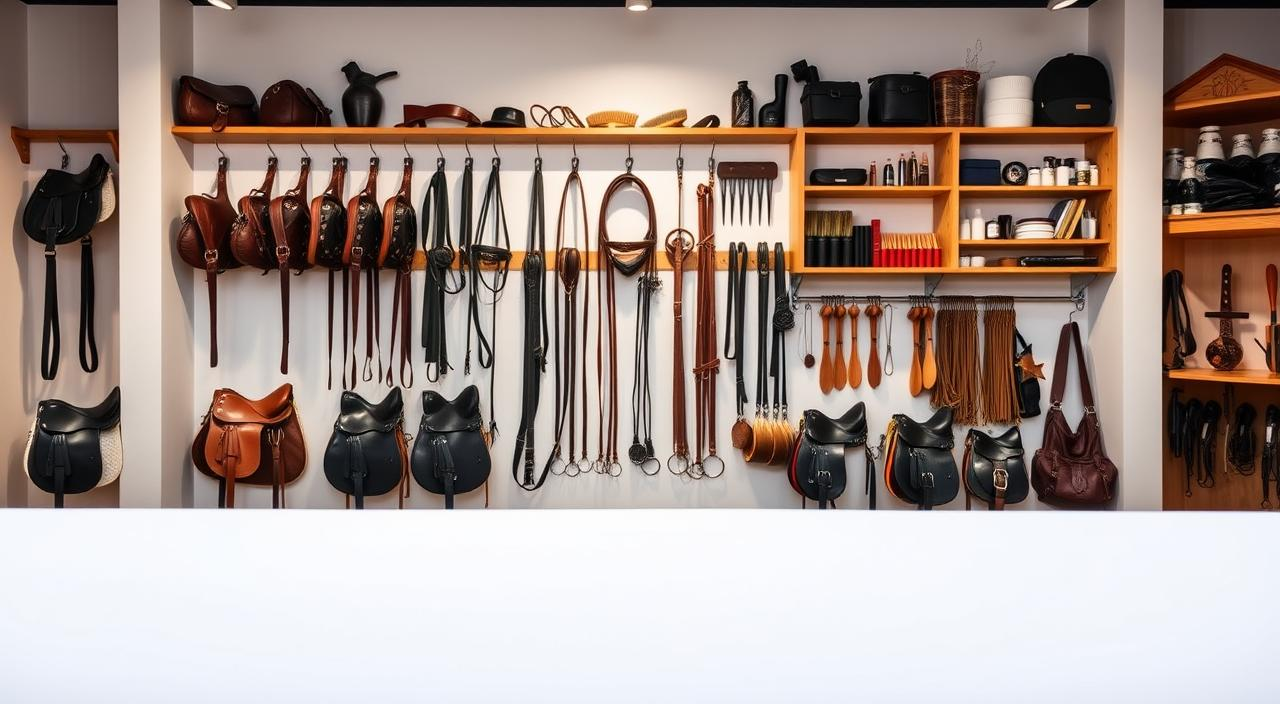
As an equestrian, you know how vital it is to care for your gear. After a long ride, it’s important to dry and store your saddle pads and girths right. This can greatly extend their life.
According to Riding Warehouse Staff, the right care and storage can really help your equipment last longer. By using saddle pad storage solutions effectively, you keep your gear tidy and in top shape.
It’s key to dry and store your equestrian gear well to keep it in great condition. This not only stops damage but also makes sure your gear is ready for your next ride.
Why Proper Drying and Storage of Equestrian Gear Matters
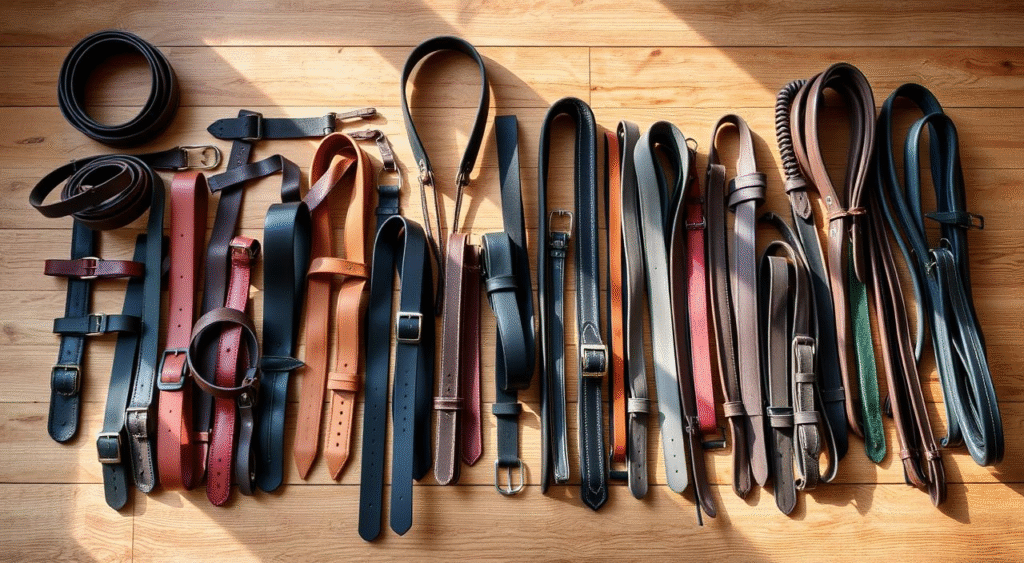
Drying and storing your saddle pads and girths right is key for any serious equestrian. It affects both the gear’s life and your horse’s health. Good care keeps your gear ready for the next time you use it.
Proper drying and storage have several key benefits. They extend your equipment’s life, save you money, and keep your horse healthy.
Impact on Equipment Lifespan
Correct drying and storage extend your gear’s life. Moisture can cause mold and mildew, damaging materials. Keeping your gear dry stops this damage.
Financial Benefits of Proper Maintenance
Proper care saves you money over time. It makes your saddle pads and girths last longer, so you don’t need to replace them as often. This cuts down your costs.
Preventing Skin Issues for Your Horse
Properly dried and stored gear also keeps your horse’s skin healthy. Sweat and dirt on damp gear can irritate and infect your horse. Keeping your tack clean is vital for your horse’s health.
- Regularly cleaning and drying your gear
- Storing equipment in a well-ventilated area
- Organizing your horse tack to ensure everything has its place
By following these practices, you not only keep your girths and other gear in good shape. You also help create a healthier environment for your horse.
Understanding Your Saddle Pad and Girth Materials
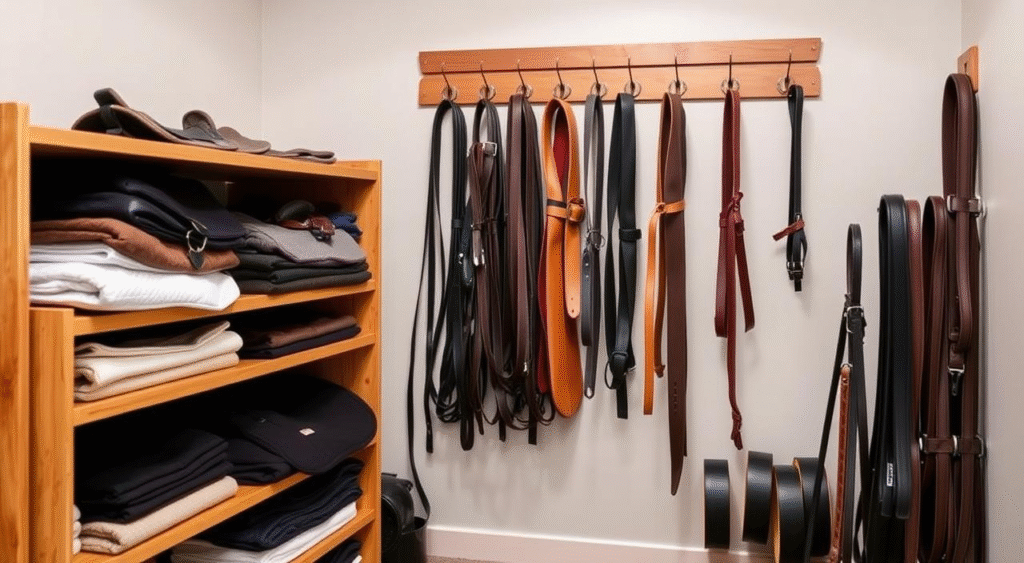
To take good care of your saddle pads and girths, you need to know what they’re made of. Each material has its own care needs. Using the wrong methods can harm your gear.
Synthetic Saddle Pad Care
Synthetic saddle pads are often made from polyester or nylon. These are tough and easy to clean. Just wipe them with a damp cloth after each use and let them air dry.
Stay away from harsh chemicals. They can break down the material.
Natural Fiber Saddle Pad Maintenance
Natural fiber saddle pads, like wool or cotton, need gentle care. Gently brush them to remove dirt and sweat. For a deeper clean, wash them by hand with mild soap.
Make sure they dry completely. This stops mold and mildew.
Leather, Neoprene, and String Girth Care Differences
Girths made from different materials need different care. Leather girths need regular conditioning to stay soft. Neoprene girths can be cleaned with soap and water. String girths need gentle cleaning to avoid fraying.
Knowing how to care for your saddle pad and girth materials helps keep them in top shape. This ensures your horse stays comfortable and supported.
Post-Ride Immediate Care Routine
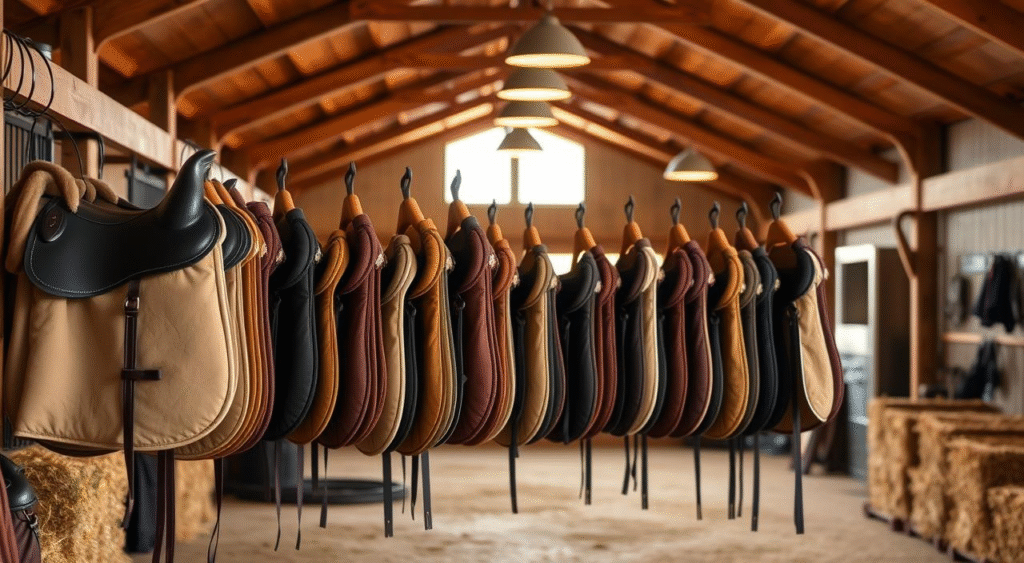
After a ride, it’s key to take care of your saddle pads and girths. The steps you take right after can really help them last longer and work better.
Removing Sweat and Dirt Promptly
Get sweat and dirt off your gear as soon as you can. Sweat can lead to bad smells and harm the materials. Use a soft brush or cloth to clean off dirt and hair. Then, use a damp cloth to wipe away sweat.
Initial Assessment for Damage
After cleaning, check your gear for damage. Look for worn spots, tears, or loose stitching. Finding damage early helps fix it before it gets worse, keeping your gear in top shape.
Quick-Drying Techniques in the Barn
Use fans or open windows to get air moving. For leather girths, apply conditioner to keep it soft while it dries. For other materials, lay them out to let air get to all sides, drying them faster.
Effective Cleaning Methods Before Storage
Before you store your saddle pads and girths, make sure to clean them well. This stops bacteria and bad smells. Cleaning them often keeps your gear in top shape.
Daily Quick Clean Techniques
After each ride, quickly brush off dirt from your gear. For synthetic stuff, a damp cloth works great. Natural fibers need a soft brush to avoid damage.
Weekly Cleaning Schedules
Once a week, do a deeper clean. Use a mild detergent that fits the material. For example, neoprene girths need a gentle soap mix. Leather girths might need a special cleaner.
Monthly Deep Clean Methods
Every month, do a deep clean by soaking them in the right cleaning solution. Rinse well and let them dry before storing. This stops mold and mildew.
By cleaning your gear regularly, it stays in great shape. Cleaning before storage is a must for keeping your equestrian gear ready for use.
Natural vs. Artificial Drying Methods
Equestrians have two main ways to dry saddle pads and girths: natural and artificial methods. Choosing the right method can greatly affect your gear’s life and quality.
Sun Drying: Pros and Cons
Sun drying uses sunlight to dry your gear. The main benefit is it kills bacteria and other microorganisms that can harm your equipment.
But, sun drying has downsides. Direct sunlight can fade colors and damage materials, mainly synthetic or treated ones.
“Sun drying is an effective method, but it requires careful monitoring to prevent overexposure.”
Indoor Drying Solutions
Indoor drying is for those who can’t or don’t want to dry outdoors. It dries your gear in a well-ventilated area, away from sunlight.
Indoor drying is kinder to materials and keeps colors and quality intact. But, it might take longer and need fans or other drying aids.
| Drying Method | Pros | Cons |
|---|---|---|
| Sun Drying | Effective against bacteria, natural | Can cause fading, material degradation |
| Indoor Drying | Gentle on materials, preserves color | May require more time, additional aids |
Using Fans and Dehumidifiers
Fans and dehumidifiers can boost drying, indoors or outdoors. Fans speed up air circulation, while dehumidifiers cut down air moisture. This stops mold and mildew.
Avoiding Common Drying Mistakes
Many equestrians forget to dry their gear fully before storing. This can cause mold, mildew, and bad smells. Always check your gear well before storing it.
Knowing the good and bad of natural and artificial drying helps you choose the best way. This ensures your saddle pads and girths stay in top shape for a long time.
How to Store Saddle Pads and Girths Properly
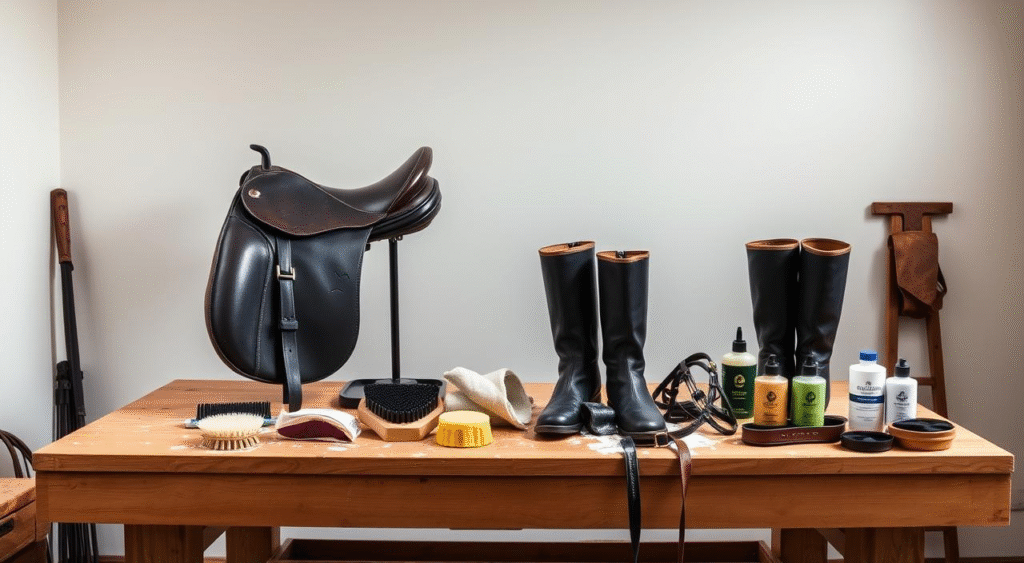
To keep your equestrian gear in top shape, it’s key to know how to store saddle pads and girths right. Storing them properly not only makes them last longer but also keeps them safe from damage and keeps them clean.
Short-Term Storage Between Rides
For short-term storage, make sure to dry your saddle pads and girths well after each ride. You can hang them up or lay them flat in a place with good air flow. A fan can help dry them faster.
Long-Term Storage Solutions
For long-term storage, use breathable bags or containers to keep your gear clean and dry. Store them in a cool, dry spot, away from sunlight. Labeling your storage containers makes it easier to find what you need.
Folding vs. Hanging: What’s Best for Different Materials
The way you store your gear depends on its material. For example, gel or foam saddle pads should be stored flat to avoid creases. On the other hand, leather girths should be hung to keep their shape. Here are some storage tips:
- Folding: Good for synthetic or wool saddle pads that don’t crease or lose shape.
- Hanging: Best for leather or neoprene girths that need to keep their form.
By following these storage tips, you can make your saddle pads and girths last longer. This ensures they’re ready for your next ride.
Optimal Storage Conditions to Prevent Damage
To keep your saddle pads and girths in good shape, the right storage is key. Think about several things that can help or hurt your equestrian gear.
Temperature and Humidity Considerations
It’s important to store your gear in a place with steady temperature and humidity. Too hot or too cold can damage materials. And high humidity can cause mold and mildew. Try to keep the temperature between 60°F to 70°F (15°C to 21°C) and humidity below 60%.
Protection from Pests and Mold
Pests and mold can really harm your gear. Use pest control and keep the storage area clean and dry. Check your gear often for mold or pests.
Ventilation Requirements for Different Materials
Each material needs its own ventilation level. Leather needs air to avoid moisture, while synthetic materials might need less. Make sure your storage area has the right amount of air for what you’re storing.
| Material | Ventilation Requirement | Special Consideration |
|---|---|---|
| Leather | High | Condition regularly |
| Synthetic | Medium | Clean regularly |
| Natural Fiber | High | Avoid direct sunlight |
Storage Equipment and Tools Worth Investing In
Organizing your equestrian gear is more than just tossing everything into a tack room. You need the right storage equipment and tools to keep your gear in top shape. This not only preserves the quality but also makes it easier to find what you need.
Racks, Hangers, and Specialized Storage Systems
Using racks, hangers, and specialized systems can greatly improve your gear’s organization. For example, saddle racks keep your saddles off the floor, preventing damage. Girth hangers help store girths without creasing or stretching them out. Specialized systems for saddle pads keep your gear organized and easy to access.
Budget-Friendly DIY Storage Solutions
Looking for budget-friendly options? Consider DIY solutions. Repurposing old pallets can create storage racks for your gear. PVC pipes can make a hanging system for girths. Bins and baskets are great for smaller items like stirrups and spurs. These DIY options are affordable and can meet your specific needs.
Best Containers for Dust-Free Storage
Keeping your gear in dust-free containers is key to its quality. Choose containers that are airtight and won’t transfer dust. Plastic bins with lids or fabric storage bags are good choices. Always clean your gear before storing to prevent damage from dirt and sweat.
| Storage Solution | Benefits | Cost |
|---|---|---|
| Saddle Racks | Keeps saddles off the floor, prevents damage | $20-$50 |
| Girth Hangers | Prevents girths from getting creased or stretched | $10-$30 |
| DIY Storage Racks | Cost-effective, customizable | $0-$20 |
| Airtight Containers | Keeps gear dust-free, maintains quality | $10-$50 |
Organizing Your Tack Room for Efficiency
Creating an organized tack room is a simple yet effective way to enhance your overall horse care experience. A well-organized tack room not only saves time but also helps in maintaining your equipment in good condition.
Space-Saving Storage Ideas
To maximize space in your tack room, consider using wall-mounted racks for saddles and bridles. You can also utilize under-shelf baskets for storing smaller items like brushes and grooming tools.
- Install hooks for hanging girths and reins.
- Use stackable containers for storing items like blankets and leg wraps.
- Invest in a saddle rack that can hold multiple saddles.
Categorizing Equipment for Easy Access
Categorizing your equipment makes it easier to find what you need quickly. Group similar items together, such as all grooming tools or all riding equipment.
“A place for everything, and everything in its place.” This old adage is very relevant for organizing your tack room.
Labeling Systems for Multiple Horses or Riders
If you have multiple horses or riders, a labeling system can be invaluable. Use labels or color-coding to differentiate between equipment for different horses or riders.
| Labeling Method | Benefits |
|---|---|
| Color-coding | Easy to implement, visually distinct |
| Label makers | Clear and durable, can be used on various materials |
By implementing these strategies, you can create a tack room that is not only efficient but also easy to maintain.
Travel and Competition Storage Solutions
Equestrians know that storing riding equipment right is key, even when traveling or competing. The big challenge is keeping your gear in top shape while on the move.
Portable Drying Options at Shows
At competitions, drying your saddle pads and girths well is a must to avoid moisture. Use portable drying racks or moisture-wicking bags to keep them dry. These are made to be small and light, perfect for carrying around.
Space-Efficient Packing for Horse Trailers
It’s important to use space wisely in your horse trailer for efficient travel. Use stackable storage containers and hanging organizers to keep things organized and easy to find. This not only saves room but also helps keep your gear in good shape.
Protecting Gear During Transport
Keeping your equestrian gear safe during transport is as important as storing it right. Use padded bags or protective covers to shield it from scratches and damage. Also, make sure to secure your gear to stop it from moving during transport.
By using these travel and competition storage solutions, your equestrian gear will stay in great shape. It will be ready for your next ride.
Troubleshooting Common Storage Problems
Storing your gear right is more than just putting it away. It’s about keeping it in top shape. You might face problems with your saddle pads and girths, even with the best care. Let’s look at some common issues and how to fix them.
Dealing with Persistent Odors
Getting rid of smells in your equestrian gear can be tough. First, clean the items well before you store them. Make a paste with baking soda and water, and apply it to the smelly spots. Let it sit for a few hours, then rinse it off.
If the smell is really bad, use special cleaning products made for equestrian gear. These products are designed to get rid of odors.
Addressing Mold and Mildew Issues
Mold and mildew love damp places, so keep your storage area dry and well-ventilated. If you see mold or mildew, clean it gently with a soft brush and mild detergent. Rinse well and let it dry completely before storing it again.
Using a dehumidifier in your storage area can help prevent mold and mildew from coming back.
Restoring Stiffened or Damaged Equipment
Fixing stiff or damaged gear is possible with the right care. For leather girths, use a good leather conditioner to make them soft again. For other materials, clean them gently and then use a fabric conditioner.
Always test any fixing method on a small, hidden area first. This way, you avoid making the damage worse.
When to Replace vs. When to Restore
Choosing to replace or fix your gear depends on the damage and its condition. If the damage is just cosmetic and doesn’t affect how it works, fixing it might be best. But if the damage is serious and affects safety or performance, it’s safer to get a new one.
Think about the cost and effort of fixing it versus buying a new one. This will help you decide what’s best for your gear.
Creating a Sustainable Saddle Pad and Girth Care System
Creating a sustainable care system for your saddle pads and girths is key. It helps extend their life and cuts down on waste. By organizing your equestrian gear well, you keep it in top shape for longer.
Begin with simple tips for storing horse riding equipment. Store your saddle pads and girths in a dry, well-ventilated spot, away from sunlight. Think about using DIY saddle pad storage ideas, like old pallets or crates, for a unique setup.
Good equestrian gear organization means regular cleaning and upkeep. This stops dirt and bacteria buildup, which can harm your gear. A sustainable care system makes managing your equestrian gear more efficient and cost-effective.