How to clean condition a leather bridle? “The horse is a mirror of the soul of the rider,” said Monty Roberts, a famous horse trainer. Every time you put a bridle on, you’re not just tacking up – you’re asking your horse to listen to your hands. Clean, well-cared-for leather makes that conversation clearer and more comfortable for both of you.
Leather bridles work hard. They soak up sweat, dust, rain, and occasionally a bit of green slobber. Left to sit like that, the leather slowly dries, stiffens, and can eventually crack or fail. That’s why so many tack manufacturers and saddlers repeat the same message: look after the leather, and it will look after you. As FinesseBridles puts it, “If you take care of your FinesseBridles®, they will last a lifetime.” – FinesseBridles / GS EquestrianGS Equestrian
Good bridle care doesn’t have to be complicated or take hours. Most expert guides suggest a simple rhythm: wipe off sweat and dust after you ride, give the bridle a deeper clean and condition on a regular schedule, and store it where it can dry naturally. The Society of Master Saddlers sums it up clearly: “It is advisable therefore to thoroughly clean your saddle and bridle at least once a week.” – Society of Master Saddlersequestrianindex.com
In the rest of this guide, you’ve got everything you need in one place: how to take a bridle apart without losing your mind, the right way to clean leather so you don’t strip it, when and how to oil, how much conditioner is actually enough, and what to do when things go wrong – from mold and mildew to dry, cracking straps. With a little routine care, your bridle will stay soft, safe, and ready to work for years.
The Importance of Regular Leather Bridle Maintenance
Keeping your leather bridle in good shape is key. It makes sure your bridle stays comfortable and safe for your horse. If you ignore your bridle, it can wear out fast and even hurt your horse.
How Proper Care Extends Your Bridle’s Lifespan
Looking after your leather bridle means cleaning, oiling, and conditioning it regularly. These steps stop the leather from drying out and cracking. By doing this, you can make your bridle last longer. For example, oiling keeps the leather soft and less likely to wear out.
Benefits of Regular Maintenance:
- Prevents leather from drying out and cracking
- Reduces the risk of equipment failure
- Ensures horse comfort and safety
- Extends the lifespan of the bridle
The Consequences of Neglecting Leather Care
Not taking care of your leather bridle can cause big problems. If you ignore it, the leather can get hard and crack. This can make the bridle break, costing you money and risking your horse’s safety.
| Maintenance Activity | Frequency | Benefit |
|---|---|---|
| Cleaning | After each use | Removes dirt and sweat |
| Oiling | Monthly | Keeps leather supple |
| Conditioning | Quarterly | Deep nourishment for leather |
By sticking to a regular care plan, your leather bridle will stay in top shape. This means a safe and comfy fit for your horse.
Essential Supplies for Leather Bridle Care
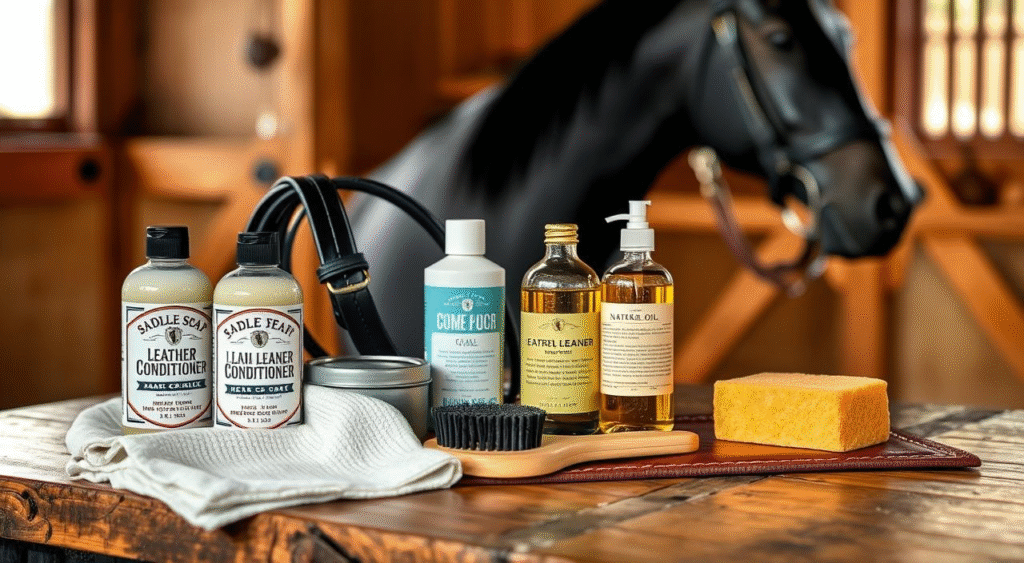
Keeping your leather bridle in good shape requires the right products and tools. You’ll need a few key items to care for your bridle properly.
Cleaning Products and Tools
To clean your bridle, use a soft, damp cloth and a gentle leather cleaner. Stay away from harsh chemicals and rough materials that can harm the leather. A soft-bristled brush is great for getting dirt out of small areas or hard spots.
Conditioning and Oiling Products
After cleaning, it’s important to condition and oil your bridle. Use a good leather conditioner or oil that fits your bridle’s leather type. Neatsfoot oil, coconut oil, and commercial conditioners are popular choices.
Additional Helpful Equipment
Having the right tools makes caring for your bridle easier. A leather bridle care kit often includes a conditioner applicator, a soft cloth for buffing, and a brush. These items help you follow the steps to clean a leather bridle and ensure you’re caring for it right.
Preparing Your Bridle for Cleaning
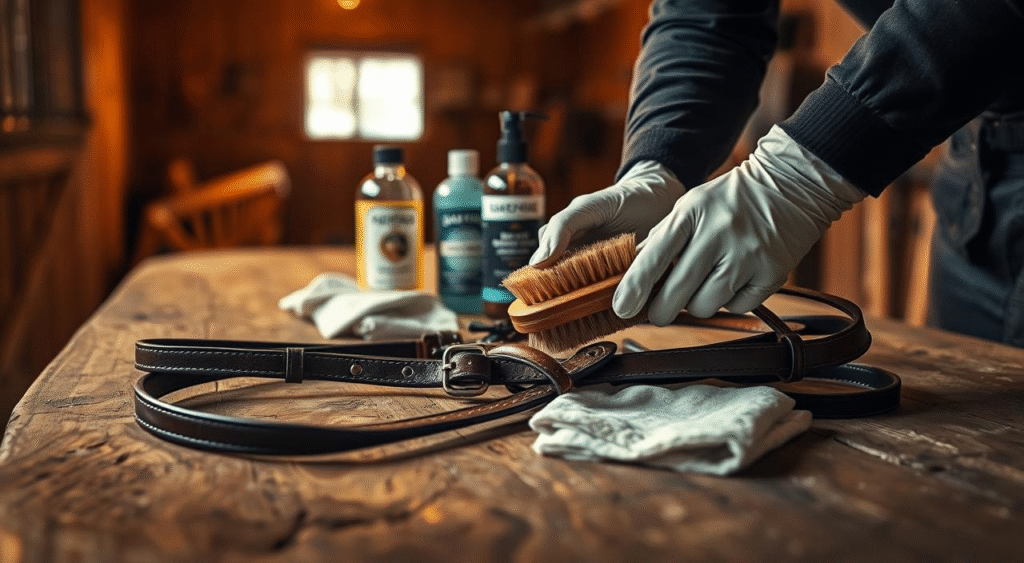
Before you start cleaning your leather bridle, make sure it’s ready. This step is vital for effective leather bridle cleaning techniques. It helps remove dirt and grime that can harm your gear.
Disassembling Your Bridle Correctly
To start, take apart your bridle. Remove the reins, noseband, and browband. Be gentle with the buckles and straps to avoid damage. Knowing how each part fits together is key for a DIY leather bridle cleaning.
- Remove the reins and set them aside.
- Take off the noseband and browband.
- Gently unbuckle any other removable parts.
Initial Dust and Dirt Removal
After taking it apart, use a soft-bristled brush or dry cloth to remove dust and dirt. This first step prevents scratches during deeper cleaning. Focus on areas around buckles and crevices where dirt often gathers.
By following these steps, you’ll clean your leather bridle more effectively. This keeps it in good shape for a longer time.
Step-by-Step Guide: How to Clean a Leather Bridle
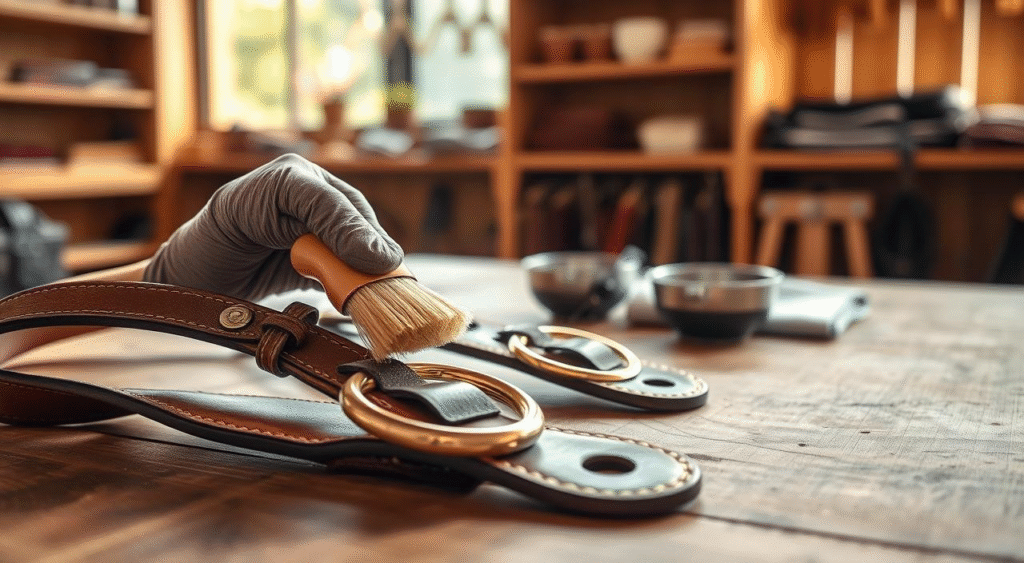
To keep your leather bridle in top shape, you need to know how to clean it right. Cleaning your bridle is a detailed process. It requires the right tools and care.
Removing Surface Dirt and Sweat
The first step is to get rid of surface dirt and sweat. Use a soft, dry cloth to wipe down the bridle. Focus on the metal parts where dirt likes to stick.
- Begin with the reins, wiping them from the ends to the bit.
- Then, clean the headstall, paying attention to the buckles and straps.
- Don’t miss the noseband and browband, as they get dirty easily.
Deep Cleaning Techniques for Stubborn Stains
For tough stains, you’ll need a leather cleaner. Put a small amount on a soft cloth and rub it into the stain. Always check the cleaner on a small area first, following the instructions.
- Put the cleaner on the cloth, not the leather.
- Rub the stain in a circular motion.
- Wipe off any extra cleaner with a clean, damp cloth.
Cleaning Metal Bits and Hardware
Cleaning the metal parts is just as important as the leather. Dirt on metal can make it wear down faster.
For metal parts with rust or tarnish, use a metal polish made for equestrian gear. Apply a small amount to a soft cloth and rub until it shines.
Polishing for Longevity
After cleaning, buff the metal with a dry cloth. This removes any leftover polish and protects the metal from tarnishing.
- Use a soft, dry cloth to buff the metal.
- Focus on areas that tarnish easily.
By following these steps, you can keep your leather bridle clean and in good condition. This ensures it stays safe and comfortable for your horse.
The Art of Properly Oiling Your Bridle
To keep your leather bridle in top shape, learning how to oil it right is key. Oiling is vital for leather bridle maintenance. It keeps the leather soft and stops it from cracking.
Choosing the Right Oil for Your Leather
Not all oils are good for leather. You must pick one that fits your bridle’s leather type. Neatsfoot oil is a top choice because it conditions and protects well. Think about your climate and your bridle’s needs when picking oil.
Application Techniques for Even Coverage
To oil well, use a soft cloth in circular motions. This spreads the oil evenly and avoids too much. Focus on dry spots like reins and noseband.
How Much Oil Is Too Much?
Too much oil can make your bridle greasy and attract dirt. Signs of over-oiling include a sticky feel and a greasy look.
Signs of Over-Oiling
Too much oil makes leather sticky and greasy. This draws dirt, making things worse.
Correcting Over-Oiled Leather
To fix over-oiled leather, wipe off extra oil with a dry cloth. Let it dry fully before checking again. If needed, use a leather cleaner to get rid of any left-over oil.
By following these tips, your leather bridle will stay in great shape. Regular, correct oiling is a key part of best leather bridle cleaning tips for every rider.
Conditioning Leather for Suppleness and Strength
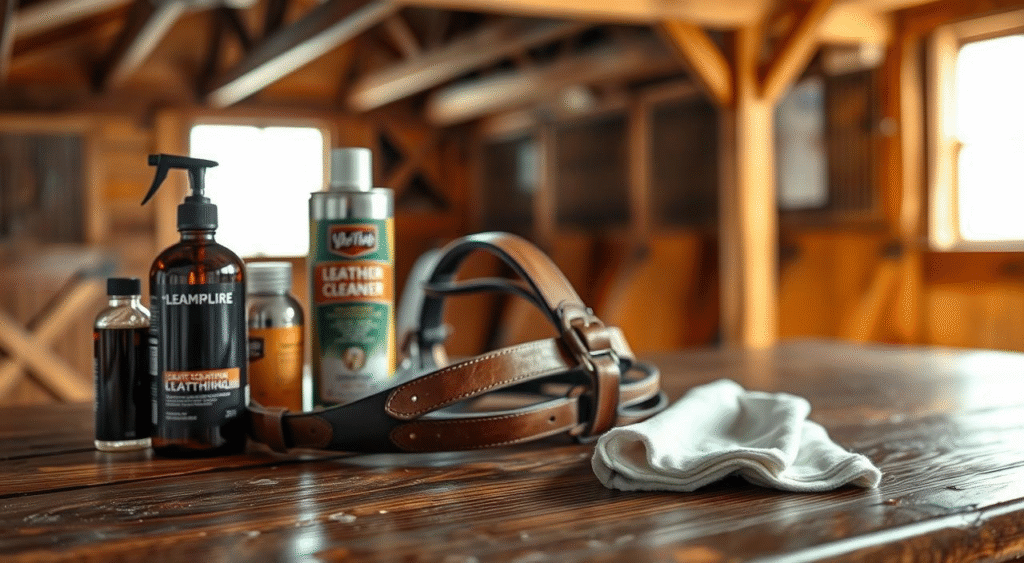
To keep your leather bridle in top shape, regular conditioning is key. It keeps the leather moist and prevents it from drying out and cracking. This is vital for your bridle’s longevity and condition.
Different Types of Leather Conditioners
There are many leather conditioners out there, each with its own benefits. Some are made for specific leathers, like full-grain or suede. Choose a conditioner that matches your bridle’s leather type.
- Creams: Provide intense moisturizing and are often used for dry or damaged leather.
- Sprays: Easy to apply and suitable for maintaining the leather’s condition between deep conditioning treatments.
- Waxes: Offer a protective barrier against the elements and can enhance the leather’s appearance.
Application Methods for Optimal Results
How you apply conditioner matters a lot. Always follow the manufacturer’s instructions. It’s best to apply conditioner to a clean, damp cloth and then rub it into the leather in a circular motion.
For the best results, condition your bridle in a cool, dry place, away from sunlight. This prevents the leather from getting too hot or drying out too fast.
| Conditioner Type | Best For | Application Method |
|---|---|---|
| Cream | Dry or damaged leather | Apply to damp cloth, rub into leather |
| Spray | Maintenance between deep conditioning | Spray onto leather, buff with clean cloth |
| Wax | Protecting against elements, enhacing appearance | Apply thin layer, buff to shine |
Special Attention Areas: Reins, Nosebands, and Browbands
Parts like reins, nosebands, and browbands need extra care. They get worn out faster, so they might need more conditioning.
When conditioning these parts, make sure to avoid any stitching or hardware. Regular checks and conditioning will keep your bridle in great shape and comfortable for your horse.
Drying and Reassembling Your Bridle
Proper drying and reassembling your bridle are key to keeping it in top shape. After cleaning and conditioning, these steps are vital for its longevity and performance.
Proper Drying Techniques
Begin by gently patting your bridle with a clean, dry cloth to remove excess moisture. Then, let it air dry in a cool, shaded area. Avoid using hair dryers or heaters as they can harm the leather. Let it dry naturally, which may take several hours or overnight, depending on the leather’s thickness and humidity.
Reassembly Tips and Tricks
When your bridle is dry, start reassembling it. Lay out all parts and check for wear or damage. Use your notes or photos from disassembly to guide you.
Take your time to align the parts properly. Ensure all buckles and straps are securely fastened. Clean and dry any metal hardware before attaching it.
Testing Fit and Function After Cleaning
After reassembly, test your bridle on your horse. Make sure it fits well and works right. Check that all buckles are secure, reins are attached, and the bit is in place. This final check is vital for your horse’s comfort and your safety. Make any needed adjustments for a proper fit.
Creating a Maintenance Schedule for Your Tack
To keep your leather bridle in top shape, setting up a maintenance plan is key. Regular care not only makes your gear last longer but also keeps it safe and working well.
Daily Quick-Clean Routines
After each ride, spend a few minutes cleaning your bridle with a soft cloth. This removes dirt and sweat, stopping grime from causing damage.
Weekly Maintenance Tasks
Set aside time each week for a deeper clean. Use a mild leather cleaner to get rid of tough dirt. Then, apply a conditioner to keep the leather soft.
Monthly Deep Cleaning Sessions
Every month, do a detailed clean of your bridle. Take it apart, clean each piece well, and condition the leather. This keeps it healthy.
Seasonal Care Considerations
Seasons change, and so do the needs of your bridle. In dry times, use more conditioner to avoid cracks. In wet seasons, make sure it dries well to avoid mold.
| Frequency | Task |
|---|---|
| Daily | Quick wipe-down after use |
| Weekly | Thorough cleaning and conditioning |
| Monthly | Deep cleaning and conditioning |
| Seasonally | Adjust care based on weather conditions |
Stick to this schedule, and your leather bridle will stay in great condition. It will remain a valuable part of your equestrian gear for many years.
Common Mistakes to Avoid When Cleaning Leather Bridles
When cleaning your leather bridle, it’s important to avoid common mistakes. This keeps your bridle in good shape for a long time. It also makes sure your horse stays comfortable and safe.
Harmful Cleaning Products and Methods
Harsh chemicals or abrasive cleaners can harm your leather. They might dry it out or cause it to crack. Instead, use gentle, leather-specific cleaners that keep the material’s natural oils.
Don’t use household cleaners or saddle soaps. They can take away the leather’s natural moisture.
Always test a small, inconspicuous area first to make sure the cleaner won’t change the leather’s color or texture. A soft-bristled brush is good for cleaning dirt from designs or stitching without damaging them.
Over-Oiling and Under-Conditioning Pitfalls
It’s important to find the right balance when oiling and conditioning your bridle. Too much oil can make it greasy and attract dirt. Too little can make it dry and brittle. Choose a high-quality leather oil or conditioner that fits your bridle’s type.
Regular conditioning keeps the leather soft and strong. Apply conditioner to a clean cloth and rub it gently into the leather. Pay extra attention to areas like reins and nosebands that wear out faster.
Storage Errors That Damage Leather
Storing your bridle wrong can cause mold, mildew, or cracking. Keep it in a cool, dry place away from sunlight. Don’t store it in a damp or humid spot, as mold can grow.
Use a breathable storage bag or a well-ventilated tack box. This keeps your bridle clean and dry. Check your bridle regularly for any damage or wear.
By avoiding these mistakes, your leather bridle will stay in great shape. It will provide comfort and reliability for you and your horse.
Troubleshooting Common Leather Bridle Issues
Even with regular care, leather bridles can sometimes develop issues that require special attention. Understanding how to address these problems is key to keeping your equipment in top shape.
Addressing Dry and Cracking Leather
Dry and cracking leather is a common problem. It often comes from not conditioning enough or being exposed to harsh weather. To fix it, use a good leather conditioner on the affected spots. Gently rub it in with a soft cloth.
Fixing Mold and Mildew Problems
Mold and mildew can grow on leather bridles if they get too wet. To solve this, clean the area with a mild soap. Then, dry it well. After drying, apply a leather conditioner to make it soft again.
Repairing Minor Damage and Wear
Small tears or worn spots can usually be fixed with a leather repair kit or conditioner. But, if the damage is big, you might need a pro.
When to Seek Professional Repair Services
Big damage, like large tears or broken buckles, needs a pro. They have the skills and tools to fix your bridle right.
| Issue | DIY Solution | Professional Help |
|---|---|---|
| Dry/Cracking Leather | Apply leather conditioner | For severe cracking |
| Mold/Mildew | Clean with mild soap | For extensive infestation |
| Minor Damage | Use leather repair kit | For significant damage |
Fixing common problems quickly and right keeps your leather bridle in great shape. Regular care and timely fixes are essential for caring for your leather bridle well.
Your Bridle Care Investment: Protecting Your Equestrian Equipment for Years to Come
Keeping your leather bridle in good shape is a big deal. By cleaning it right and following care tips, you make it last longer. This keeps your bridle looking great.
For many riders, their equestrian gear is a big expense. Taking care of your bridle keeps it working well. It also saves you money by avoiding expensive fixes or new purchases.
Following this guide helps you take care of your bridle. This way, you can enjoy a well-kept bridle for many years. It also makes riding more comfortable for you and your horse.
Conclusion
Your Bridle, Your Hands, Your Horse: Why the Little Things Matter
A leather bridle seems simple: a few straps, some buckles, a bit. But in reality it’s one of the most important links between you and your horse. When the leather is clean, supple, and correctly adjusted, your aids travel through it quietly. When it’s stiff, dirty, or cracked, that same leather can rub, pinch, or even fail at the worst moment.
If you look across the best tack-care guides, the advice is very consistent:
wipe away sweat and dust after you ride,
clean more thoroughly on a regular schedule,
and condition just enough to keep the leather flexible, not greasy.elevatorequestrian.co.uk+2equestrianindex.com+2
It doesn’t have to be fancy. A damp sponge, a decent leather cleaner, and a conditioner that suits your bridle’s leather will take you a long way. The real magic isn’t in the brand – it’s in the habit. Five quiet minutes with your bridle after a sweaty schooling session will do more for its lifespan than any “rescue” routine once a year.
Regular care is also your chance to spot problems early. Tiny cracks around a buckle hole, stretched stitching on a cheekpiece, a noseband that’s going hard at the edges – you see all of that when you’re cleaning. Catching it early means you can repair or replace a part before it becomes a safety issue.
You’ve invested in this bridle once. By following a simple routine and treating it as part of your grooming, you protect that investment, keep your tack looking show-ready, and make your horse’s life a little more comfortable. That’s the real point of bridle care: not having perfect leather for photos, but giving your horse soft, reliable gear every single time you ride.
FAQs
What do you clean a leather bridle with?
Use a damp sponge or cloth and a leather-specific cleaner or saddle soap made for tack. The sponge should be damp, not soaking, so you don’t flood the leather. Most expert guides suggest working up a light lather, wiping away sweat and dirt, then removing any soap residue and letting the leather dry before conditioning.Pets4Homes+2Horse Journals+2
How often should you clean a leather bridle?
How often you clean depends on how often and how hard you ride. If you ride several times a week, a quick wipe-down after each ride and a proper clean at least once a week is a sensible goal.equestrianindex.com+2elevatorequestrian.co.uk+2 If you ride less often, you can stretch it a bit, but any time the bridle is sweaty, salty, or visibly dirty, it should be cleaned before you hang it back up.
Should you oil your bridle as well as condition it?
Yes, but not constantly. Oil and conditioner do slightly different jobs. A light oiling (for example with neatsfoot oil) is useful on new, dry, or slightly stiff leather to help it soften and flex.Pets4Homes+1 A cream or balm conditioner is better for regular maintenance once the leather is in good shape. Many tack makers suggest oiling new bridles a few times at the start, then switching mostly to balm or conditioner unless the leather dries out.
Can you use olive oil or kitchen oils on a leather bridle?
Technically you can, but most leatherworkers and saddlers don’t recommend it. Kitchen oils like olive or vegetable oil can go rancid, attract dust, and sometimes soak unevenly, leaving dark, greasy patches.UNIQ Bridles+1 It’s much safer to use a leather oil or conditioner made for saddlery – they’re designed to penetrate properly and stay stable over time.
How do you condition a leather bridle?
Once the bridle is clean and dry, apply a small amount of leather balm, cream, or oil to a soft cloth or sponge (don’t pour it straight onto the leather). Work it in with gentle, even strokes, paying attention to areas that flex a lot, like reins, cheekpieces, and the noseband. Let it soak in, then lightly buff off any excess so the leather feels nourished, not sticky.UNIQ Bridles+1
How do you get mold off a leather bridle?
First, take the bridle somewhere with good ventilation. Wipe off the surface mold with a slightly damp cloth, rinsing it often so you’re not spreading spores around. Many riders and leatherworkers then use a dilute vinegar solution (for example, 50/50 white vinegar and water) on the affected areas to help kill the mold, followed by a proper leather cleaner and, once fully dry, conditioner.Reddit+1 After that, check your storage area – mold usually means too much moisture and not enough air flow.
Is saddle soap good or bad for bridles?
In moderation, good saddle soap is fine and widely used. Where people get into trouble is scrubbing hard with strong soap every single day. That can strip natural oils and leave the leather dry or tacky.Horse Journals+2Pets4Homes+2 Think of saddle soap as something you use when the bridle is genuinely dirty. On “normal” days, a damp cloth to remove sweat and dust, plus occasional conditioning, is often enough.
Real feedback
Here are some real comments from riders talking about tack and bridle cleaning. You can drop these into a section like “What other riders actually do” or “Real-world routines” at the end of your article.
I scrub the bit after each use and clean any visible detritus off the bridle. I clean/condition my bridle about once a week, girth about once a month, leathers/saddle less often. I rotate between my four saddle pads until they’re all grimy, and then wash them all together, maybe once every three months. I rarely fully disassemble my tack for a “complete” cleaning, maybe twice a year. English h/j rider, mostly casual. Reddit
I clean with saddle soap every other ride. A newly washed under pad each ride. ( I have six) I disassemble the bridle completely every week and clean and oil. The bit is washed after every ride. Reddit
I use a product called Leather Wash on my saddle & bridle. You don’t have to wipe it off & it keeps everything in great condition. Reddit
It depends on how sweaty or grimy the tack gets—I wipe all of my tack with a damp cloth and apply a leather balm (preferably Effax leather balm) after every ride regardless. If things are especially gross, I saddle soap before the balm. A lot of conditioners leave weird residue also. Light glycerine soap should get off dirt/sweat/etc. and if your tack is not that dirty, I’d say just use a damp cloth. Oil it maybe once a month. Or be like me, get a beta biothane bridle and then you can just hose it off, lol. (Do rinse/wipe your bit after every ride.) Reddit
Just as a note, I have one saddles that is 30 years old, a bridle I bought in 1995, and they are all in good condition. I mostly wipe the bridle down with a damp cloth every other ride or so, and clean it with saddle soap one a month, and do a deep clean/leather conditioner 1-2 times a year. I wipe down my saddle/clean the billets once a week or so. I think the biggest part of keeping tack in good shape is to buy good leather to begin with. The cheaper the leather the more you have to baby it. Reddit