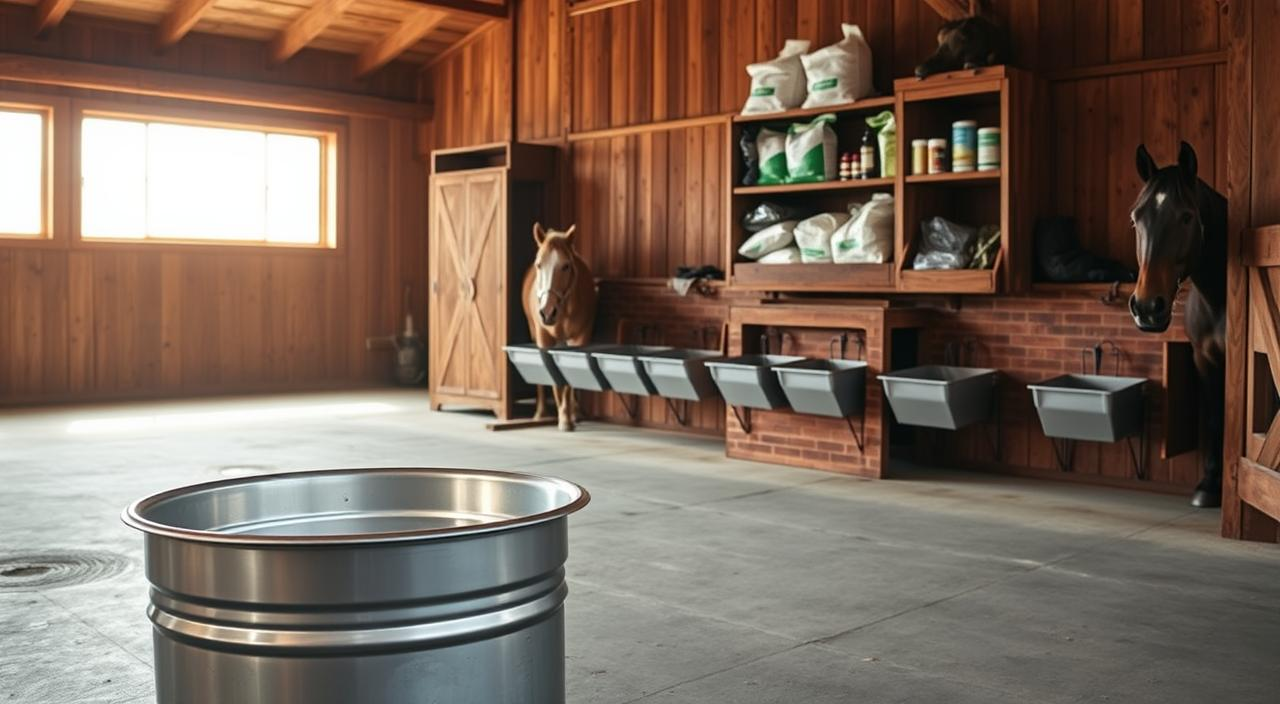
Is your horse feeding space a mess? It’s not just about looks. A tidy feeding area makes mealtime calm and efficient for you and your horse.
A clean feeding area improves your horse’s mealtime. The right storage and tips can make feeding smooth and fun.
This article will show you how to make your horse’s feeding area neat and useful. You’ll see how a tidy area simplifies horse care.
The Importance of a Well-Organized Feeding Area

Keeping your horse’s feeding area tidy is key to their health and happiness. It makes sure they get the right food and helps you manage their horse feeding schedule better.
With a few simple storage tips, you can make feeding time easier for both you and your horse. It saves you time and effort too.
Benefits for Horse Health and Nutrition
A clean feeding area keeps your horse healthy by preventing contamination and spoilage. It also keeps the food’s nutritional value high.
| Health Benefit | Description |
|---|---|
| Reduced Contamination Risk | Proper storage minimizes exposure to pests and mold. |
| Maintained Nutritional Value | Feed is stored in conditions that preserve its nutritional quality. |
Time and Labor Efficiency Benefits
When the feeding area is organized, feeding management for horses becomes more efficient. This saves you time by making it quicker to get and prepare the food.
Organizing your horse’s feeding area leads to a smoother feeding process. It benefits both you and your horse.
Assessing Your Current Horse Feeding Area Organization

Before you start organizing your horse’s feeding area, it’s key to check how it’s set up now. This step helps you see what needs to change. It aims to make your horse’s feeding spot more efficient.
Identifying Pain Points and Challenges
Watch how you and your horse go about feeding. Look for any hard parts like finding feed or dealing with mess. Write down these issues to tackle them later. Think about how long feeding takes, how easy it is to get to feed, and any safety issues.
Space Evaluation and Measurement
Measure the space where you feed your horse. Note its size and any things that block it. Think about how to make the flow better. Also, think about where to store your horse’s food and supplements.
Setting Organizational Goals
Use what you’ve seen and measured to set goals for your horse’s feeding area. Decide what you want to change, like making feeding faster or better storing food. Having clear goals will help you make an optimal horse feeding area that’s good for your horse.
Essential Components of an Efficient Horse Feeding Station

Creating an efficient horse feeding station is key for your horse’s health and nutrition. It makes your daily routine smoother and keeps your horse’s feed clean and organized.
Feed Storage Containers and Bins
The right containers and bins are vital for keeping your horse’s feed fresh and easy to get to. When picking storage, think about these factors:
Airtight Options for Freshness
Using airtight containers is key for keeping your horse’s feed fresh. Airtight containers keep moisture and pests out, making sure your horse’s meals stay nutritious and safe.
Size and Capacity Considerations
Choose containers that fit the amount of feed you store. Big containers are good for bulk buys, while small ones work for daily portions. Think about the space in your feeding area when picking container sizes.
Supplement Organization Systems
Having a good supplement system is also important. Use labeled containers or bins for supplements. This makes it easier to manage your horse’s nutritional needs.
Water Source Considerations
Access to clean water is as important as feed storage. Make sure your horse’s water is clean, easy to get to, and protected from the weather. Use a water tank or buckets made for outdoor use and are easy to clean.
Designing an Optimal Layout for Your Horse Feeding Area
Creating a good horse feeding station setup needs careful thought. A well-planned layout can make feeding time better for your horse. It can also reduce stress and make feeding easier.
Traffic Flow and Accessibility
When setting up your horse feeding area, think about traffic flow and accessibility. Make sure it’s easy for you and your horse to get to. There should be enough room to move around without trouble. A clear path helps avoid accidents and lowers stress.
Weather Protection Considerations
Weather protection is key when designing your horse feeding area. Keeping your horse dry and comfortable is important. You might want a covered area or a roof to protect from rain and sun.
Multi-Horse Management Strategies
If you have more than one horse, plan your feeding area carefully. Use separate feeding stations or dividers to avoid competition. This helps each horse eat without feeling stressed or anxious.
By thinking about these points, you can make a horse feeding area organization that works well. It will meet your horse’s needs efficiently.
Feed Storage Solutions for Different Types of Horse Feed
Keeping your horse’s feed fresh is key to their health. It’s important to store different types of feed properly. This helps keep their quality and freshness up.
Grain and Concentrate Storage Options
Grain and concentrates need protection from moisture, pests, and temperature changes. Metal or plastic containers are good choices for this.
Metal vs. Plastic Containers
Metal containers are tough and keep pests out. Plastic ones are lighter and don’t rust as easily.
Moisture and Temperature Control
It’s vital to control moisture and temperature, no matter the container. Make sure your storage area is dry and has good air flow to stop mold.
| Container Type | Durability | Pest Resistance |
|---|---|---|
| Metal | High | High |
| Plastic | Medium | Medium |
Hay Storage Systems and Racks
Hay needs careful storage to stay dry. Using hay racks or systems that keep hay off the ground helps prevent moisture.
Pest-Proof Storage Techniques
To keep pests away from your horse’s feed, use pest-proof methods. Seal containers well and use materials that repel rodents.
With these feed storage solutions, you can keep your horse’s feed fresh. This is good for their health and happiness.
Organizing Supplements and Medications
Having a good system for supplements and medications is key. It makes sure your horse gets the right treatment on time. This boosts your horse’s health and makes your daily routine easier, as part of an organized feeding routine for horses.
Labeling Systems and Inventory Management
Good labeling is essential for managing supplements and medications. Use strong, clear labels with the name, dosage, and expiration dates. An inventory system helps you keep track of what you have and what’s needed.
- Use a first-in, first-out system to ensure older stock is used before it expires.
- Keep a log of administration dates and amounts.
- Regularly check expiration dates and dispose of expired products.
Temperature-Controlled Storage Options
Some items need special storage. Get a thermometer and think about a fridge or climate-controlled cabinet for sensitive items.
Measuring and Preparation Tools
Accurate measurement is key when giving supplements and medications. Use specific scoops, cups, or scales for precise amounts.
Pre-Portioning Systems
Pre-portioning saves time and cuts down on mistakes. Use containers or bags for each feeding, helping you follow your horse feeding schedule.
Supplement Organizers and Dispensers
Look into organizers or dispensers for horse supplements and medications. They can be wall-mounted or countertop, keeping everything in one spot.
Creating an Efficient Horse Feeding Schedule System
To make sure your horse gets the right food at the right time, setting up a good feeding schedule is key. A well-planned schedule helps keep your horse healthy and performing well.
Digital and Physical Tracking Methods
You can track your horse’s feeding schedule with digital tools or physical calendars. Apps like StableManager or Equine Feed Manager send reminders and track feeding. Or, you can use a physical calendar or logbook if you like the old-school way.
Multiple Caretaker Communication Strategies
When there are many caretakers, it’s important to communicate clearly. Use a shared digital calendar or a logbook for everyone to see the feeding schedule. This keeps things consistent and avoids confusion.
Adjusting Schedules for Special Needs Horses
Horses with special needs might need a custom feeding schedule. Talk to your vet to find the best plan. Change the schedule as needed to meet your horse’s changing needs or health.
Tools and Equipment Organization for Feeding Time
To make horse feeding easier, organize your tools and equipment well. An organized feeding area saves time and lowers the chance of mistakes.
Scoops, Scales, and Measuring Devices
Measuring food accurately is key for your horse’s health. Keep scoops, scales, and measuring tools in a spot you can easily get to. Use a labeled drawer or container for them to stay neat and handy.
Buckets, Feeders, and Troughs
Buckets, feeders, and troughs are must-haves for feeding your horse. Make sure they’re clean, in good shape, and stored right when not in use. A rack or hook near the feeding area keeps them organized and off the ground.
Cleaning Supplies Storage
Cleaning supplies are important for a clean feeding area. Store them in a special place, away from food and equipment to avoid contamination. Use labeled bins or shelves to keep them organized and easy to find.
| Tool/Equipment | Storage Suggestion | Benefits |
|---|---|---|
| Scoops and Measuring Devices | Designated drawer or container | Easy access, reduced clutter |
| Buckets and Feeders | Rack or hook near feeding area | Keeps items off the ground, organized |
| Cleaning Supplies | Labeled bins or shelves away from feed | Prevents contamination, easy access |
By organizing your tools and equipment, you can make horse feeding more efficient. This helps both you and your horse.
DIY Horse Feeding Area Organization Projects
You can make your horse feeding area much better with simple DIY projects. These projects make feeding more efficient and add a personal touch.
Budget-Friendly Storage Solutions
Using old pallets or crates for storage is a smart move. It’s cheap and good for the environment. You can turn them into places to store feed and supplies.
Upcycled Container Ideas
Turning old containers into storage is creative. Old plastic bins or metal drums work great. Just clean and label them so you can find what you need easily.
Building Simple Feed Preparation Stations
A feed preparation station makes feeding easier. You can build one from wooden planks or make a mobile cart. It has bins for feed and supplements.
Wall-Mounted Organization Systems
Using wall space is a great way to organize. Shelves or hooks on the wall can hold feeding equipment. This keeps the floor clear and makes everything more accessible.
Mobile Feed Cart Construction
A mobile feed cart is very useful. You can make one from a wooden or metal frame. Add bins and shelves as needed. It lets you move feed and supplies easily around the barn.
| DIY Project | Cost | Benefits |
|---|---|---|
| Repurposed Pallet Storage | $0 – $50 | Environmentally friendly, cost-effective |
| Upcycled Container Storage | $10 – $100 | Creative reuse, easy to label |
| Feed Preparation Station | $50 – $200 | Streamlines feeding process, customizable |
Maintaining Cleanliness and Hygiene in the Feeding Area
Keeping the feeding area clean is key for your horse’s health. A clean space stops mold growth, cuts down on contamination, and keeps pests away. These steps are vital for efficient horse feeding and feeding management for horses.
Daily, Weekly, and Monthly Cleaning Routines
Having a cleaning schedule is essential. Every day, clear out leftover feed, clean the equipment, and remove debris. Weekly, do a deeper clean by disinfecting all surfaces. Monthly, check for wear or damage and fix it if needed.
Preventing Mold and Contamination
Mold and contamination harm your horse’s health. Store feed in airtight containers and throw away wet or moldy feed right away. Always check the feeding area for moisture or mold.
Pest Control Strategies
Pests can ruin feed and spread diseases. Use pest-proof containers and check the area for pests often. Think about natural repellents or get help from a pest control expert if needed.
Seasonal Adjustments for Your Horse’s Feeding Area
To keep your horse’s feeding area top-notch, you need to adjust it with the seasons. Each season brings its own set of challenges. These can affect the quality of feed, your horse’s health, and how smoothly you can feed them.
Winter-Proofing Your Feed Storage
In winter, it’s key to protect your feed from the weather. Moisture and cold can harm your horse’s feed. Use weather-resistant containers or bins for feed. Store them in a dry, sheltered spot.
| Winter Preparation Tips | Benefits |
|---|---|
| Use weather-resistant feed containers | Protects feed from moisture |
| Store feed in a dry, sheltered area | Maintains feed quality |
Summer Heat Considerations
Summer heat can spoil feed and dehydrate horses. Make sure your feeding area is well-ventilated. Think about using shaded feeding areas or cooling systems to keep your horses cool.
Mud Season and Rainy Weather Adaptations
When it’s muddy or rainy, keep your feeding area clean and dry. This stops mud ingestion and hoof issues. Use raised feeding platforms or mats to keep it dry and clean.
Your Action Plan for Perfect Horse Feeding Area Organization
Now that you know how important a well-organized horse feeding area is, it’s time to act. Start by looking at your current feeding area and finding ways to improve it. Think about what makes a good horse feeding station, like where to store feed and supplements, and how to keep water clean and accessible.
To make feeding time better for your horse, create a schedule that works for both of you. Use digital or paper methods to keep track of when to feed. This way, you can make sure your horse gets the food they need regularly, helping them stay healthy.
By following your plan, you’ll have a clean and efficient feeding area. This means less stress for you and a happier horse. You’ll be able to give your horse the best care possible, knowing they’re getting what they need.