As a horse owner who boards your equine companion, efficient stall cleaning and manure management are vital not only for your horse’s health but also for building a positive relationship with the barn staff. Smart mucking routines can make caring for your horse easier, save time, and improve the overall environment. Whether you’re dealing with full-care, partial-care, or self-care boarding, a well-maintained stall plays a crucial role in your horse’s well-being.
In this article, we’ll explore the essential mucking strategies for one-horse owners, helping you keep your horse’s living area clean, healthy, and comfortable—while also respecting the barn’s expectations and fostering a smooth boarding experience.
The Importance of Efficient Stall Cleaning for Boarders
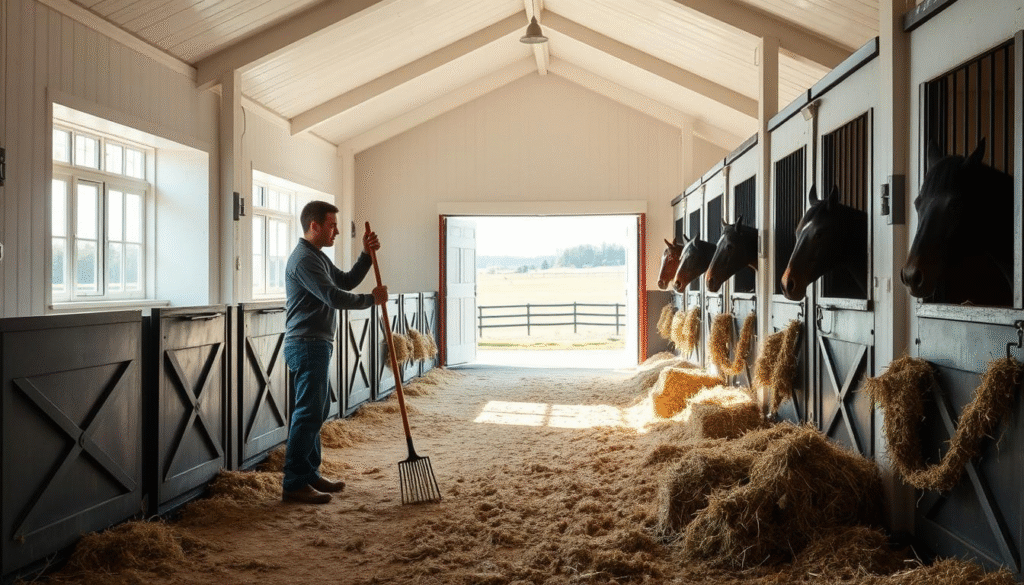
Keeping your horse’s stall clean is more than just an aesthetic choice—it’s essential for your horse’s health and comfort. A regular mucking routine contributes to your horse’s well-being and makes a big difference in preventing health problems.
Health Benefits for Your Horse
A clean stall plays a significant role in preventing several health issues:
- Respiratory Health Considerations: Dust and ammonia from manure can compromise your horse’s respiratory system. Consistent mucking reduces ammonia buildup, which can prevent respiratory illnesses.
- Hoof Health and Dry Bedding: Wet bedding can create the ideal breeding ground for thrush, a common hoof infection. Dry, clean bedding keeps hooves healthy, preventing infection and promoting better circulation.
By investing time in efficient stall cleaning routines, you’re providing a safe, comfortable environment that supports your horse’s overall health.
Understanding Your Boarding Facility’s Expectations
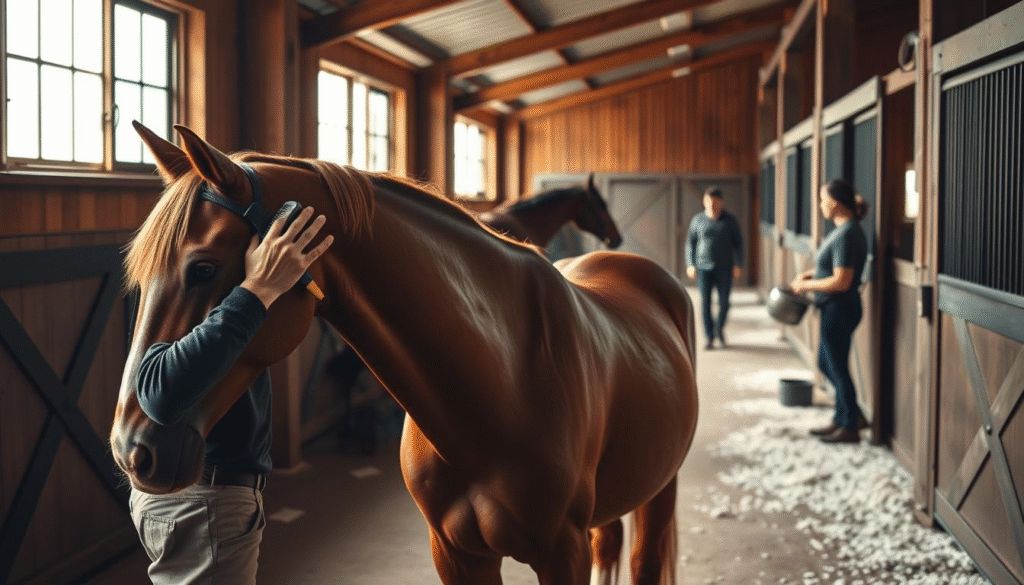
When you board your horse, it’s essential to understand the facility’s rules and expectations for mucking and stall care. Being proactive and following the barn’s guidelines ensures a smooth relationship with the barn management and other boarders.
Common Boarding Arrangements and Mucking Responsibilities
The level of mucking responsibility varies depending on your boarding arrangement. Here’s a quick breakdown:
| Boarding Type | Mucking Responsibility | Typical Tasks |
|---|---|---|
| Full-Care | Facility Staff | Daily stall cleaning, manure removal |
| Partial-Care | Shared between owner and staff | Owner: daily mucking; Staff: deep cleaning |
| Self-Care | Horse Owner | Daily mucking, weekly deep cleaning |
Knowing your responsibilities and communicating with barn management is key to maintaining a positive relationship and ensuring your horse’s stall is well taken care of.
Essential Tools for Efficient Mucking
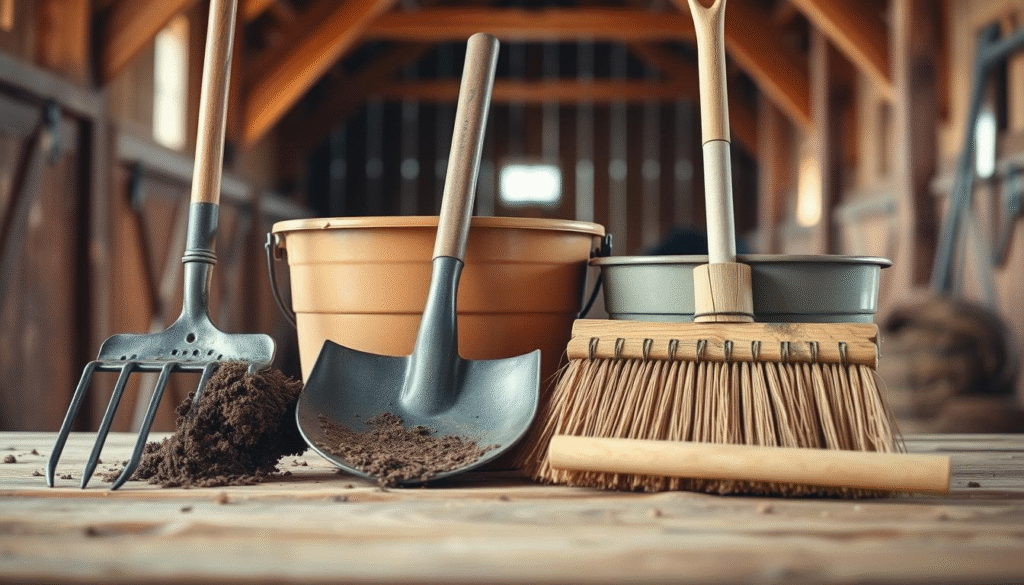
Having the right tools for mucking is crucial for efficiency. With the right equipment, cleaning your horse’s stall can be a quick and manageable task.
Must-Have Equipment for One-Horse Owners
Investing in the following essential tools will make mucking your horse’s stall easier:
- Forks, Shovels, and Rakes: A pitchfork is perfect for removing soiled bedding, while a shovel helps with manure removal. A rake is essential for tidying up and spreading bedding evenly.
- Wheelbarrows and Muck Buckets: A wheelbarrow or muck bucket is necessary for transporting waste from the stall to the manure pile. Look for one that is easy to maneuver and durable.
Specialty Tools Worth Considering
For those looking to make mucking even easier, consider investing in:
- Muck Cart: Great for transporting large amounts of manure, reducing the need to make multiple trips.
- Long-Handled Stall Cleaning Tools: These can save your back by allowing you to muck without bending over too much.
Space-Saving Storage Solutions
Proper tool storage is crucial for keeping your mucking routine organized:
- Wall-mounted racks or compact bins help keep your tools in one place and make the entire mucking process more efficient.
Quality vs. Budget Tools
While budget tools may seem like a cost-effective option, investing in quality tools pays off in the long run. Durable equipment will last longer, be more comfortable to use, and make mucking less time-consuming.
Smart Mucking Routines for One-Horse Owners Who Board
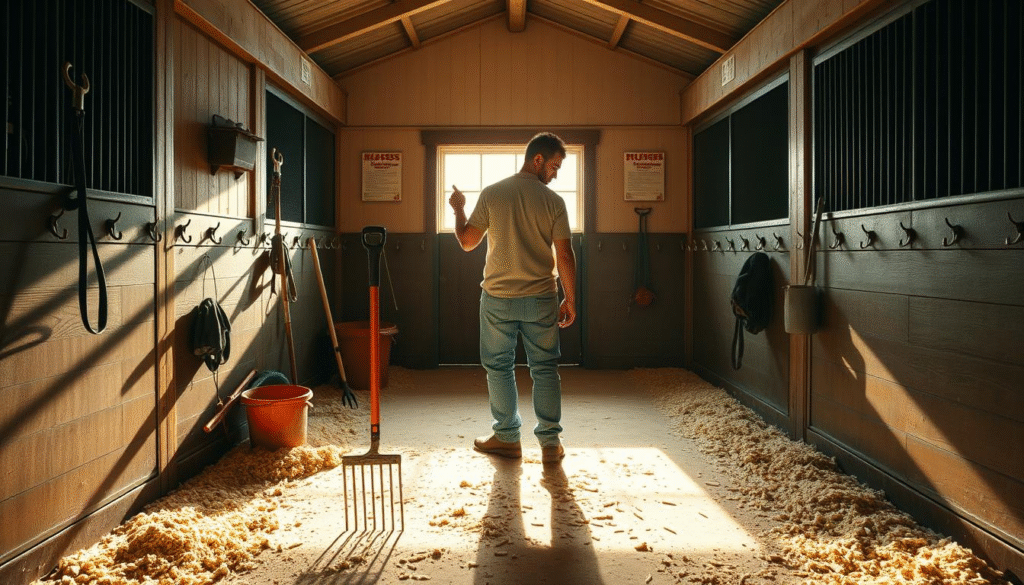
Consistency is key when it comes to mucking. By developing a regular mucking routine, you’ll keep your horse’s stall clean and healthy without overburdening yourself.
The 15-Minute Daily Maintenance System
A 15-minute daily mucking routine ensures your horse’s stall remains clean without taking up too much time:
Morning Quick-Clean Strategy
- Remove soiled bedding and manure.
- Clean water buckets and hay racks.
- Add fresh bedding for comfort.
This simple 5-minute routine helps you start the day with a clean stall and ensures your horse’s environment is healthy.
Evening Touch-Up Approach
A quick touch-up in the evening ensures the stall is neat and comfortable:
- Remove soiled bedding
- Add fresh bedding if necessary
- Check water levels and refresh hay
This keeps your horse’s space inviting and minimizes the amount of work for the next day.
Weekend Deep-Clean Strategies
While daily mucking is essential, a deeper clean every week will keep your stall in top shape and reduce odors, dirt, and bacterial buildup.
| Task | Frequency | Time Required |
|---|---|---|
| Remove Soiled Bedding | Daily | 5 minutes |
| Deep Clean Stall | Weekends | 30 minutes |
| Disinfect Surfaces | Weekends | 10 minutes |
Use the weekend to thoroughly clean, disinfect surfaces, and replace bedding. This is also the time to check for any repairs needed in the stall.
Seasonal Adjustments to Your Routine
As the seasons change, so should your mucking routine. Different weather conditions affect how often you’ll need to muck and what kind of bedding is most effective.
Summer vs. Winter Considerations
- Summer: Focus on keeping stalls dry and cool. Hot weather can cause your horse to sweat more, increasing the need for daily mucking and adding fresh bedding.
- Winter: Ensure stalls are warm and dry. In colder weather, bedding might need more frequent changes, as moisture from urine can freeze and become a hazard.
Spring Cleaning for Horse Stalls
Spring is a great time for an annual deep stall clean. Thoroughly clean and disinfect everything, remove old bedding, and check for structural repairs to ensure the stall is in good condition for the coming months.
Time-Saving Techniques for Busy Horse Owners
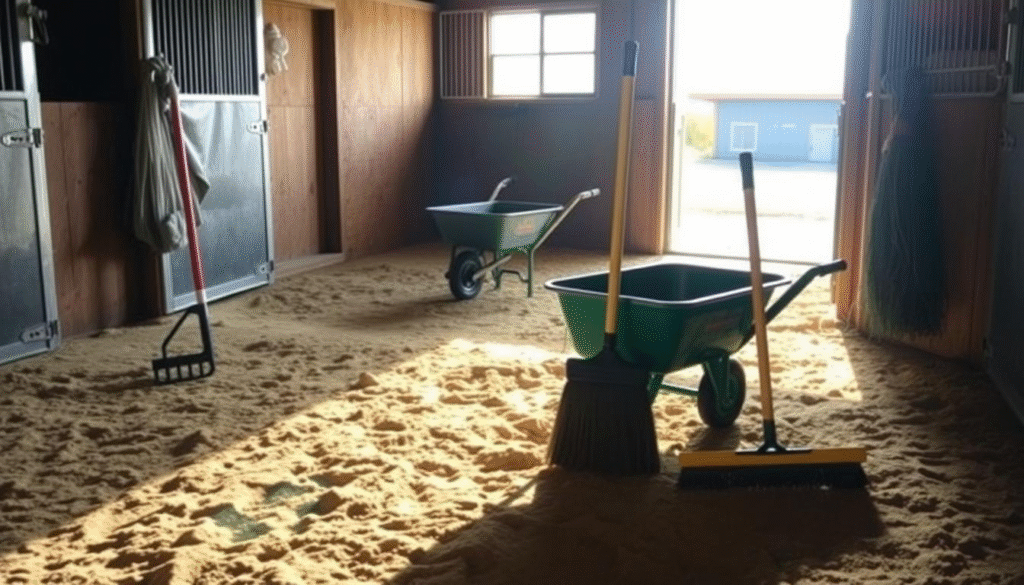
If your time is limited, consider using some smart strategies to make mucking quicker without sacrificing cleanliness.
Efficient Stall Cleaning Patterns
- Remove your horse from the stall to make cleaning easier.
- Use a pitchfork to sort wet from dry bedding, then dispose of it.
- A muck cart or tool caddy can help organize your supplies and make cleaning faster.
Bedding Management Tricks
Using smart bedding techniques can save time and effort:
- Strategic bedding banks in stall corners create barriers and keep the middle clean.
- Choose absorbent bedding like wood pellets or shavings to minimize the need for frequent changes.
Manure Management Best Practices
Proper manure management keeps your horse’s environment clean and helps you maintain good relations with the barn staff.
Understanding Your Facility’s Waste Disposal System
Know how the barn handles manure and waste disposal:
- Identify manure collection locations and follow facility guidelines.
- Stick to the designated disposal areas to keep the barn organized.
Eco-Friendly Approaches to Manure Handling
Consider composting manure to recycle it into fertilizer for your farm or garden. Proper manure disposal and composting practices reduce waste and help maintain an eco-friendly environment.
| Challenge | Solution |
|---|---|
| Odors | Turn compost piles regularly, maintain the right carbon-to-nitrogen ratio |
| Pests | Use pest-resistant bedding and seal manure storage areas |
| Storage Capacity | Optimize storage by compacting manure or using off-site disposal options |
Collaborating with Barn Staff and Fellow Boarders
Building strong relationships with barn staff and other boarders will make stall cleaning and other horse care tasks easier and more enjoyable.
Building Positive Relationships Through Stable Etiquette
Respect the barn’s rules, communicate clearly, and maintain cleanliness in shared spaces. Simple gestures like greeting barn staff and following shared equipment rules go a long way in fostering positive relationships.
When and How to Arrange for Help
If you ever need assistance with mucking, don’t hesitate to ask. Be sure to set clear expectations regarding the stall’s condition and the tasks required.
Conclusion: Streamlining Your Barn Visit for Efficiency
By creating smart mucking routines for your one-horse boarding situation, you can ensure that stall cleaning stays efficient, your horse’s health remains optimal, and your time is well-managed. Effective cleaning isn’t just about routine maintenance; it’s about building relationships, staying organized, and adjusting practices to accommodate the seasons.
With a little effort, you’ll create a stable environment where both you and your horse thrive.
FAQs: Smart Mucking Routines for One-Horse Owners Who Board
How often should I clean my horse’s stall?
It’s ideal to muck daily with a deep clean on weekends. This helps maintain a healthy, clean environment for your horse.
What is the best bedding for stall cleaning?
Wood shavings, straw, and pellets are popular choices. Wood pellets are highly absorbent and easy to manage, while straw is softer and more comfortable.
How do I handle manure in a boarding facility?
Follow your facility’s guidelines for manure disposal. Composting and using eco-friendly bedding can reduce waste and minimize environmental impact.
Can I ask for help with mucking?
Yes! If you’re unable to muck your stall one day, communicate with the barn staff or fellow boarders to arrange assistance.
What’s the quickest way to keep the stall clean between deep cleans?
Use a quick 5-minute morning clean routine, remove waste, and replace bedding daily to keep the stall comfortable for your horse.